


News & Events
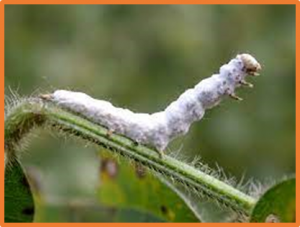
Invasive social insects are among the most damaging of invasive organisms and have proved universally intractable to biological control. Despite this, populations of some invasive social insects collapse from unknown causes. We report long-term studies demonstrating that infection by a microsporidian pathogen causes populations of a globally significant invasive ant to collapse to local extinction, providing a mechanistic understanding of a pervasive phenomenon in biological invasions: the collapse of established populations from endogenous factors. We apply this knowledge and successfully eliminate two large, introduced populations of these ants.
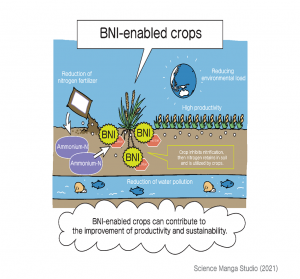
A study on the development of the first biological nitrification inhibition (BNI)-enhanced wheat has been awarded the 2021 Cozzarelli Prize given by the Proceedings of the National Academy of Sciences of the United States of America (PNAS). The study was a joint research collaboration of Japan International Research Center for Agricultural Sciences, the International Maize and Wheat Improvement Center, the University of the Basque Country, and Nihon University.
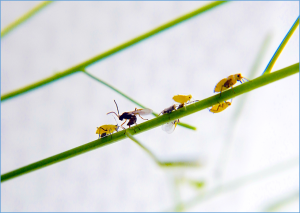
A research team from the University of Zurich (UZC) has shown that a single gene can affect an entire ecosystem and the discovery of the "key gene" could change the current strategies of biological diversity conservation. The UZH researchers and their colleagues from the University of California report that a mutation in a single gene dramatically changes the structure and function of an ecosystem.

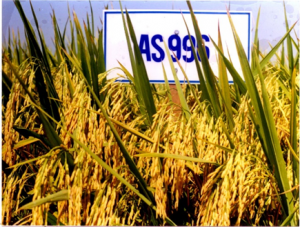
Genetic diversity is a prerequisite for crop improvement. This study, which was carried out at Patuakhali Science and Technology University, Bangladesh, explored the genetic diversity of 38 Bangladeshi aus rice (Oryza sativa L.) landraces under drought stress by using phenotypic and simple sequence repeat (SSR) markers. Nonhierarchal clustering analysis with Mahalanobis‟ D2 statistic based on the data of morphological traits divided the studied landraces into four groups

Researchers from Guangdong Academy of Science in China used a new technique called single cell RNA-sequencing (scRNA-seq) to identify and describe the major cell types in the root-tip of maize as well as the developmental pathways and genes involved in various functions. Their study is published in The Crop Journal. The root system is vital in the growth and yield of maize plants. Finding out its genetic diversity and response to nitrate at the single-cell level will provide insights into root development and nutrient uptake.

An international team of researchers led by the John Innes Centre, The Sainsbury Laboratory, and the University of Minnesota have identified the stem rust resistance gene from a wild goat grass species. The researchers found the gene in Aegilops sharonensis, a wild relative of wheat found in Israel and southern Lebanon. Using bioinformatic advances, the research team developed the first accurate genome map of A. sharonensis.
Phosphorus (P) is essential for cellular processes like respiration, photosynthesis, biosynthesis of membrane phospholipids, etc. To cope with P deficiency stress, plants adopt reprograming of the expression of genes involved in different metabolic/signaling pathways for survival, growth, and development. Plants use transcriptional, post-transcriptional, and/or post-translational machinery to achieve P homeostasis.

Zhejiang University developed Ruifeng 125, an insect resistant genetically modified (GM) maize. Field experiments conducted for over five years showed significant results. Ruifeng 125 can produce an efficient insecticidal protein to kill lepidopteran insects such as corn borers and cotton bollworms. Studies have shown that Ruifeng 125 can provide corn borer control to as high as 96%. It can also decrease the number of damaged kernels which are prone to toxin-producing microbes.

Market Research Store releases the Transgenic Seeds Market Research Report featuring major trends and technologies performing a major role in the transgenic seeds market for the forecast period of 2022 to 2028. Using SWOT analysis to evaluate market growth, the report presents the key players including Monsanto, DLF-Trifolium, Takii, KWS AG, Land O' Lakes, Bayer Crop Science, Syngenta, Sakata, Groupe Limagrain, and DuPont
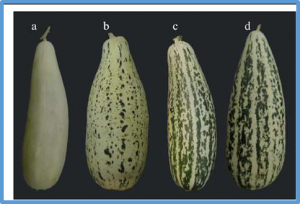
Seed coat color is related to flavonoid content which is closely related to seed dormancy. According to the genetic analysis of a six-generation population derived from two parents (IC2508 with a yellow seed coat and IC2518 with a brown seed coat), we discovered that the yellow seed coat trait in melon is controlled by a single dominant gene, named CmBS-1. Bulked segregant analysis sequencing (BSA-Seq) revealed that the gene is located at 11,860,000–15,890,000 bp (4.03 Mb) on Chr 6

More than a hundred thousand online and print articles and more than a million social media posts were analyzed by researchers to determine the volume and tenor of the GMO conversation from 2018 to 2020. The results showed that both social and traditional media may be moving toward a more favorable and less polarized overall conversation on ag-biotech.
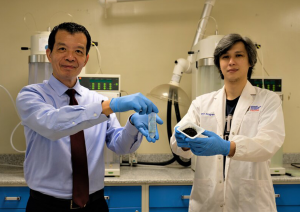
A team of scientists led by Nanyang Technological University, Singapore (NTU Singapore) has developed a method to effectively produce and extract plant-based oils from common microalgae, using a newly discovered method that could serve as a healthier and greener alternative to palm oil. Palm oil is the world's most popular vegetable oil, used in around half of all consumer products. However, the rapid expansion of oil palm plantations has been blamed for massive deforestation in several countries, destroying the habitat of endangered native wildlife.