


News & Events
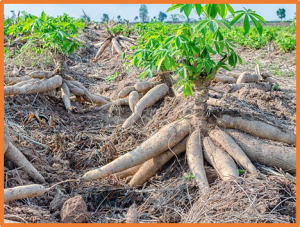
Drought stress severely impairs crop yield and is considered a primary threat to food security worldwide. Although the SQUAMOSA promoter binding protein-like 9 (SPL9) gene participates extensively in numerous developmental processes and in plant response to abiotic stimuli, its role and regulatory pathway in cassava (Manihot esculenta) response to the drought condition remain elusive.
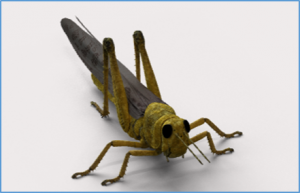
Desert Locusts are ravenous eaters. Usually found in semi-arid and arid deserts of East Africa, the Near East and South-West Asia, they can form large swarms and pose a major threat to food security and local livelihoods. But what are Desert Locusts and what makes them such a threat exactly?
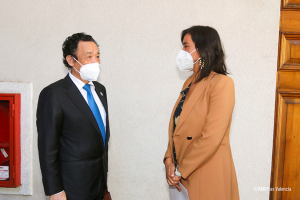
The FAO Director-General, Qu Dongyu, concluded his trip to Latin America and the Caribbean region with a one-day visit to Chile, where he was received by the acting Vice President and Minister for the Interior and Public Security, Iskia Siches, and other Chilean State Ministers.The acting Vice President highlighted that the new Chilean government would very much like to strengthen the longstanding collaboration between Chile and FAO.
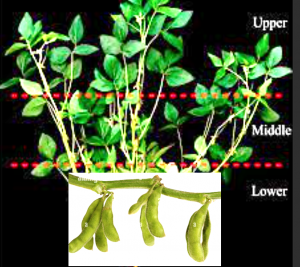
Soybean branch angle is a critical architectural trait that affects many other traits of agronomic importance associated with the plant’s productivity and grain yield and is thus a vital consideration in soybean breeding. However, the genetic basis for modulating this important trait in soybean and many other crops remain unknown. Previously, we developed a recombinant inbred line (RIL) population derived from a cross between a domesticated soybean (Glycine max) variety, Williams 82, and a wild soybean (Glycine soja) accession, PI 479,752, and observed drastic variation in plant architecture including branch angle among individual RILs.
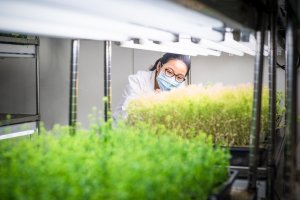
Researchers from the Indian Institute of Technology Guwahati and Gifu University reported that overexpression of unique cowpea NAC genes enhanced growth and seed yield in Arabidopsis. Their study is published in Plant Science. NAC proteins are one of the biggest groups of plant transcription factors (TFs) that are involved in diverse complex biological processes.
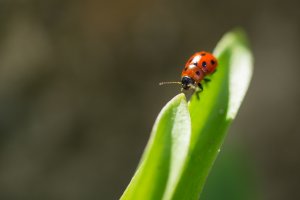
A team of scientists from China and Switzerland studied the effects of pollen from genetically engineered (GE) maize on the ladybird beetle using omics approaches with feeding assays. Results found that the pollen may not lead to biologically relevant effects on the insect and the method is a useful strategy to assess biological impacts of GE on non-target organisms (NTOs). The scientists used a total of 10 maize lines consisting of three GE lines and seven hybrid lines.
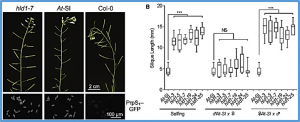
Glycosylphosphatidylinositol-anchored proteins (GPI-APs) are tethered to the outer leaflet of the plasma membrane where they function as key regulators of a plethora of biological processes in eukaryotes. Self-incompatibility (SI) plays a pivotal role regulating fertilization in higher plants through recognition and rejection of “self” pollen. Here, we used Arabidopsis thaliana lines that were engineered to be self-incompatible by expression of Papaver rhoeas SI determinants for an SI suppressor screen. We identify HLD1/AtPGAP1, an ortholog of the human GPI-inositol deacylase PGAP1, as a critical component required for the SI response.
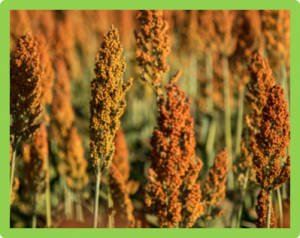
A paper published in Nature presents the resequencing of the sorghum genome, providing insights for the improvement of plant agroecological characteristics. Sorghum (Sorghum bicolor L. (Moench)) is the world's fifth economically most important cereal and is a staple in the semi-arid tropics of Africa and Asia. Sorghum has gained popularity due to the rise in demand for gluten-free specialty grains rich in health-promoting and food oxidative stabilizing compounds.

New information was recorded by scientists after finally piecing together the human genome's repetitive regions. These regions accounted for more than eight percent of the genome that was previously left undocumented more than 20 years ago when the first news of human genome sequencing came out. The repetitive regions were previously found to repeat the same letters of the DNA over and over again which made it impossible for the scientists to assemble the chopped-up sequences in the correct order
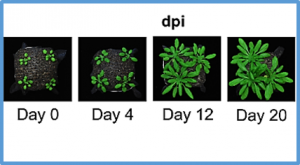
Plants and animals are in constant association with a variety of microbes. Although much is known about how pathogenic and symbiotic microbes interact with plants, less is known about the population dynamics, adaptive traits, and transcriptional features of the vast number of microbes that make up the bulk of the plant microbiota. The majority of microbiota taxa are either commensal, natural mutants of pathogens, or pathogens that encounter strong immune responses due to plant recognition of pathogen effectors
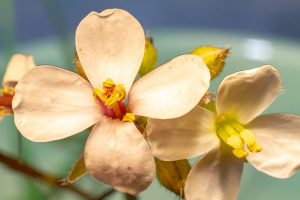
The “Highlander” gene was found to regulate self-incompatibility that has the potential to allow plants to self-fertilize, creating opportunities to breed stronger, more resilient crops for sustainable agriculture.The investigation started with the observation of the field poppy, Papaver rhoeas, which has the mechanism to avoid problems in self-fertilization. Poppies can recognize their own pollen and trigger a cell suicide program, providing a precise and clean way to eliminate unwanted pollen grains.

In the inaugural issue of Science Diplomacy Perspectives, produced by Pakistan's Ministry of Foreign Affairs, Career Diplomat Muhammad Adeel wrote about science diplomacy and how it provides socio-technical platforms that can potentially deliver technology-enabled sustainable development. The United Nations has organized a Food Systems Summit on September 23-24, 2022 to discuss the future of global food systems, especially on attaining zero-hunger.