


News & Events
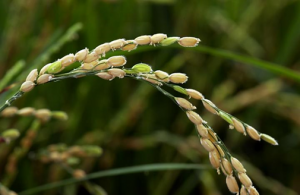
The AATCA motif was identified to respond pathogens infection in the promoter of defense-related gene Os2H16. OsbHLH057 bound to the motif to positively regulate rice disease resistance and drought tolerance. Sheath blight (ShB), caused by the necrotrophic fungus Rhizoctonia solani, is a devastating disease in rice (Oryza sativa L.). The transcriptional regulation of host defense-related genes in response to R. solani infection is poorly understood. In this study, we identified a cis-element, AATCA, in the promoter of Os2H16, a previously identified multifaceted defense-related gene in rice that responded to fungal attack.

Under the patronage of President Félix Tshisekedi of the Democratic Republic of Congo, IITA organized a planning conference for the Agenda for the Transformation of Agriculture in the Democratic Republic of Congo (ATA-DRC). The meeting took place at the “President Olusegun Obasanjo, IITA Research campus” in South Kivu from 23 to 25 February.

The Maize Association of Nigeria celebrated its 30th Anniversary on 21 March at Arewa Conference Hall in Kaduna. The Association presented numerous awards to Royal Highnesses, research, extension, and financial institutions, and seed and input suppliers. IITA was also given an award for supplying suitable technologies and rendering supportive services in agricultural development for sustainable food security in Nigeria.
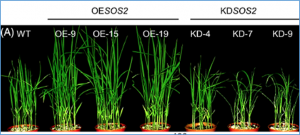
Abiotic stresses are emerging as a potential threat to sustainable agriculture worldwide. Soil salinity and drought will be the major limiting factors for rice productivity in years to come. The Salt Overly Sensitive (SOS) pathway plays a key role in salinity tolerance by maintaining the cellular ion homeostasis, with SOS2, a S/T kinase, being a vital component. The present study investigated the role of the OsSOS2, a SOS2 homolog from rice, in improving salinity and drought tolerance.
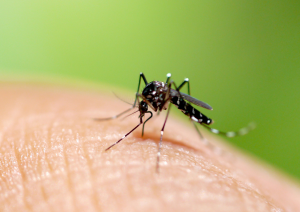
A team of researchers from the United States and the United Kingdom has developed a gene drive effector that can delay Plasmodium development in transgenic Anopheles gambiae mosquitoes using antimicrobial peptides in the midgut. This technique could be used to eliminate malaria under different transmission scenarios.

Citrus is one of the most difficult plants to improve through traditional breeding due to its complex reproductive biology. But the technological advancement in genome editing may help overcome this challenge to develop better varieties of this globally important fruit crop. Protoplasts are often used for the development of genetically modified plants by the in vitro integration of rDNA, either plasmid-based or linear, into the plant genome.
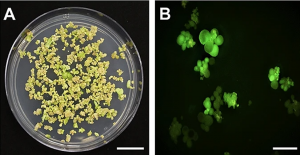
Here, we determined the best cationic lipid nanoparticles to deliver donor DNA and described a protocol using Lipofectamine™ LTX Reagent with PLUS Reagent to mediate DNA delivery into citrus protoplasts. A Cas9 construct containing a gRNA targeting the CsNPR3 gene was transfected into citrus protoplasts using the cationic lipid transfection agent Lipofectamine with or without polyethylene glycol (PEG, MW 6000).
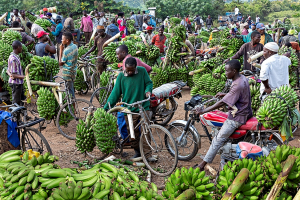
Recent advances in gene editing technology to control diseases in banana holds prospects to alleviate the industry, particularly to improve production, food security, and farmers' income. The banana industry of East Africa, the largest producer and consumer of bananas in the region, is constantly threatened by different banana bacterial diseases like moko, bugtok, blood, and, most destructive, the banana Xanthomonas wilt (BXW).

Indoor Biotechnologies, a US-based company that manufactures biologics for allergy and asthma, has used CRISPR gene editing technology to delete the protein in cat cells that causes allergy, in the first step towards creating hypoallergenic cats. Cat allergy affects more than 10 percent of the population, with more than 90 percent of cat allergic patients having the IgE antibodies to the major cat allergen, Fel d 1. Cats secrete Fel d 1 in their saliva and transfer it to their fur when they clean themselves.
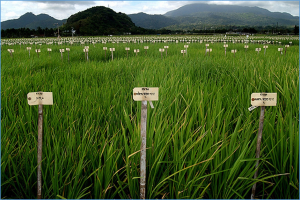
Long non-coding RNAs (lncRNAs) play vital roles in plant responses to environmental challenges. A better understanding of the gene regulation mediated by lncRNAs and their systematic identification would provide great benefits for modern agriculture. In this study, we performed strand-specific RNA sequencing for two rice varieties, heat-tolerant ZS97B and heat-susceptible SYD2 under heat stress.
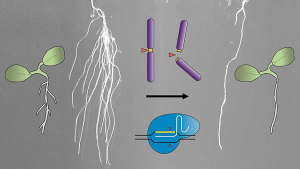
Karlsruhe Institute of Technology (KIT) scientists developed CRISPR-Kill, a new technique to remove the complete DNA of certain cell types to prevent the formation of specific organs during plant development. This technique is presented in Nature Communications. The research team, led by Prof. Holger Puchta, a molecular biologist at KIT and one of the co-developers of CRISPR-Cas for plants, developed CRISPR-Kill which induces multiple cuts in the genome.
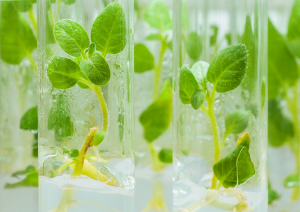
In a Memorandum dated March 30, 2022, India's Ministry of Environment, Forest and Climate Change has announced the exemption of genome-edited plants without foreign genes from being treated as transgenic products. The move was recommended by the Department of Biotechnology, Ministry of Science and Technology; and Department of Agriculture Research and Education,