


News & Events
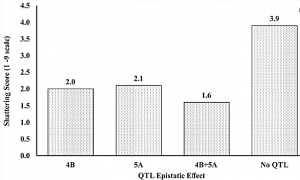
Spike shattering can cause severe grain yield loss in wheat. Development of cultivars with reduced shattering but having easy mechanical threshability is the target of wheat breeding programs. This study was conducted to determine quantitative trait loci (QTL) associated with shattering resistance, and epistasis among QTL in the populations Carberry/AC Cadillac and Carberry/Thatcher. Response of the populations to spike shattering was evaluated near Swift Current, SK, in four to five environments.
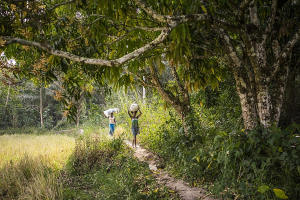
With the world facing multiple crises including, COVID-19, conflicts, climate crisis and biodiversity loss, our forests can help us recover from their impact, but only if we step up action to unlock their potential. In a key report launched today, the State of the World’s Forests Report 2022, the Food and Agriculture Organization of the United Nations (FAO) sets out three pathways for doing that: halting deforestation; restoring degraded land and expanding agroforestry and sustainably using forests and building green value chains.

Researchers, developers, regulators, and young professionals from Latin America, Africa and the Middle East, North America and Europe, and Asia and Oceania regions engaged in targeted breakout group discourses. This article summarizes the highlights of their discussions that may impact animal biotechnology research and regulations.
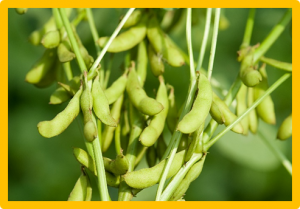
For introgression of new transgenic traits to field cultivars, adding new DNA to an existing transgene locus would reduce the number of segregating loci to reassemble back into a breeding line. We described previously an in planta transgene stacking system using the Bxb1 integrase to direct new DNA into a genomic target, but for this system to operate, the target locus must have a preexisting recombination site for Bxb1-mediated integration.
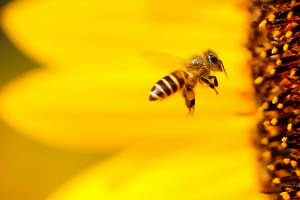
Many measures have been proposed to control varroa mites (Varroa destructor), one of the most significant bee pests globally. These measures include physical and chemical treatments, but researchers are still pursuing other methods to reduce their threat and one of them is through gene drive technology. Existing methods are laborious, not completely effective and may affect the bees.
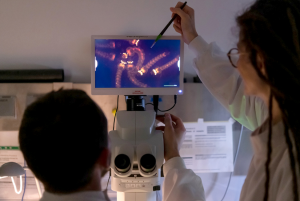
The World Health Organization (WHO) recorded a significant rise in the global burden of malaria in 2020, with approximately 627,000 deaths and 241 million new cases. WHO aims for a 90% decrease in malaria case incidence and mortality by 2030, which will need renewed global attention, increased funding, and continuous research and development of new interventions.
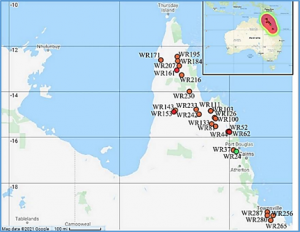
The wild rice gene pool, i.e., AA-genome, in Australia is geographically and genetically distinct from that in Asia. Two distinct taxa are found growing together in northern Australia, Oryza meridionalis (including annual and perennial forms) and an Oryza rufipogon like taxa that have been shown to have a chloroplast genome sequence that is closer to that of O. meridionalis than to O. rufipogon from Asia. Rare plants of intermediate morphology have been observed in the wild despite a reported reproductive barrier between these two species
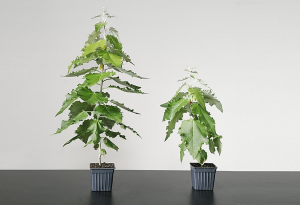
Through genetic engineering (GE), a photosynthesis enhancement trait was incorporated into hybrid poplar trees that resulted in the trees' increase in speed growth as well as a 53% increase in the production of above-ground biomass. This is proof that plant biotechnology can increase terrestrial carbon capture and storage which is not possible with conventional trees. Decreasing carbon in the atmosphere is an important means to combat climate change.

Scientists from the US Department of Agriculture Agricultural Research Service (ARS) are taking advantage of the latest tools and techniques in genomics to beef up the nutritive value of onions and carrots, and make future salads even more nutritious. Philipp Simon, who leads the ARS Vegetable Crops Research Unit, is working with his team to boost the beta carotene content of carrots. Beta carotene is a vital pigment that makes carrots orange in color and when this is consumed,
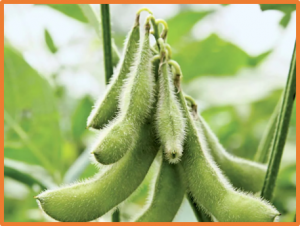
Microarray technology facilitates rapid, accurate, and economical genotyping. Here, using resequencing data from 2214 representative soybean accessions, we developed the high-throughput functional array ZDX1, containing 158,959 SNPs, covering 90.92% of soybean genes and sites related to important traits. By application of the array, a total of 817 accessions were genotyped, including three subpopulations of candidate parental lines, parental lines and their progeny from practical breeding. The fixed SNPs were identified in progeny, indicating artificial selection during the breeding process.

A research team led by the U.S. Department of Agriculture's Agricultural Research Service and Washington State University (WSU) found that the Sclerotinia sclerotiorum fungus uses a protein to bypass the natural defenses of plants and cause extensive rot in hundreds of broad leaf plant varieties. According to Weidong Chen, corresponding author of the paper published in Nature Communications, Sclerotinia causes stem rot on more than 600 plant species, including peas, lentils, canola, potatoes, soybeans, and many other broad leaf crops
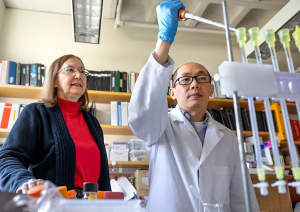
A Cornell University study published in Science Advances describes a breakthrough in the quest to improve photosynthesis in certain crops, a step toward adapting plants to climate changes and increasing yields to feed the world's projected 9 billion population by 2050. Senior author Maureen Hanson and first author Myat Lin developed a computational technique to predict favorable gene sequences that make Rubisco, the key plant enzyme for photosynthesis.