


News & Events
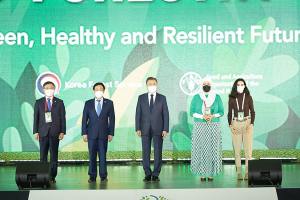
Qu was speaking in Seoul at the opening of the XV World Forestry Congress, in a ceremony also addressed by Moon Jae-in, President of the Republic of Korea, Princess Basma bint Ali of Jordan, a newly designated FAO goodwill ambassador, the Republic of Korea’s Forest Service Minister Choi Byeong-am and International Forestry Students’ Association President Magdalena Jovanovic. UN Secretary-General António Guterres also spoke via a video message delivered by Deputy Secretary-General Amina Mohammed.
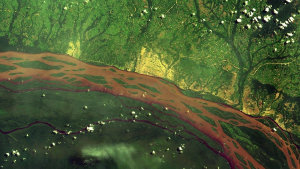
The rate at which our forests are disappearing slowed by nearly 30 per cent from the first decade of the century to the period from 2010-2018, a key report launched today by the Food and Agriculture Organization of the United Nations (FAO) showed. But the earth’s tropical rainforests are still under the greatest threat, whether from livestock grazing in South America or expansion of croplands such as oil palm plantations in Asia.
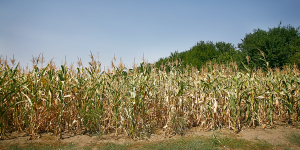
Fifteen million farmers in India engaged in Maize cultivation. India would require 45 MMT of Maize by 2022. But, only 15% of cultivated area of maize is under irrigation and water shortage has been a challenge for sustainability of maize production. Water deficit stress (WDS) during pre-flowering and grain filling stages massively affects the plant performance due to imprecise traits function. Thus, the effect of WDS on non-drought tolerant (NDT) and drought tolerant (DT) maize lines were investigated
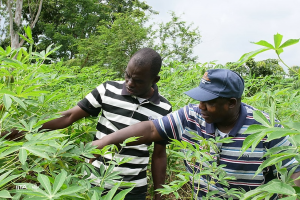
A new study finds tremendous potential for continuous improvement and mathematical methods to improve breeding schemes, leading to better crops for farmers. The Frontiers in Plant Science paper — authored by the CGIAR Excellence in Breeding team, International Institute of Tropical Agriculture (IITA) and partners — lays out the potential of systematizing breeding as an industrial process and ensuring programs adopt a culture of continuous improvement.
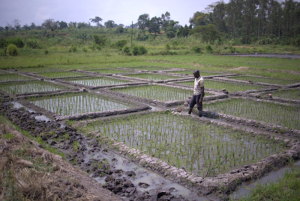
Modern agricultural practices have enabled food production to meet — and even outpace — demands from growing populations. But the rapid growth in production has often come at the cost of significant land and water degradation, biodiversity losses and increased greenhouse gas emissions (GHGs). This month’s Earth Day underscores our need to ensure agriculture can roll out environmental solutions — or at least mitigate the negative impacts of producing food and feed for the world.
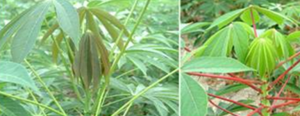
MARD held the meeting on "Current situation and orientation of sustainable cassava development in Vietnam, on April 8, 2022. MARD held the workshop on "Practical farming to obtain efficient outputs through protocol optimization, low input, low production cost", on April 13, 2022
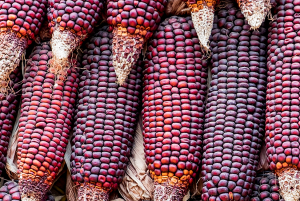
Efforts to understand the phenotypic transition that gave rise to maize from teosinte have mainly focused on the analysis of aerial organs, with little insights into possible domestication traits affecting the root system. Archeological excavations in San Marcos cave (Tehuacán, Mexico) yielded two well-preserved 5,300 to 4,970 calibrated y B.P. specimens (SM3 and SM11) corresponding to root stalks composed of at least five nodes with multiple nodal roots and, in case, a complete embryonic root system.
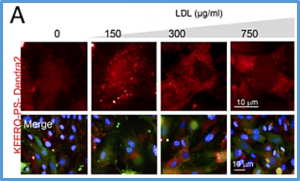
Cardiovascular diseases remain the leading cause of death worldwide, with atherosclerosis being the most common source of clinical events. Metabolic changes with aging associate with concurrent increased risk of both type 2 diabetes and cardiovascular disease, with the former further raising the risk of the latter. The activity of a selective type of autophagy, chaperone-mediated autophagy (CMA), decreases with age or upon dietary excesses. Here we study whether reduced CMA activity increases risk of atherosclerosis in mouse models
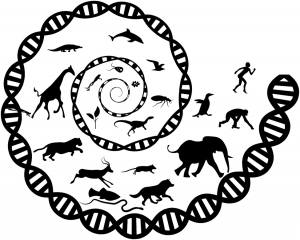
Whether flowers, mosquitoes, or humans, all organisms tend to interact and reproduce with others of their ilk who are close by. In principle, that means that their genetics can reveal not only their ancestry but also their geography. Taking advantage of this simple insight, evolutionary geneticists recently showed that it was possible to create models, based on scanning thousands of genomes from mosquitoes to elephants to humans (Fig. 1),
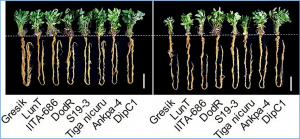
Bambara groundnut [Vigna subterranea (L.) Verdc.] is grown in rainfed production systems and suffers from periodic drought stress (DS), leading to yield reductions. Natural genotypic variation for root traits is essential for adaptation to water deficit conditions. However, root traits have not been fully utilised as selection criteria to improve DS in bambara groundnut. The present study explored the natural genotypic variation found in single genotypes of bambara groundnut derived from landraces to identify adaptive differences in tap root length (TRL)
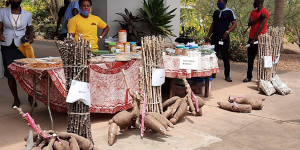
Experts from the Building an Economically Sustainable Integrated Cassava Seed System, Phase 2 (BASICS-II) have shared insights encouraging cassava farmers to access and benefit from improved cassava planting materials for the 2022 planting season. They highlighted these during a recent webinar for experts and farmers, organized with the GIZ Green Innovation Centres for the Agriculture and Food Sector (GIAE) and IITA Cassava and Maize Value Chain Project.
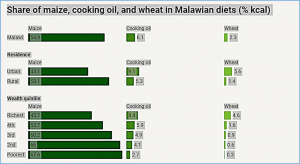
Food insecurity is endemic in Malawi, affecting up to 38% of the population every year in the run-up to the harvest in April. Although geographically distant, there are multiple channels through which Russia’s invasion of Ukraine can make matters worse this year. The conflict has disrupted global supplies of key cereals, vegetable oils, and fertilizers, pushing already-high prices higher, and putting particular pressure on low-income countries with vulnerable poor populations