


News & Events

The pandemic, global interruption to supply chains, rising costs of major primary commodities, conflicts and humanitarian crises threaten the functioning of world agrifood systems, QU Dongyu, Director-General of the Food and Agriculture Organization of the United Nations (FAO), said today. “We are at serious risk of facing a food access crisis now, and probably a food availability crisis for the next season.
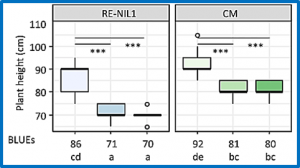
The semi-dwarfing reduced height alleles Rht-D1b and Rht-B1b have been deployed in modern wheat cultivars throughout the world, but they increase susceptibility to Fusarium head blight (FHB). Here, we investigated the impact of the Rht1 genes on anther retention (AR) in relation to FHB resistance using four different sets of near-isogenic lines (NILs) with contrasting levels and types of background FHB resistance.
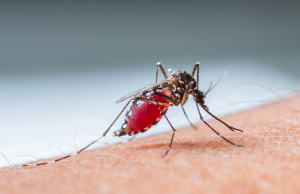
A series of online workshops have identified nine recommendations to advance the future environmental risk assessment of gene drive applications. The recommendations came from an exercise that identified potential harms from simulated investigational releases of a population suppression gene drive for malaria vector control. The World Health Organization reported that in 2020, there were 228 million cases of malaria, resulting in 602,000 deaths in the African region.
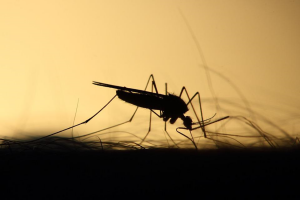
Malaria kills over 300,000 children in Africa every year despite the use of control measures. Novel control approaches using gene drives have been proven to be able to reduce or modify malaria vector populations in laboratory settings, and are now being considered for potential future field applications. Anopheles gambiae sensu stricto and Anopheles coluzzii are two closely related mosquito subspecies that are both malaria vectors in sub-Saharan Africa.
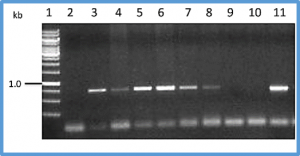
The gram pod borer is a major pest of chickpea, accounting for average annual yield losses to the tune of 40–50%. VIP3Aa, a class of insecticidal protein with different receptor binding site in the insect’s midgut compared to Bt-crystal protein, offers an alternative protection strategy against Lepidopteran insects. Here, we report evaluation of genetically engineered chickpea lines harboring codon modified Vip3Aa (cmVip3Aa) against the Lepidopteran insect pest, gram pod borer.

Researchers from the Synthetic Microbiology Center Marburg in Germany presented a versatile scarless and marker-free genome editing system in their latest publication in Nature Communications. CRISPR SWAPnDROP can perform indels consecutively or in parallel and transfer chromosomal regions between species of independent size and with high-editing efficiencies.
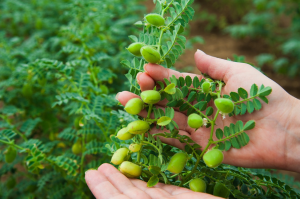
Researchers from India evaluated chickpea lines that were genetically modified (GM) to combat the gram pod borer, one of the major pests of the crop, and reached promising results. This is an important development considering there is no complete-resistance source that has been identified in the chickpea gene pool. The gram pod borer causes an average annual yield loss of 40-50% in the chickpea industry.
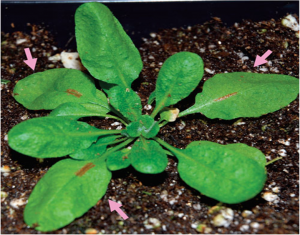
Here we report that overexpression of MYB37, a R2R3 MYB subgroup 14 transcription factor in Arabidopsis thaliana, confers hyposensitive phenotypes to exogenous salt. The results showed that compared with the wild type (Col-0), the overexpression of MYB37 significantly alleviated the salt stress symptoms of A. thaliana plants under NaCl stress. There was significantly less of a decrease in the contents of Chl a and Chl b in OE-1 and OE-2 compared with those in Col-0. In particular, the Chl a/b ratio was also higher than that in Col-0 under NaCl stress.
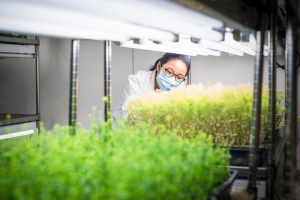
Researchers from Northeast Forestry University and partners reported a gene that can positively control photosynthetic inhibition and oxidative damage in Arabidopsis under saline conditions. Their findings are published in Frontiers in Plant Science. The research team overexpressed MYB37, a R2R3 MYB subgroup 14 transcription factor in Arabidopsis, which confers hyposensitivity to salt.
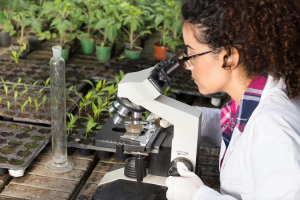
Xinjian Agricultural University researchers reported that a gene from sea-island cotton can help resist drought and salt stress in Arabidopsis. Their findings are reported in Plant Science. The group of genes known as TCP transcription factors plays vital roles in regulating plant growth and development. However, there is not enough information about their reaction to salt and drought stress in sea-island cotton.
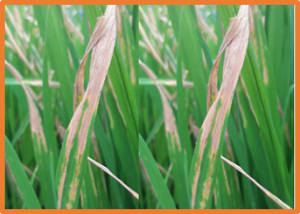
The Gram-negative bacteria Xanthomonas oryzae pv. oryzae, the causative agent of bacterial leaf blight (BLB), received attention for being an economically damaging pathogen of rice worldwide. This damage prompted efforts to better understand the molecular mechanisms governing BLB disease progression. This research revealed numerous virulence factors that are employed by this vascular pathogen to invade the host, outcompete host defence mechanisms, and cause disease. In this review, we emphasize the virulence factors and molecular mechanisms that X. oryzae pv. oryzae uses to impair host defences, recent insights into the cellular and molecular mechanisms underlying host-pathogen interactions and components of pathogenicity,
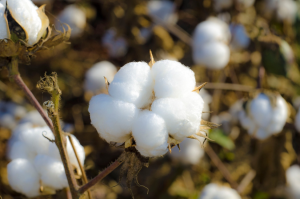
The European Food Safety Authority (EFSA) Panel on genetically modified organisms (GMO Panel) has published their risk assessment of new sequencing information for genetically modified (GM) stacked cotton DAS-24236-5 × DAS-21Ø23-5. The GMO Panel has previously assessed GM cotton DAS-24236-5 × DAS-21Ø23-5 in application EFSA-GMO-NL-2005-16.