


News & Events
ISAAA Inc., BioTrust Global, the Malaysian Biotechnology Information Center, Murdoch University, and the National Seed Association Malaysia will hold the workshop Policy Considerations for Gene Editing: The Asian and Australian Perspective from August 23 to 25, 2022 in Kuala Lumpur, Malaysia.
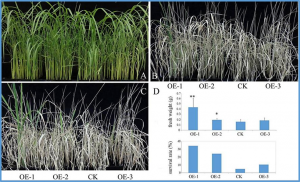
Mosses are one of the earliest diverging land plants that adapted to living on land. The BURP domain-containing proteins (BURP proteins) are plant-specific proteins that appeared when plants shifted from aquatic environments to land. Phylogenetic analysis revealed that the BURP domain of higher plants is originated from lower land plants and divergent because of motif conversion. To discover the function of BURP protein in moss, rice transgenics with ectopic expression of PpBURP2 were subjected to different abiotic stresses treatments.
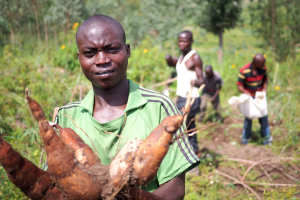
The International Food Policy Research Institute and economists from Tanzania, Nigeria, Uganda, and Ghana analyzed the expected economic benefits from the adoption of genetically modified (GM) crops in five sub-Saharan African countries. The results of their study show that substantial economic benefits are gained by both farmers and consumers from the timely adoption and planting in farmers' fields of GM crops through an efficient regulatory system.
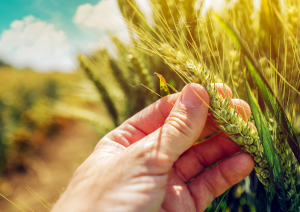
Bioceres Crop Solutions has announced that the U.S. Food and Drug Administration (FDA) has concluded its evaluation of the company´s proprietary drought tolerant HB4® Wheat. According to Bioceres, after reviewing all the safety and regulatory information submitted, the FDA has concluded that it has no further questions regarding the safety of HB4® Wheat and that it does not raise issues that would require premarket review or approval by FDA.
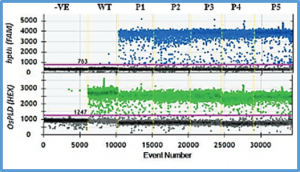
Rice (Oryza sativa L.) is an excellent source of starch, which is composed of amylopectin and amylose. Resistant starch (RS) is a starch product that is not easily digestible and absorbed in the stomach or small intestine and instead is passed on directly to the large intestine. Cereals high in RS may be beneficial to improve human health and reduce the risk of diet-related chronic diseases. It has been reported through chemical mutagenesis and RNA interference studies that starch branching enzymes (SBEs)
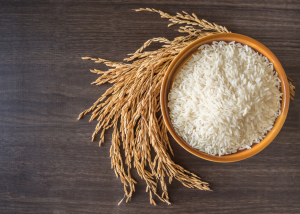
Using CRISPR-Cas9, researchers from Texas A&M University were able to produce rice with an increased amount of resistant starch. The findings can help develop rice that is more beneficial for human health and possibly reduce the risk of diet-related chronic diseases. Resistant starch is commonly found in cereal crops. It is not easily digestible nor absorbed by the small intestine, and is passed on to the large intestine which helps make the elimination of waste more efficient.
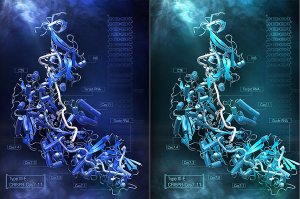
In 2021, researchers at the Massachusetts Institute of Technology's McGovern Institute for Brain Research discovered and characterized Cas7-11, the first CRISPR enzyme that makes precise, guided cuts to RNA strands without harming cells in the process. Now, with collaborators at the University of Tokyo, the same team reveals that Cas7-11 can be shrunk to a more compact version, making it an even more viable option for editing the RNA inside living cells.
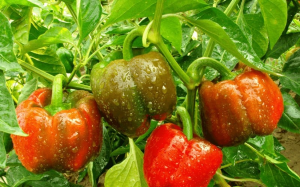
The use of cytoplasmic-genic male sterility (CGMS) systems greatly increases the efficiency of hybrid seed production. Although marker development and candidate gene isolation have been performed for the Restorer-of-fertility (Rf) gene in pepper (Capsicum annuum L.), the broad use of CGMS systems has been hampered by the instability of fertility restoration among pepper accessions, especially sweet peppers, due to the widespread presence of the Unstable Restorer-of-fertility (Rfu) locus.
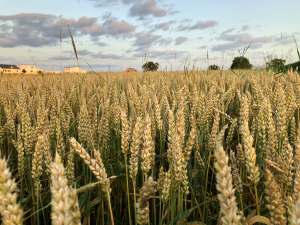
Fujian Agriculture and Forestry University (FAFU) researchers discovered that the enzyme TuRLK1 is vital in stripe rust resistance of YrU1 and confers broad resistance to multiple pathogens. Their findings are reported in BMC Plant Biology. YrU1 is a protein that confers effective resistance to stripe rust fungus. YrU1 has been cloned in bread wheat, but the molecular mechanism and components causing the YrU1-controlled resistance remain unclear.
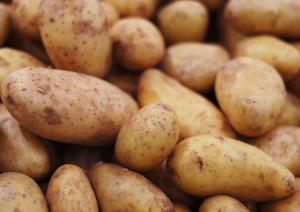
An international team including researchers from The James Hutton Institute has shed light on the evolution and biology of the potato as a genetically complex global food crop.Commercially grown potatoes are tetraploids with four sets of chromosomes. Diploid potato varieties – with just two sets of chromosomes – are less complex to breed and have the potential to revolutionize future potato breeding and production.
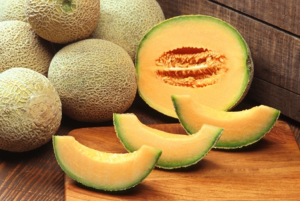
Carpel number (CN) is an important trait in melon. Three-CN melon fruit is oval, while 5-CN melon fruit has a round or flat shape. Herein, a genetic analysis of a population in which the CN locus was segregated indicated that 3-CN is controlled by a major dominant effective gene. Bulked segregant analysis and initial linkage mapping placed the CN locus in a 6.67 Mb region on chromosome 12, and it was narrowed to 882.19 kb with molecular markers and recombinant plants.

The European Food Safety Authority (EFSA) GMO Panel released their scientific opinion on herbicide tolerant (HT) soybean A5547-127, which is applied for renewal of authorization for food and feed uses. EFSA's assessment found no evidence for new hazards. Following the submission of BASF Agricultural Solutions Seed US LLC, the EFSA GMO Panel assessed the post-market environmental monitoring reports, literature on the HT soybean,