


News & Events

While studying the Arabidopsis plant, scientists discovered that a mutation on the DHS gene disrupts natural brakes on the production of aromatic amino acids during photosynthesis. This provides the opportunity to develop plants that can produce more aromatic compounds while absorbing more carbon dioxide from the atmosphere, thus having the potential to be both economically and environmentally beneficial in today's setting.
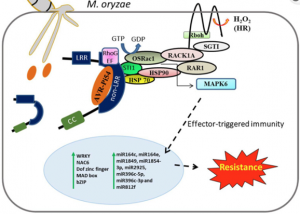
Rice is a global food grain crop for more than one-third of the human population and a source for food and nutritional security. Rice production is subjected to various stresses; blast disease caused by Magnaporthe oryzae is one of the major biotic stresses that has the potential to destroy total crop under severe conditions. In the present review, we discuss the importance of rice and blast disease in the present and future global context, genomics and molecular biology of blast pathogen and rice, and the molecular interplay between rice-M. oryzae interaction governed by different gene interaction models.

In a study published in the journal Sustainability, biotech corn farmers from the Philippines were asked about their perceptions and attitudes about the Supreme Court's bans on biotech crops implemented in 2015. The findings highlighted the importance of farmer consultations in policy framing and implementation. In 2021, the Philippines approved Bt eggplant for food, feed, or processing; and Golden Rice for cultivation.
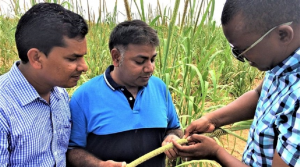
Professor Rajeev Varshney is the recipient of the 2022 International Crop Science Award by the Crop Science Society of America. He is being recognized as a global leader in genomics, crop science, and international agriculture this year. Professor Varshney is the current Director of the Centre for Crop and Food Innovation at Murdoch University. He is also the Director of the State Agricultural Biotechnology Centre at Murdoch, and the University's International Chair in Agriculture and Food Security.
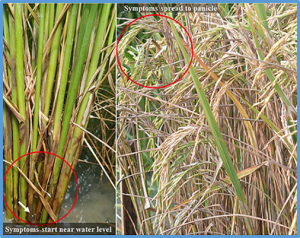
Sheath blight caused by necrotrophic fungus Rhizoctonia solani Kühn is one of the most serious diseases of rice. Use of high yielding semi dwarf cultivars with dense planting and high dose of nitrogenous fertilizers accentuates the incidence of sheath blight in rice. Its diverse host range and ability to remain dormant under unfavorable conditions make the pathogen more difficult to manage. As there are no sources of complete resistance, management through chemical control has been the most adopted method for sheath blight management.
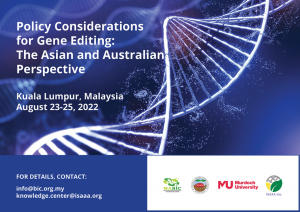
ISAAA Inc., BioTrust Global, the Malaysian Biotechnology Information Center, Murdoch University, and the National Seed Association Malaysia will hold the workshop Policy Considerations for Gene Editing: The Asian and Australian Perspective from August 23 to 25, 2022 in Kuala Lumpur, Malaysia.

ISAAA Inc. took science communication further by combining responsible science reporting and the potential of social media to advocate modern biotechnology and reach a wider range of audiences of various demographics in a two-day virtual workshop in collaboration with the Philippine Department of Agriculture's Biotech Program Office and the SEARCA Biotechnology Information Center.
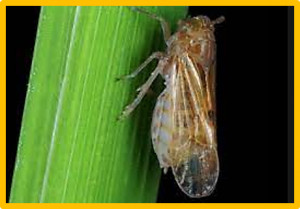
Plants have evolved a sophisticated defense system that employs various hormone pathways to defend against attacks by insect pests. Cytokinin (CK) plays an important role in plant growth and stress tolerance, but the role of CKs in plant-insect interaction remains largely unclear. Here, we report that CKs act as a positive regulator in rice resistance against brown planthopper (BPH), a devastating insect pest of rice.
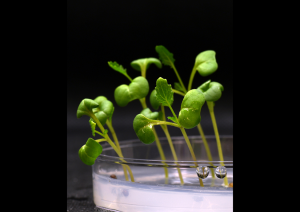
Scientists from the University of California, Riverside, and the University of Delaware have found a way to bypass biological photosynthesis and create food without sunlight by using artificial photosynthesis. The research team used a two-step electrocatalytic process to convert carbon dioxide, electricity, and water into acetate, the form of the main component of vinegar.
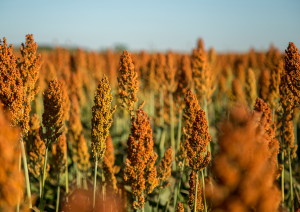
Australia's Office of the Gene Technology Regulator (OGTR) has issued license DIR 189 to The University of Queensland (UQ) for the limited and controlled release (field trial) of sorghum genetically modified (GM) for asexual seed formation.The field trial will take place at one site with a maximum area of one hectare per season at the University of Queensland's Gatton Campus in the Lockyer Valley LGA in Queensland.
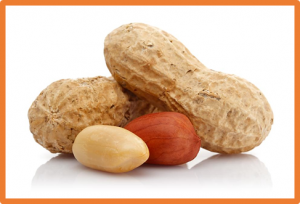
Peanut (Arachis hypogaea L.), an allotetraploid legume of the Fabaceae family, is able to thrive in tropical and subtropical regions and is considered as a promising oil seed crop worldwide. Increasing the content of oleic acid has become one of the major goals in peanut breeding because of health benefits such as reduced blood cholesterol level, antioxidant properties and industrial benefits such as longer shelf life.
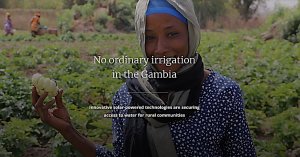
Across many parts of rural Gambia, women farmers often start their days before dawn to ensure that they have enough water to irrigate their gardens and to cook, clean and bathe at home. “Some of us would wake up as early as 3.00 a.m. to 4.00 a.m. just to get water. Hyenas attacked us on three different occasions,” said Salla Bah, a vegetable farmer in the Central River Region in the north of the Gambia.