


News & Events
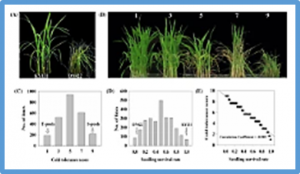
Cold stress caused by underground cold-water irrigation seriously limits rice productivity. We systemically measured the cold-responsive traits of 2,570 F2 individuals derived from two widely cultivated rice cultivars, Kong-Yu-131 and Dong-Nong-422, to identify the major genomic regions associated with cold tolerance. A novel major QTL, qCT7, was mapped on chromosome 7 associated with the cold tolerance and survival, using whole-genome re-sequencing with bulked segregant analysis. Local QTL linkage analysis with F2 and fine mapping with recombinant plant revealed a 70.9-kb core region on qCT7 encoding 13 protein-coding genes. Only the LOC_Os07g27670 expression level encoding the OsWRKY115 transcription factor on the locus was specifically induced by cold stress in the cold-tolerant cultivar.

The backlash over genetically modified organisms (GMOs) gave speculations on public acceptance of gene-edited foods despite their difference. A study conducted at Iowa State University (ISU) is the first to gauge public acceptance of gene-edited foods using a nationally representative sample of 2,000 U.S. residents. The researchers asked participants if they would eat or actively avoid gene-edited foods to understand the factors that shape their decisions.

Scientists from Korea were able to produce CRISPR-Cas9-mediated genome-edited dogs using somatic cell nuclear transfer (SCNT) technology with the aim of recovering pathogenic mutations in purebred dogs or to generate inbred animal models to study diseases. There have been two previous cases in which CRISPR-Cas 9 was used for canine research to produce genome-edited dogs, both did not use SCNT-based canine cloning technology.
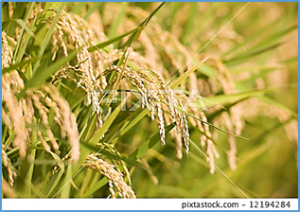
Crop improvement via transgenesis can benefit through efficient DNA integration strategies. As new traits are developed, new transgenes can be stacked by in planta site-specific integration near previous transgenes, thereby facilitating their introgression to field cultivars as a single segregation locus. However, as each round of integration often requires use of selectable markers, it is more convenient to reuse the selection scheme.

A patient in New Zealand is the first to undergo DNA editing to lower their blood cholesterol as part of a clinical trial by the U.S. biotechnology company Verve Therapeutics. A version of the gene editing tool CRISPR was injected to modify a single letter of DNA in the patient's liver cells. Verve Therapeutics said that the tiny edit should be enough to permanently lower a person's levels of “bad” LDL cholesterol, the fatty molecule that causes arteries to clog and harden with time.
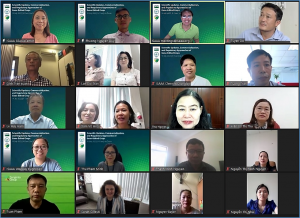
ISAAA in partnership with Vietnam's Institute of Agricultural Genetics (AGI) and the United States Department of Agriculture Foreign Agricultural Service Hanoi (USDA-FAS Hanoi) conducted the webinar Scientific Updates, Commercialization, and Regulatory Approaches of Gene-Edited Products on July 19, 2022, via Zoom. The event helped participants understand the latest information on the science of genome editing,
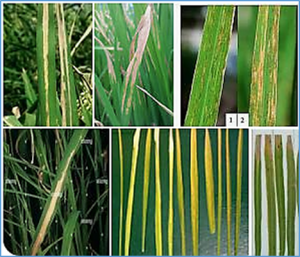
Rice production is severely affected by the bacterial pathogen, Xanthomonas oryzae pv. oryzae (Xoo), which causes bacterial leaf blight (BLB) disease. Nano-enabled strategies have recently attracted attention as a sustainable platform to improve crop nutrition and protection. Here, we report the bioengineering of chitosan-iron nanocomposites (BNCs) along with their in vitro and in vivo bactericidal activity against Xoo.

Scientists from Zhejiang University used nanotechnology to manage bacterial leaf blight disease in rice. The results are published in the journal Nanotoday. Bacterial leaf blight (BLB) is one of the most devastating diseases affecting rice production in China. Climate change and changes in the cultivation system contributed to the resurgence of BLB in major rice areas in the country. This led Professor Li Bin to search for nanomaterials that can help ease the BLB problem in China.
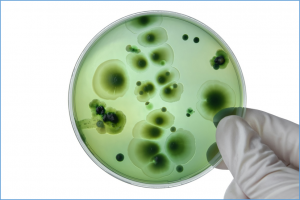
European scientists found a way to manipulate signals precisely and effectively between the host plant and pathogens to prevent fungal attacks without environmentally hazardous toxins and with less ecological footprint. Scientists from Germany, France, and Switzerland used around 20,000 fungus strains and 6,000 plant species to develop a method to trick the pathogens' chemical communication with plants and prevent fungal infections
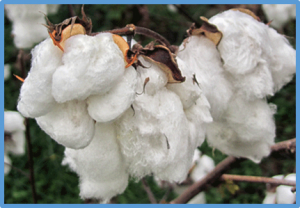
Numerous studies have been conducted to investigate the genetic basis of Fusarium wilt (FW, caused by Fusarium oxysporum f. sp. vasinfectum, FOV) resistance using bi-parental and association mapping populations in cotton. In this study, a multi-parent advanced generation inter-cross (MAGIC) population of 550 recombinant inbred lines (RILs), together with their 11 Upland cotton (Gossypium hirsutum) parents, was used to identify QTLs for FOV race 4 (FOV4) resistance.
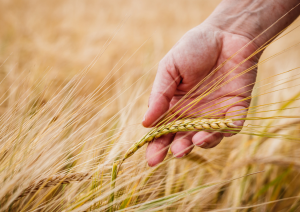
Many valuable cereal crops come from the same grass family, Poaceae, including barley, wheat, rice, and maize. Scientists have been working to better understand the molecular mechanisms behind this lineage's survival to ensure that these plants continue to flourish and feed the world in years to come. Grasses have evolved into the thriving varieties they are today while diseases that infect them evolved alongside them. The Pucciniales, an order of fungal pathogens that cause rust diseases includes stripe rust, Puccinia striiformis, which is present in all major wheat-growing areas of the world.
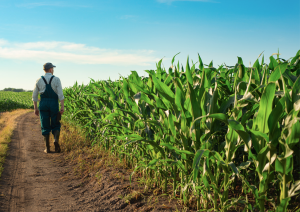
North Carolina State University researchers have shown that the maize gene HPC1 modulates certain chemical processes that contribute to flowering time, and originated from “teosinte mexicana,” a precursor to modern-day corn that grows wild in the highlands of Mexico. Maize grown in higher altitudes, like the highlands of Mexico, needs special accommodations to grow successfully.