


News & Events
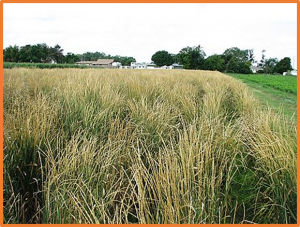
Perennial grains have the potential to provide food for humans and decrease the negative impacts of annual agriculture. Intermediate wheatgrass (IWG, Thinopyrum intermedium, Kernza®) is a promising perennial grain candidate that The Land Institute has been breeding since 2003. We evaluated four consecutive breeding cycles of IWG from 2016 to 2020 with each cycle containing approximately 1100 unique genets.
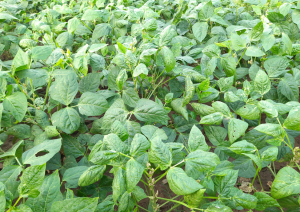
On June 30, 2022, Ghana's National Biosafety Authority approved the genetically engineered (GE) Bt cowpea event 709A for import and/or use without conditions, marking the first GE crop to be approved for use in Ghana. The approval is for 10 years and is renewable. Bt cowpea 709A targets the Maruca pod borer which reduces cowpea yields by 20-80 percent. Field testing for this event began in Ghana in 2016, and now the developer,

ISAAA Inc., BioTrust Global, the Malaysian Biotechnology Information Center (MABIC), Murdoch University, and the National Seed Association Malaysia will hold the workshop Policy Considerations for Gene Editing: The Asian and Australian Perspective at Sunway Clio Hotel, Petaling Jaya, Malaysia from August 23 to 25, 2022. The registration is now open for interested participants.
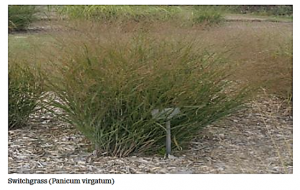
Grass species exhibit large diversity in panicle architecture influenced by genes, the environment, and their interaction. The genetic study of panicle architecture in perennial grasses is limited. In this study, we evaluate the genetic basis of panicle architecture including panicle length, primary branching number, and secondary branching number in an outcrossed switchgrass QTL population grown across ten field sites in the central USA through multi-environment mixed QTL analysis.
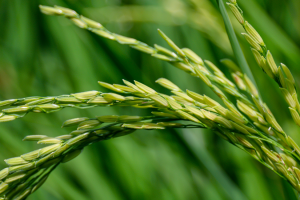
Scientists from Nanjing Agricultural University used CRISPR-Cas9 to enhance pre-harvest sprouting resistance in rice. Pre-harvest sprouting in cereal crops is a universal phenomenon that impacts grain yield and quality. Breeders have been applying various techniques, including genome editing, to fortify seed dormancy and prevent pre-harvest sprouting.

The study on the S-adenosylmethionine decarboxylase (SAMDC) gene in maize has not been reported yet. Now, scientists from Jilin Agricultural University in China found substantial evidence that its overexpression can lead to effectively improve the cold tolerance of the crop. Previous studies have found the SAMDC gene to be effective in improving the performances of tobacco, cotton, and herbaceous plants.
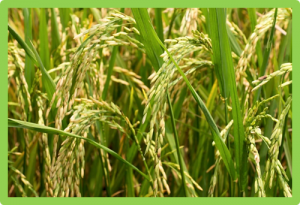
Complex biological processes such as plant growth and development are often under the control of transcription factors that regulate the expression of large sets of genes and activate subordinate transcription factors in a cascade-like fashion. Here, by screening candidate photosynthesis-related transcription factors in rice, we identified a DREB (Dehydration Responsive Element Binding) family member, OsDREB1C, in which expression is induced by both light and low nitrogen status.
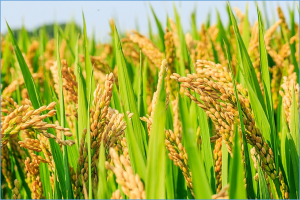
An extra copy of the OsDREB1C gene in rice boosted its nitrogen intake, resulting in more efficient photosynthesis and 40% more in grain yield. The Chinese scientists who conducted the research are now looking at the possibility of doing the same for other plants like wheat. Scientists from the Chinese Academy of Sciences started investigating 118 rice and maize regulatory genes that encode transcription factors previously identified to be important to photosynthesis.
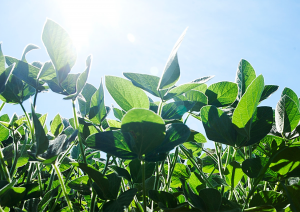
The collaboration between 2Blades Foundation and Corteva Agriscience has produced a transgenic trait for Asian Soybean Rust (ASR) resistance, with successful field trials of Latin American soybean varieties containing the new ASR transgene. Due to mild winter conditions, soybeans in Latin America are particularly vulnerable to ASR, a fungal disease that can cause 10-80% yield loss in countries where it is established, carrying significant risk for farmers and agricultural systems.
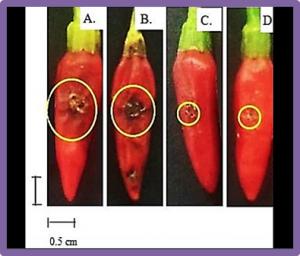
In several countries throughout the world, the whitefly-transmitted begomovirus causes massive yield losses in pepper (Capsicum spp.) production. Although introgression of the genetic resistance against begomovirus to commercial cultivars is strongly required, the recently discovered recessive resistance gene pepy-1, which encodes the messenger RNA surveillance factor Pelota, is the only begomovirus resistance gene identified in Capsicum so far. In this study, we fine-mapped another begomovirus resistance gene from PG1-1 (C. annuum),

High school students in the U.S. are now learning about CRISPR, a decade after it started as a vital tool in genetic research. Some specialized schools include hands-on experiments using CRISPR as part of their lessons on biotechnology. "Visualizing and comprehending what's happening on the molecular level is usually always the challenge,” said Katy Gazda, a high school biotechnology teacher who has experienced discussing CRISPR in her classes in 2021.
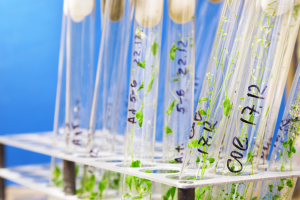
Researchers from Duke University and Howard Hughes Media Institute found the gene linked to plants' temperature sensitivity and devised a way to fix the plant's immune system at higher temperatures. The open-access article about the study is published in Nature. The research team identified the gene CBP60g, which codes a protein controlling how other genes involved in the salicylic acid pathway are expressed.