


News & Events
Using an approach called chemical biology, Australian scientists are using drugs to learn how a plant's biological system functions. Particularly, their objective is to understand how metabolism affects the plant's circadian rhythm which is important to its optimization of sunlight used for photosynthesis and managing energy reserves at night. Circadian clocks work by turning on and off at least one-third of animal genes and proteins every day.

Scientists from the UK Centre for Ecology and Hydrology (UKCEH) investigated the impact of a 1,000-hectare commercial farm in Buckinghamshire on biodiversity. The results, published in Journal of Applied Ecology, showed that agri-environment schemes are beneficial to the bird and butterfly populations.The study started in 2005 and involved creating several wildlife habitats, which include seed-bearing plants for birds, insects, and small mammals.
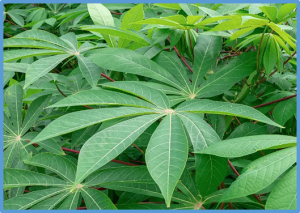
Cassava (Manihot esculenta Crantz) is the sixth most important food crop and consumed by 800 million people worldwide. In Africa, cassava is the second most important food crop after maize and Africa is the worlds' largest producer. Though cassava is not one of the main commodity crops in South Africa, it is becoming a popular crop among farming communities in frost-free areas, due to its climate-resilient nature.
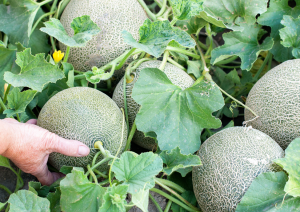
A collaboration between the Centre for Research in Agricultural Genomics (CRAG) and the Institute of Agrifood Research and Technology (IRTA) in Spain and the Institute of Biology of the École Normale Supérieure in Paris has identified the role of three genes in melon ripening, giving insights into the ripening mechanism of the fruit. Marta Pujol, researcher at IRTA and CRAG, said that melon ripening is a complex process that involves several genes that need to be identified to understand how it works. The researchers worked on cantaloupe, a climacteric variety of melon.
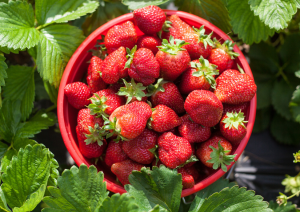
Rising global temperatures affect pollinator populations and food production is becoming increasingly difficult for farmers. A new study at the University of Maryland addresses this issue, giving insights into how flowering plants develop fruits and seeds. In the study led by Zhongchi Liu, the team aimed to discover how fertilization — or pollination — triggers the fruit development process. The team suspected that an internal communication system signals the plant to develop fruit, but the researchers were unsure how that system was being activated by fertilization or pollination.
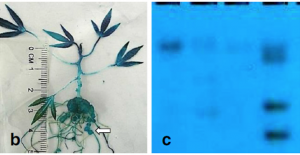
The workshop addressed "Current situation of cassava mosaic disease and solutions" on July 28 2022 at the IAS. VAAS organized the workshop mentioning "Enhancing the scientific quality và efficiency to meet the demand of science and technology markets" at Buon Me Thuot, Dak Lak; July 29 2022
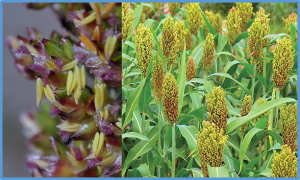
Salt tolerance in plants is triggered by various environmental stress factors and endogenous hormonal signals. Numerous studies have shown that WRKY transcription factors are involved in regulating plant salt tolerance. However, the underlying mechanism for WRKY transcription factors regulated salt stress response and signal transduction pathways remains largely unknown. In this study, the SbWRKY55 transcription factor was found to be the key component for reduced levels of salt and abscisic acid in SbWRKY55 overexpression significantly reduced salt tolerance in sorghum and Arabidopsis.
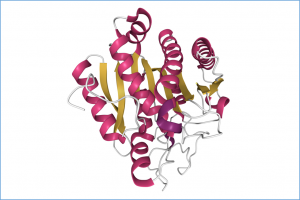
Finding out the 3D structure of almost all protein will be as easy as googling. DeepMind, the Google-owned artificial intelligence (AI) company based in London, created AlphaFold, the revolutionary AI network that can predict the structures of over 200 million proteins of about 1 million species. “Essentially, you can think of it covering the entire protein universe,” said DeepMind Chief Executive, Demis Hassabis. “We're at the beginning of a new era of digital biology,” he added.
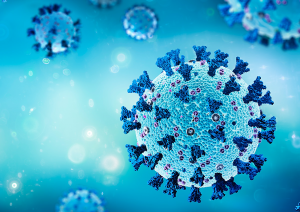
Researchers led by a team at Duke Health in Duke University used CRISPR technology to successfully prevent and treat COVID infections in proof-of-concept experiments conducted in mice. The experiments modified a currently available lipid nanoparticle to deliver a specific CRISPR-Cas13 mRNA that generates an inhospitable environment in the lungs for SARS-CoV-2 infection. Duke University professor Qianben Wang and colleagues focused on an enzyme that breaks down protein
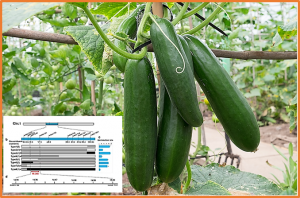
Low temperature reduces the percentage of seeds germinating and delays seed germinating time, thus posing a threat to cucumber production. However, the molecular mechanism regulating low temperature germination in cucumber is unknown. We here dissected a major quantitative trait locus qLTG1.1 that controls seed germination at low temperature in cucumber. First, we fine-mapped qLTG1.1 to a 46.3-kb interval, containing three candidate genes.

ISAAA Inc., the Outreach Network for Gene Drive Research, and the ISAAA Biotechnology Information Centers Network conducted the webinar Integrating social, economic and health aspects into the decision-making process on July 28, 2022, via Zoom. It is the third and final part of the 2022 Gene Drive Webinar Series. The webinar aimed to give an overview of the different dimensions of gene drive impact and risk assessments, including environmental and socio-economic aspects.
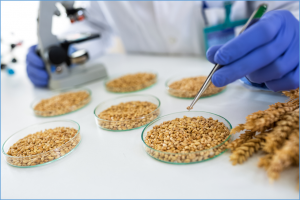
Scientists from the Chinese Academy of Sciences and Peking University reported that gene editing of an APETALA2/ethylene responsive factor (AP2/ERF) transcription factor, DUO1, could lead to better wheat grain yield. Their findings are featured in Nature Plants. Wheat is one of the most important food crops worldwide. To help improve food production, it is vital to pinpoint new locations in the wheat genome that can help improve its yield. Thus, the researchers analyzed the key genes involved in spikelet number.