


News & Events

Scientists from the University of California Davis are offering a sustainable alternative agricultural practice that can reduce the use of excessive nitrogen fertilizers by modifying cereal plants to produce more chemicals to fix atmospheric nitrogen gas – the same chemicals used by soil bacteria that does the same. The scientists first identified compounds in rice plants that boosted the nitrogen-fixing activity of the bacteria using chemical screening and genomics.

Scientists at Yale University have found that the common weed Portulaca oleracea, commonly known as purslane, holds the key to creating drought resistant crops. According to the Yale study published in Science Advances, purslane integrates two metabolic pathways that enable the weed to resist drought while remaining highly productive. Purslane is unique because it possesses both C4 and CAM functions. Scientists have previously believed that C4 and CAM operated independently in the leaves of purslane.
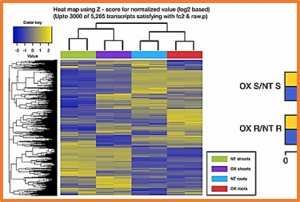
Land plants have developed a comprehensive system to cope with the drought stress, and it is operated by intricate signaling networks, including transcriptional regulation. Herein, we identified the function of OsNAC17, a member of NAC (NAM, ATAF, and CUC2) transcription factor family, in drought tolerance. OsNAC17 is localized to the nucleus, and its expression was significantly induced under drought conditions
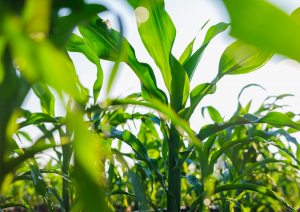
A two-year project at Texas A&M AgriLife Research is combining corn breeding and entomology to tackle some of the major issues of corn production in the U.S. The project will address current challenges such as increased pest resistance, decreased efficacy of Bt technology, vulnerability to caterpillar pests such as fall armyworm (FAW), and preharvest mycotoxin contamination, and is led by Texas A&M AgriLife Research entomologist Megha Parajulee and corn breeder Wenwei Xu.

A new economic model in research conducted by Cornell University, Johns Hopkins University, and international partners in Lancet Health reveals that while plant-based 'beef' alternatives help reduce carbon dioxide emissions, their growth and popularity are threatening more than 1.5 million jobs in the U.S. According to the paper published in The Lancet, the U.S. could reduce its agricultural carbon footprint by 2.5% to 13.5% by using meat protein alternatives, mostly through the reduction of the number of cows needed for for beef production by two to 12 million.
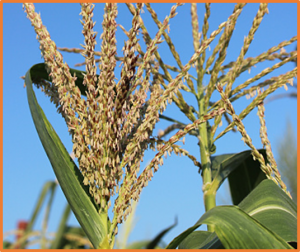
Maize (Zea mays) originated in tropical areas and is thus susceptible to low temperatures, which pose a major threat to maize production. Our understanding of the molecular basis of cold tolerance in maize is limited. Here, we identified bZIP68, a basic leucine zipper (bZIP) transcription factor, as a negative regulator of cold tolerance in maize. Transcriptome analysis revealed that bZIP68 represses the cold-induced expression of DREB1 transcription factor genes.

The Government of Vietnam has recognized Jimmy Smith, director general of the International Livestock Research Institute (ILRI), and Hung Nguyen, co-leader of ILRI’s Animal Human Health program, for their contributions to agricultural research and development in the country. They received the Medal for Contribution to the Cause of Agriculture and Rural Development from the Ministry of Agriculture and Rural Development at a ceremony on 3 August 2022 in Hanoi, Vietnam.
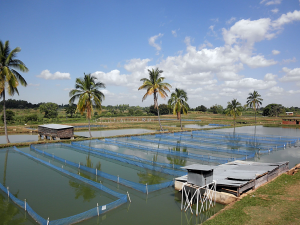
Global non-governmental organization WorldFish sees opportunities for investors to take on the low-value species market across Africa. WorldFish is present in Egypt, Zambia and Malawi and recently also entered the Nigerian market by transferring 50,000 Genetically Improved Tilapia Fish (GITF) fingerlings to the country earlier this spring.
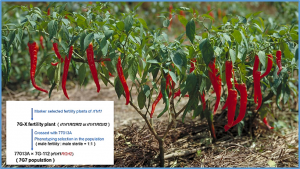
Male fertility restoration genes of chili pepper restorer line G164 (Capsicum annuum L.) were studied using molecular marker genotypes of an F2 population (7G) of G164 crossed with the cytoplasmic male sterility line 77013A. The ratio of sterile to fertile single plants in the F2 population was 1:15. This result indicates that chili pepper G164 has two dominant restoration genes, which we designated as Rf1 and Rf2. An individual plant recessive for Rf1 and heterozygous for Rf2, 7G-112 (rf1rf1Rf2rf2)
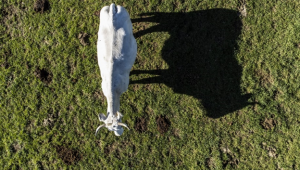
The benchmark for world food commodity prices declined significantly in July, with major cereal and vegetable oil prices recording double-digit percentage declines, the Food and Agriculture Organization of the United Nations (FAO) reported today. The closely-watched FAO Food Price Index averaged 140.9 points in July, down 8.6 percent from June, marking the fourth consecutive monthly decline since hitting all-time highs earlier in the year.
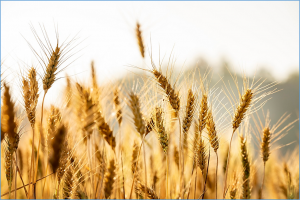
By exploring the genetic population of almost 1,000 wild and domesticated species of rye, German scientists were able to identify recombining regions of the crop, which enabled them to explain why cultivated rye is less resistant to stresses brought by climate change than its wild species. Their study investigated how the genetic material within a plant mixes along a chromosome during cell division in the recombining regions.
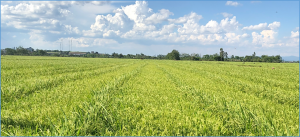
Three-line hybrid rice obtained through cytoplasmic male sterility (CMS) has helped increase the yield of rice globally, and the wild abortive (WA)-type cytoplasm from wild rice (Oryza rufipogon Griff.) is used widely in three-line indica hybrids. The identification and mapping of the Restorer-of-fertility (Rf) genes in maintainer lines aided in uncovering the genetic basis of fertility restoration of WA-type CMS and the development of WA-type hybrids