


News & Events
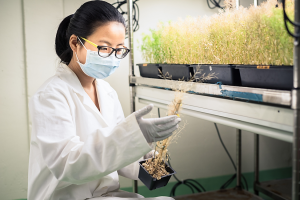
Pennsylvania State University molecular plant geneticists conducted the first-ever investigation on epigenetic reprogramming code and the reprogramming effects, which are vital for breeding crops that can withstand extreme weather caused by climate change. When plants sense environmental triggers such as drought or extreme weather, they naturally reprogram their genetic material for survival. To breed more resilient crops, the researchers stress that the chemical code that turns on those changes can be deciphered and duplicated
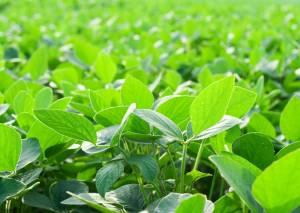
For the first time, researchers from the research project Realizing Increased Photosynthetic Efficiency (RIPE) have proven in field trials that the multigene bioengineering of photosynthesis increases the yield of soybeans. After more than a decade, the collaborative team led by the University of Illinois and scientists at Lancaster University has transgenically altered soybean plants to increase the efficiency of photosynthesis, resulting in greater yields without loss of quality.
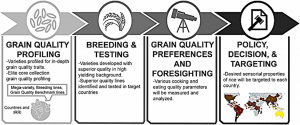
The eating and cooking quality (ECQ) of rice is critical for determining its economic value in the marketplace and promoting consumer acceptance. It has therefore been of paramount importance in rice breeding programs. Here, we highlight advances in genetic studies of ECQ and discuss prospects for further enhancement of ECQ in rice. Innovations in gene- and genome-editing techniques have enabled improvements in rice ECQ. Significant genes and quantitative trait loci (QTLs) have been shown to regulate starch composition, thereby affecting amylose content and thermal and pasting properties.
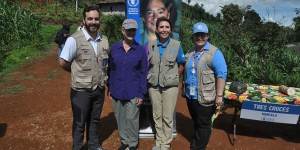
Guatemala and Honduras lie in the heart of the Dry Corridor—a dry strip of land running throughout Central America that is particularly exposed to climate change. As well as economic and geographic ties, the two countries also share challenges—including inequality, malnutrition and violence—prompting many to migrate north to the United States. But change is unfolding. Rural communities are tackling these challenges, with passion, hope, commitment, as well as international support.
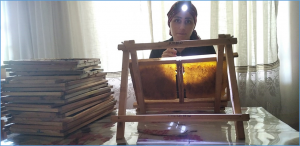
In the highlands of southern Türkiye, the hum of bees provides the springtime soundtrack and the town of Bozkır is honey heaven. Thanks to the clean air, plentiful thyme and pine, and cold-water springs, 85,000 kilograms of honey are produced here every year. Bees are perhaps the most important creatures of the ecosystem and our food systems. Three-quarters of the crops we grow for food depend, in some part, on pollinators, so by protecting bees, beekeepers are also protecting biodiversity.
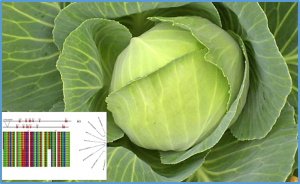
Cabbage is a plant-vernalization-responsive flowering type. In response to cold, BoFLC2 is an important transcription factor, which allows cabbage plants to remain in the vegetative phase. However, there have been few reports on the detailed and functional effects of genetic variation in BoFLC2 on flowering time in cabbage. Herein, BoFLC2E and BoFLC2L, cloned from extremely early and extremely late flowering cabbages, respectively, exhibited a 215-bp indel at intron I, three non-synonymous SNPs and a 3-bp indel at exon II. BoFLC2L was found to be related to late flowering,
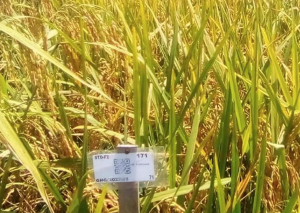
Recently, the Institut des Sciences Agronomiques du Burundi (ISABU) released eleven new and improved rice varieties that are resilient to climate change, disease-tolerant, high yielding with great nutritional value, and with good grain quality. These rice varieties were released in collaboration with the International Rice Research Institute-Burundi under World Bank’s variety development program through the Great Lakes Regional Integrated Agriculture Development Project (Projet Régional de Développement Agricole Intégré dans les Grands Lacs or PRDAIGL).
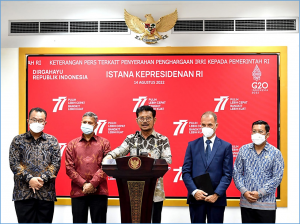
To acknowledge the efforts that Indonesia put into achieving rice self-sufficiency, the International Rice Research Institute (IRRI) awarded President Joko Widodo with a commemorative plaque for “Achieving Agri-Food Systems Resiliency and Rice-sufficiency During 2019-2021 through the Application of Rice Technology” in a ceremony at the State Palace in Jakarta on 14 August 2022. Presenting the award was IRRI Director General Dr. Jean Balié.
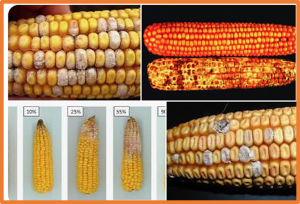
Fusarium verticillioides is a common maize (Zea mays L.) pathogen that causes Fusarium ear rot (FER) and produces the mycotoxin fumonisin (FUM). This study empirically compared phenotypic selection (PS) and genomic selection (GS) for improving FER and FUM resistance. Three intermating generations of recurrent GS were conducted in the same time frame and from a common base population as two generations of recurrent PS. Lines sampled from each PS and GS cycle were evaluated in three North Carolina environments in 2020. We observed similar cumulative responses to GS and PS, representing decreases of about 50% of mean FER and FUM compared to the base population.
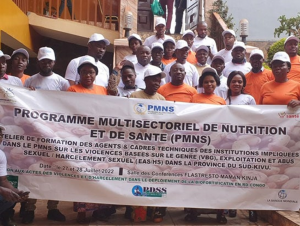
The Government of the Democratic Republic of Congo (DRC) has launched a major initiative to scale sustainable production and consumption of biofortified staple crops, to help address persistently high rates of malnutrition in this central African country of 93 million people. The initiative is part of the World Bank-funded Multisectoral Nutrition and Health Project (French acronym PMNS) to increase the range and scope of interventions aimed in particular at children ages 0-23 months, and women of reproductive age.

July 27, 2022 – CGIAR’s System Board has appointed Dr. Claudia Sadoff, current Convener of the inaugural CGIAR Executive Management Team (EMT) established for a two-year term in August 2020, and Managing Director for Research Delivery and Impact, as CGIAR’s single top executive.In the role of CGIAR’s Executive Managing Director (EMD), Dr. Sadoff will lead a multi-disciplinary EMT,
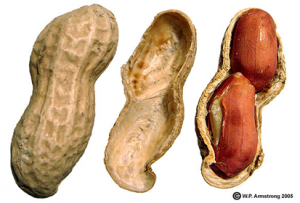
Auxin response factors (ARFs) play important roles in plant growth and development; however, research in peanut (Arachis hypogaea L.) is still lacking. Here, 63, 30, and 30 AhARF genes were identified from an allotetraploid peanut cultivar and two diploid ancestors (A. duranensis and A. ipaensis). Phylogenetic tree and gene structure analysis showed that most AhARFs were highly similar to those in the ancestors. By scanning the whole-genome for ARF-recognized cis-elements, we obtained a potential target gene pool of AhARFs, and the further cluster analysis and comparative analysis showed that numerous members were closely related to root development.