


News & Events
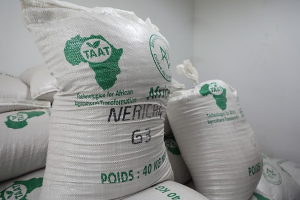
The African Development Bank is set to release an additional $27.41 million to implement Phase II of its flagship agricultural initiative, “Technologies for African Agricultural Transformation” (TAAT). The goal is to increase farming households’ productivity and incomes by giving them access to climate-resilient technologies in 36 low-income African countries by 2025. The decision to make this new disbursement was taken in Abidjan by the Bank Group’s Board of Directors on Friday, 15 July 2022.
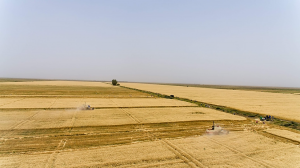
America’s largest organization of journalists and media professionals of colour has named the African Development Bank a “Salute to Excellence” award winner for the Bank’s communication around its Technologies for African Agricultural Transformation (TAAT) programme.The National Association of Black Journalists cited the Bank’s excellence in online media relations and marketing about the landmark initiative, also known as TAAT.
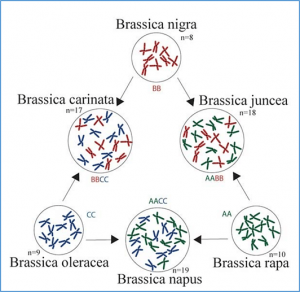
Interspecific hybridization and allopolyploidization present an important pathway for plant evolution and breeding. In this study, different types of digenomic autoallohexaploids with two or four copies of two subgenomes (AAAACC, AACCCC, AAAABB, BBBBCC, BBCCCC) were synthesized by the crosses between three Brassica allotetraploids and their diploid progenitors and the chromosome doubling, and their meiotic behaviors were analyzed by fluorescence in situ hybridization (FISH).

Modeling and inference are central to most areas of science and especially to evolving and complex systems. Critically, the information we have is often uncertain and insufficient, resulting in an underdetermined inference problem; multiple inferences, models, and theories are consistent with available information. Information theory (in particular, the maximum information entropy formalism) provides a way to deal with such complexity.

On April 19, 2022, Florida Governor Ron DeSantis signed into law an academic tenure reform bill that requires all tenured faculty in Florida to be reviewed by the board of directors every five years (1). A few months ago, Texas Lieutenant Governor Dan Patrick stated that one of his top priorities is to eliminate tenure at all public universities in Texas; he also said that for already-tenured professors, the tenure review cycle would be changed from every six years to every year
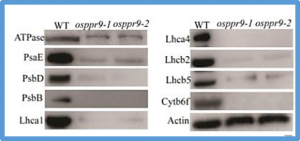
Photosynthesis occurs mainly in chloroplasts, whose development is regulated by proteins encoded by nuclear genes. Among them, pentapeptide repeat (PPR) proteins participate in organelle RNA editing. Although there are more than 450 members of the PPR protein family in rice, only a few have been shown to affect RNA editing in rice chloroplasts. New rice germplasm and mutants were created by gene editing technology, which could be used for rice breeding and gene function study, respectively.
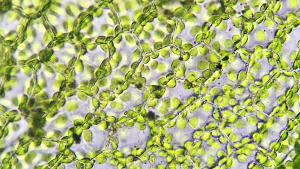
Researchers from China National Rice Research Institute conducted a study to assess the role of OsPPR9 in chloroplast RNA editing in rice. Their findings are published in the Journal of Integrative Agriculture. Photosynthesis happens particularly in chloroplasts, which are developed through the regulation of proteins encoded by nuclear genes. Among these proteins, the pentapeptide repeat (PPR) proteins are involved in organelle RNA editing

Chinese scientists optimized a new method of developing sugarcane that is resistant to the sugarcane streak mosaic virus (SCSMV). The findings provide new options for researchers to improve the breeding efforts to develop sugarcane resistant to multiple virus strains. RNA viruses in sugarcane are one of the causes of low yield and decreased sugar content. Scientists are trying to develop sugar varieties with broad-spectrum virus resistance to help solve the problem.
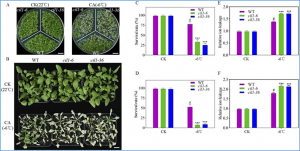
With the intensification of global warming, extreme weather events have occurred more frequently, among which cold stress has become one of the major environmental factors that restrict global crop yield and production. Multiple long noncoding RNAs (lncRNAs) have been predicted or recognized in the plant response to cold stress, however, the molecular biological functions of most of these RNAs are still poorly understood
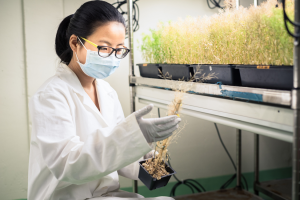
Plant Science journal reported a long noncoding RNA that improves cold stress tolerance in Arabidopsis. Cold stress is one of the major environmental factors that impact global crop yield and production. Several long noncoding RNAs have been known to be involved in plant response to cold stress, but their molecular biological role is still to be explored.
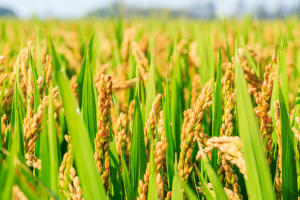
Punjab Agricultural University scientists developed sheath blight resistant rice using an antifungal gene from Trichoderma. Their findings are published in Transgenic Research. Sheath blight, caused by the fungal pathogen Rhizoctonia solani, is one of the most devastating threats to rice production that accounts for up to 50% of yield losses. The pathogen penetrates leaf blades and sheaths, which causes plant necrosis.
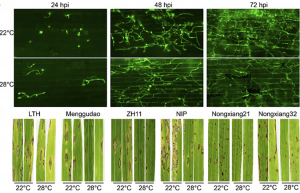
Changes in global temperatures profoundly affect the occurrence of plant diseases. It is well known that rice blast can easily become epidemic in relatively warm weather. However, the molecular mechanism remains unclear. In this study, we show that enhanced blast development at a warm temperature (22°C) compared with the normal growth temperature (28°C) is rice plant-determined. Comparative transcriptome analysis revealed that jasmonic acid (JA) biosynthesis and signaling genes in rice could be effectively induced by Magnaporthe oryzae at 28°C but not at 22°C.