


News & Events

The Brandizzi Laboratory of the Michigan State University (MSU) is sending seeds enriched in amino acids of the plant Arabidopsis thaliana to space to investigate if fortifying seeds on Earth could create a more sustainable path to growing healthier, nutrient-packed plants in space as a source of food for space travelers. The experiment is one of four that is part of the National Aeronautics and Space Administration's (NASA) Biological and Physical Sciences' Biological Experiment 01 (BioExpt-01) mission through Artemis I that will serve as a pathfinder for biological research beyond low-Earth orbit

Opening ceremony of “Innnovation and creation club on vegetable, flower & fruit in Southern Vietnam” at the IAS on August 9 2022
Brainstorming on specific sweet potato production areas at Châu Thành and Tân Hồng, Đồng Tháp province; 11-13 August 2022
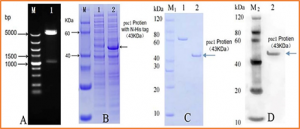
Various RNA viral diseases on sugarcane result in yield loss and decreased sugar content. Breeding new varieties with virus resistance is the main goal of the sugarcane breeding program. Both single-stranded and double-stranded RNA viruses generated a double-stranded RNA replicative form (RF) during the replication cycle progress. While double-stranded RNA-specific ribonuclease (PAC1) encoded by the Pac1 gene (from Schizosaccharomyces pombe)

After a comprehensive study of plants across the U.S., researchers have concluded that plants able to fix atmospheric nitrogen are most diverse in arid regions of the country, which runs counter to the prevailing assumption that nitrogen-fixers, are comparatively most diverse in environments where soil nitrogen is limited. Plants incorporate nitrogen into nearly every structure and reaction that takes place in their cells

Feeding the world can be done through the existing scientific innovations including gene editing, but achieving it depends on regulations. This is one of the main messages of the gene editing experts to over 60 participants of the Workshop on Policy Considerations for Gene Editing: The Asian and Australian Perspective held on August 23-25, 2022 at Sunway Clio Hotel, Petaling Jaya, Malaysia.
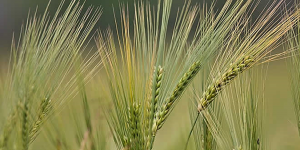
The goal of any plant breeding program is to maximize genetic gain for traits of interest. In classical quantitative genetics, the genetic gain can be obtained from what is known as “Breeder’s equation”. In the past, only phenotypic data were used to compute the genetic gain. The advent of genomic prediction (GP) has opened the door to the utilization of dense markers for estimating genomic breeding values or GBV. The salient feature of GP is the possibility to carry out genomic selection with the assistance of the kinship matrix, hence improving the prediction accuracy and accelerating the breeding cycle.

In 2021, the CRISPR/CRISPR-associated genes market was valued at US$1.56 billion. With a compound annual growth rate (CAGR) of 16.67%, the market is expected to reach US$3.73 billion by 2032, Market.us reported. CRISPR has a wide array of applications, particularly for genome editing. Its popularity has increased over the years since its discovery as a tool in genetics. Since then, CRISPR has been driving developments in genome editing across medicine and biotechnology.

CRISPR-Cas9-mediated genome editing in grapes was first reported in 2016. With the increasing interest in using this new breeding technique in grapes, scientists from the Chinese Academy of Sciences evaluated genome editing in grapes using newly developed CRISPR-based tools such as the CRISPR/LbCpf1 system to increase existing evidence that gene editing tools are useful in improving the crop. The scientists evaluated four different markers and found that the Enhanced Green Fluorescent Protein (EGFP) was not harmful to grape cells, but its signal was not easily detected.

Plant endogenous small RNAs (sRNAs) are involved in various plant developmental processes. In Arabidopsis, sRNAs combined with ARGONAUTE (AGO) proteins are incorporated into the RNA-induced silencing complex (RISC), which functions in RNA silencing or biogenesis of trans-acting siRNAs (ta-siRNAs). However, their roles in melon (Cucumis melo L.) are still unclear. Here, the melon shoot organization 1 (mso1) mutant was identified and shown to exhibit pleiotropic phenotypes in leaf morphology and plant architecture.

Cure Rare Disease, a Boston-based nonprofit organization developing genetic medicines, has received approval from the Food and Drug Administration (FDA) to administer its CRISPR-based therapeutic that halts the progression of Duchenne muscular dystrophy. Duchenne muscular dystrophy is a rare genetic disease caused by a mutation in the gene responsible for dystrophin production. It can affect all muscle types and leads to loss of mobility and eventually to respiratory and cardiac failure. The disease impacts 1 in 3,500 males and is extremely rare in females.
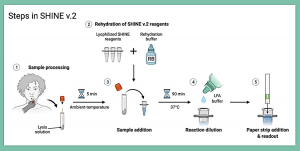
Researchers from Princeton University and the Broad Institute have created an easy-to-use diagnostic COVID-19 test that is more sensitive than the commonly used at-home antigen tests and allows for the rapid and specific detection of SARS-CoV-2 variants in point-of-care settings. The improved COVID-19 test detects the virus using a different mechanism than the more familiar clinic-based PCR or at-home antigen tests.
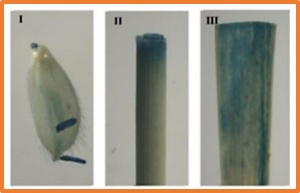
Rice (Oryza sativa L.) is one of the main food crops for human survival, and its yield is often restricted by abiotic stresses. Drought and soil salinity are among the most damaging abiotic stresses affecting today's agriculture. Given the importance of abscisic acid (ABA) in plant growth and abiotic stress responses, it is very important to identify new genes involved in ABA signal transduction. We screened a drought-inducing gene containing about 158 amino acid residues from the transcriptome library of rice exposed to drought treatment, and we found ABA-related cis-acting elements and multiple drought-stress-related cis-acting elements in its promoter sequence.