


News & Events

The environmental and economic costs caused by invasive species in the United States are estimated at more than US$120 billion per year. Invasive species quickly spread as they have few or no natural predators. Introduced non-native insects can decimate crops and forests, and invasive rodents are also disruptive, particularly on island ecosystems, where they are the leading cause of plant and animal extinctions. In the U.S., exotic plant pests and diseases threaten food security, quality of life, and the economy.
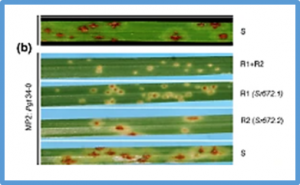
The Aegilops tauschii (wheat D-genome progenitor) accessions RL 5271 and CPI110672 were identified as resistant to multiple races (including the Ug99) of the wheat stem rust pathogen Puccinia graminis f. sp. tritici (Pgt). This study was conducted to identify the stem rust resistance (Sr) gene(s) in both accessions. Genetic analysis of the resistance in RL 5271 identified a single dominant allele (SrRL5271) controlling resistance,

ISAAA Inc., in partnership with the Outreach Network for Gene Drive Research, launched a policy brief that tackles the importance of science-based and case-by-case risk assessment for gene drives. The policy brief, titled Risk Assessment for Gene Drive Organisms, is the first of a series that aims to present proposed policy options that address issues relating to gene drive technology. The following questions were answered in the first policy brief:
ISAAA Inc., in partnership with the Outreach Network for Gene Drive Research, launched a policy brief that tackles the importance of science-based and case-by-case risk assessment for gene drives. The policy brief, titled Risk Assessment for Gene Drive Organisms, is the first of a series that aims to present proposed policy options that address issues relating to gene drive technology. The following questions were answered in the first policy brief:
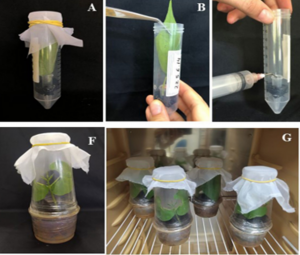
Common bean (Phaseolus vulgaris L.) is a staple food in Brazil with both nutritional and socioeconomic importance. As an orphan crop, it has not received as much research attention as the commodity crops. Crop losses are strongly related to virus diseases transmitted by the whitefly Bemisia tabaci, one of the most important agricultural pests in the world. The main method of managing whitefly-transmitted viruses has been the application of insecticides to reduce vector populations.
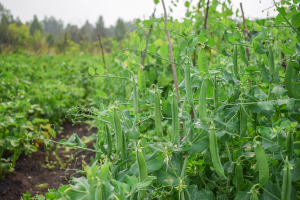
Brazilian researchers developed a line of transgenic common bean that was found to have a significant mortality effect against whitefly (Bemisia tabaci) while producing no effects on other insects. This can potentially provide farmers an alternative measure to combat the devastating pest without resulting to chemical pesticides. Whiteflies are vectors to viruses that can affect yield and grain quality of crops. It is also a common pest of the common bean, and farmers often use chemical pesticides to control it and the spread of disease.
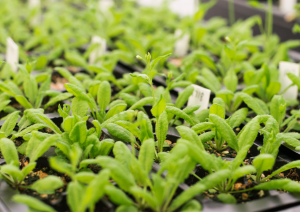
Research led by the Spanish National Research Council (Consejo Superior de Investigaciones Científicas, CSIC) has developed a mathematical model based on temperature-regulated processes that can predict plant response to global warming. The research, published in the journal Science Advances, identified the role of COP1 protein as a growth promoter of Arabidopsis plants in long days and high environmental temperatures and its interaction with other cellular factors.
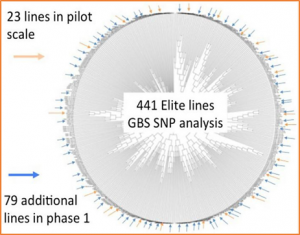
The SoyaGen project was a collaborative endeavor involving Canadian soybean researchers and breeders from academia and the private sector as well as international collaborators. Its aims were to develop genomics-derived solutions to real-world challenges faced by breeders. Based on the needs expressed by the stakeholders, the research efforts were focused on maximizing realized yield through optimization of maturity and improved disease resistance.
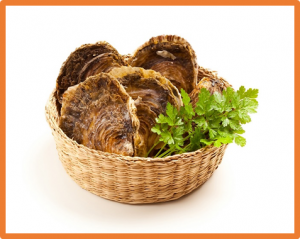
Two separate studies by scientists led by the Roslin Institute of the University of Edinburgh in Scotland and the University of Santiago de Compostela in Spain found new information about the oyster's genome that can help improve its selective breeding approaches. The results can potentially help achieve food security and sustainability of the oyster industry.

Researchers from The Pennsylvania State University (Penn State) report in a new study that flavonoids produced by sorghum leaves show promising results in combating fall armyworm larvae. When sprayed on the leaves of corn, sorghum flavonoids stunt the growth of fall armyworm and often kill the pest. The research group led by Surinder Chopra, professor of maize genetics at Penn State has studied mutant lines of corn that overproduce the flavonoids and has developed new lines that combine flavonoid overproduction with other desirable traits.
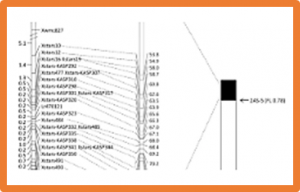
Leaf rust, caused by Puccinia triticina, is the most common and widespread rust disease in wheat. Races of Puccinia triticina evolve rapidly in the southern Great Plains of the USA, and leaf rust resistance genes often lose effectiveness shortly after deployment in wheat production. PI 470121, a wheat breeding line developed by the University of Zagreb in Croatia, showed high resistance to Puccinia triticina races collected from Oklahoma, suggesting that PI 470121 could be a leaf rust resistance source for the southern Great Plains of the USA.
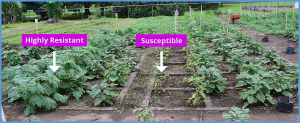
Researchers at the University of the Philippines Los Baños (UPLB) led by Dr. Lourdes D. Taylo are using innovative technologies to develop improved eggplant varieties that are resistant to eggplant fruit and shoot borer (EFSB) and leafhopper (LH). The multi-disciplinary team is using genomics, IT-based phenotyping platforms, molecular marker technologies, and new breeding techniques to fast-track this development.