


News & Events
The 4th International Workshop on Regulatory Approaches for Agricultural Applications of Animal Biotechnologies will take place in São Paulo, Brazil, on September 12-16, 2022. Topics to be discussed include animal breeding, animal biotechnologies in the pipeline, biosafety and regulatory approaches, and risk assessment.
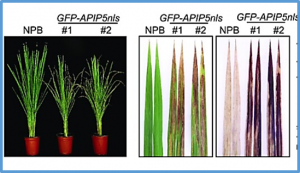
Many transcription factors (TFs) in animals bind to both DNA and mRNA, regulating transcription and mRNA turnover. However, whether plant TFs function at both the transcriptional and post-transcriptional levels remains unknown. The rice (Oryza sativa) bZIP TF AVRPIZ-T-INTERACTING PROTEIN 5 (APIP5) negatively regulates programmed cell death and blast resistance and is targeted by the effector AvrPiz-t of the blast fungus Magnaporthe oryzae.
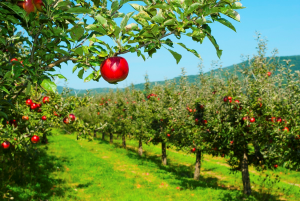
Genetically modifying trees to increase resilience has long been hounded by regulatory hurdles and public opposition, but the latest findings of the University of Manchester's scientists offer an important contribution to this debate. The apple rubbery wood virus (ARWV) has infected many apple trees worldwide. In the study, the scientists found that the symptoms of ARWV result from the reduction in lignin, a key structural material that supports the tissues of most plants.

Experts from Lund University developed a cheaper way of producing artificial pheromones that can confuse insects and prevent them to find mates. Manufacturing artificial pheromones is complex and expensive. It can cost around US$1,000 to US$3,500 per kilogram, and an additional US$40 to US$400 deployment cost, depending on the type of pest. Thus, decreasing the cost to make pheromones will make this environmentally-friendly pest control accessible to farmers, especially in developing countries.
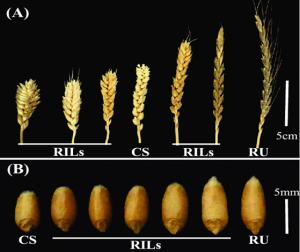
Brassinosteroids (BRs) control many important agronomic traits and therefore the manipulation of BR components could improve crop productivity and performance. However, the potential effects of BR-related genes on yield-related traits and stress tolerance in wheat (Triticum aestivum L.) remain poorly understood. Here, we identified TaD11 genes in wheat (rice D11 orthologs) that encoded enzymes involved in BR biosynthesis.
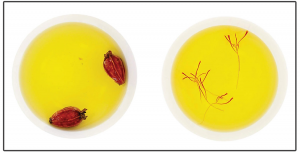
Saffron, the most expensive spice in the world is obtained from the stigma of Crocus sativa flowers. To produce a kilogram of saffron, it takes 150,000–200,000 flowers. Researchers at the King Abdullah University of Science and Technology (KAUST) have found a way to use a common garden plant to produce crocins, saffron's active ingredient, a compound with important applications in the therapeutic and food industry.
Researchers, through a Policy Forum article published in Science, are calling for a new approach to regulating genetically engineered (GE) crops. The researchers argue that current approaches for triggering safety testing vary dramatically among countries and generally lack scientific merit, particularly as advances in crop breeding have blurred the lines between conventional breeding and genetic engineering.

A better understanding of the extent of convergent selection among crops could greatly improve breeding programs. We found that the quantitative trait locus KRN2 in maize and its rice ortholog, OsKRN2, experienced convergent selection. These orthologs encode WD40 proteins and interact with a gene of unknown function, DUF1644, to negatively regulate grain number in both crops. Knockout of KRN2 in maize or OsKRN2 in rice increased grain yield by ~10% and ~8%, respectively, with no apparent trade-offs in other agronomic traits.
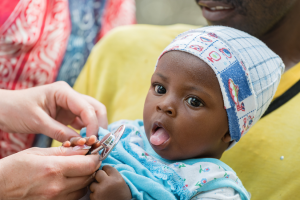
Gene drive, together with traditional vector control measures, provides a powerful combination in eliminating malaria within the Sahel region located in sub-Saharan Africa. This is according to a modeling study conducted by the Bill & Melinda Gates Foundation and Imperial College London published in the Malaria Journal. The researchers determined the impact of population replacement gene drive system and defined the parameters required to attain local elimination.

Researchers from Target Malaria and partners presented the implications of gene drive applications in a ‘species complex' such as mosquito Anopheles gambiae s.l. in a paper published in Trends in Biotechnology. Gene drives share the same environmental risk assessment considerations as other genetically modified organisms. However, they vary in their potential to spread, increase in frequency, and persist in target populations.
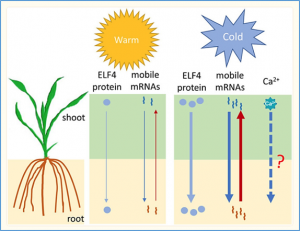
Maize (Zea mays L.) is an annual grass that originated in tropical and subtropical regions of the New World. Maize is highly sensitive to cold stress during seed gemination and the seedling phase, which can lead to reductions in plant vigor and grain production. There are large differences in the morphological and physiological changes caused by cold stress among maize varieties. In general, cold tolerant varieties have a stronger ability to maintain such changes in traits related to seed germination, root phenotypes, and shoot photosynthesis

Scientists from Peking University in China developed a highly confined gene drive model that involves the CifA and CifB genes found in the Wolbachia phage. They proposed new types of toxin-antidote gene drives that can be constructed with the genes using the information that no viable offspring is produced if a male with both the CifA and CifB mates with a female that has no CifA in her. The scientists highlighted the model's highly confined feature.