


News & Events
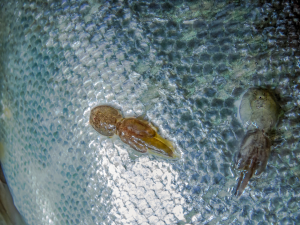
The CrispResist Project is led by the Norwegian food research institute, Nofima, in partnership with researchers from Norway, the United Kingdom, the United States, Canada, Sweden, and Australia. It aims to investigate the possibilities of using gene editing as a tool to manage the parasitic salmon louse without sacrificing the fish's health and welfare. Salmon louse is a natural parasite and one of the biggest challenges in aquaculture.
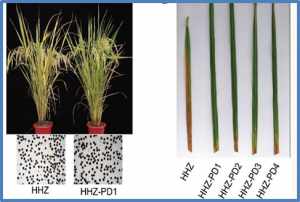
xa13 is a recessive pleiotropic gene that positively regulates rice disease resistance and negatively regulates rice fertility; thus, seriously restricting its rice breeding application. In this study, CRISPR/Cas9 gene-editing technology was used to delete the Xa13 gene promoter partial sequence, including the pathogenic bacteria-inducible expression element. Rice with the edited promoter region lost the ability for pathogen-induced gene expression without affecting background gene expression in leaves and anthers,
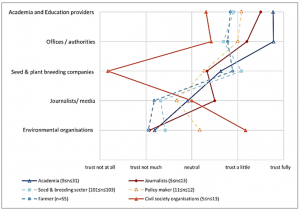
Euroseeds and partners released the results of their study that assessed the communication activities and needs of European stakeholders involved in plant breeding innovation. The findings are published in the journal Food and Energy Security. According to the study, a high level of trust is given by the stakeholders to representatives from academia. Across the different stakeholder groups, there is a high regard for topics such as safety, transparency, and sustainability.

In the race against time to feed the growing global population, all available options to attain sustainable agriculture need to be utilized. Experts from Brazil and Argentina are proposing to use organic agriculture and genome editing in crops side by side to achieve food security. Organic agriculture and agricultural biotechnology have always been publicly viewed at the opposite ends of the spectrum resulting in small farmers believing that the two agricultural systems are incompatible
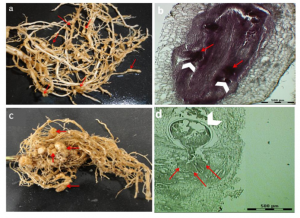
Meloidogyne javanica is among the most important nematodes that damage soybean, and although genetic resistance is the ideal control measure, there are few cultivars described as resistant among those recommended for southern Brazil. The objective of this work was to evaluate the reaction of soybean cultivars to M. javanica. The inoculum of nematodes (Est. J3) was obtained from soybean plants and inoculated into tomato plants cultivar "Santa Cruz".
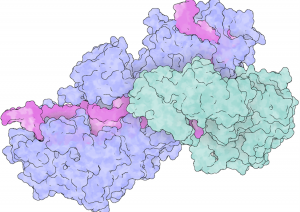
Researchers from Delft University of Technology (TU Delft) led by Stan Brouns have discovered a CRISPR-Cas system that cuts proteins instead of DNA. The discovery opens the door to the development of a range of biotechnological and medical applications, such as sensing RNA molecules in pathogens. Brouns explains that when CRISPR-Cas was discovered, it was observed to cut viral DNA in precise locations. “But the protein had more surprises in store: we later discovered that some variants of CRISPR-Cas can also cut viral RNA. Now CRISPR-Cas goes one step further cutting proteins with high precision.

The Department of Entomology at Texas A&M AgriLife, U.S. Department of Agriculture National Institute of Food and Agriculture, and Cotton Incorporated are working on a collaborative three-year project to research novel pest management tools for cotton production. Titled Modifying Terpene Biosynthesis in Cotton to Enhance Insect Resistance Using a Transgene-free CRISPR-Cas9 Approach, the project could provide positive cost-benefit results that ripple through the economy and environment.
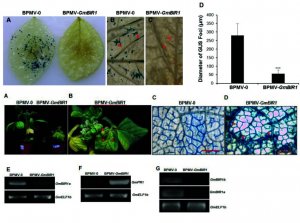
Receptor-like kinases (RLKs) are a large group of pattern recognition receptors (PRRs) and play a critical role in recognizing pathogens, transducing defense signals, and mediating the activation of immune defense responses. Although extensively studied in the model plant Arabidopsis, studies of RLKs in crops, including soybean, are limited. When a BAK1-interacting receptor-like kinase (BIR1) homolog (referred to as GmBIR1 hereafter) was silenced by the BPMV (Bean pod mottle virus)-induced gene silencing (BPMV-VIGS)
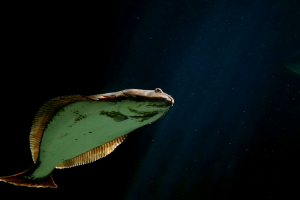
After conducting a whole-genome sequence on the Greenland Halibut, researchers expressed that the fish appear to be panmictic in most of the Northwest Atlantic. Moreover, their work enables further studies of genomic datasets to characterize the effects of climate change across different species. The long-term presence of the Greenland Halibut in the Northwest Atlantic requires accurate information about its geographic population structure and local adaptation for scientists to understand more about the species.
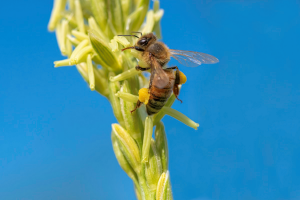
A three-year study conducted in Yitong in the Jilin province of China provided more proof of how safe transgenic maize is to non-target insects, as it concluded that two transgenic maize varieties had no significant effect on the arthropod communities in the field. The transgenic maize varieties DBN9868 and DBN9936 were planted in the field from June to September of each year from 2015 to 2017.
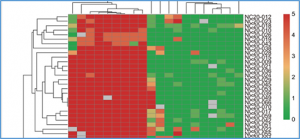
Rice blast is the most destructive disease threatening stable rice production in rice-growing areas. Cultivation of disease-resistant rice cultivars is the most effective way to control rice blast disease. However, the rice blast resistance is easy to breakdown within years by blast fungus that continually changes to adapt to new cultivars. Therefore, it is important to continuously monitor the incidence of rice blast disease and race differentiation of rice blast fungus in fields
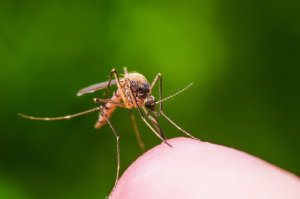
Researchers from Seattle Children's Research Institute reported the promising results of a small experimental trial of a malaria vaccine. The vaccine contains living parasites weakened by the deletion of three key genes that are essential for it to leave the liver and infect blood cells. Genetically engineered parasites cannot cause severe disease, nor can they be passed on to other people. The researchers used CRISPR to modify the parasites.