


News & Events

The Innovative Genomics Institute has launched CRISPRpedia, a free, textbook-style online resource that explains and illustrates all things CRISPR. CRISPRpedia covers CRISPR from its role in bacterial immunity to its development as a tool for genome editing. CRISPRpedia offers resources on CRISPR applications in basic research, medicine, and agriculture. Each section offers original illustrations and content written by Ph.D. scientists and edited by Jennifer Doudna and other CRISPR experts.
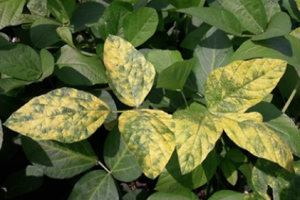
Soybean mosaic disease (SMD) can be caused by a variety of viruses, most of which have been largely overlooked in breeding programs. Effective mitigation of the adverse of SMD might result from breeding cultivars with broad-spectrum resistance. However, reports on broad-spectrum resistance to multiple virus have been limited. To catalog viral community members behind SMD, virus samples were collected from symptomatic field plots, and pathogenicity of component strains was assessed. Preliminary ELISA and PCR detection revealed that 39.58% and 66.67% of samples contained two or more virus strains, respectively.
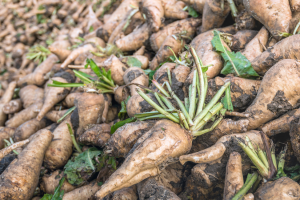
Experts from KeyGene, Wageningen University & Research, and Leibniz Institute of Plant Biochemistry have developed chicory plants with high levels of costunolide, a plant metabolite with anti-cancer activity. Their findings are reported in Frontiers in Plant Science. Costunolide was first found in Saussurea costus, a wild plant inhabiting the Himalayas, and is now planted in India but in low yields.

The CRISPR-Cas9 system has previously been found suitable for Bacillus subtilis, a microorganism commonly used in industrial enzyme production, but is limited by the selection of knockout genes, long editing cycle, and instability. Scientists have overcome these with the construction of an all-in-one plasmid CRISPR-Cas9 system which significantly improved the bacterium's transformation efficiency.
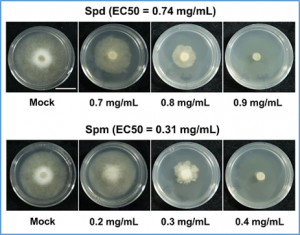
Plant immunity is activated upon perception of pathogens and often affects growth when it is constitutively active. It is still a challenge to balance plant immunity and growth in disease resistance breeding. Here, we demonstrated that soybean (Glycine max) polyamine oxidase (GmPAO) confers resistance to multiple Phytophthora pathogens, but has no obvious adverse impact on agronomic traits. GmPAO produces H2O2 by oxidizing spermidine and spermine. Phytophthora sojae induces an increase in these two substrates, and thus promotes GmPAO-mediated polyamine catabolism specifically during infection.

During an informal meeting of EU Agriculture Ministers in Prague on September 16, 2022, the main topics were food security and the role of European agriculture and food in sustainable global food production. The Ministers agreed that the EU must now act to maximize sustainable increases in agricultural production and accelerate the use of modern techniques in agriculture.
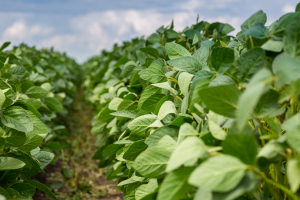
Nanjing Agricultural University researchers reported how they improved soybean's resistance to Phytophthora without compromising growth. Their findings are published in Phytopathology Research. A plant's immune system is turned on when it perceives the presence of pathogens. An active immune system impacts growth, making it a challenge to balance plant immunity and growth in breeding disease resistance.
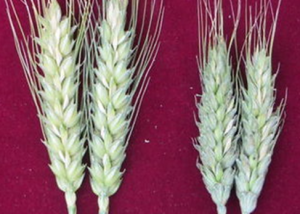
Using wild relatives of crops to identify genes related to improved productivity and resilience to climate extremes is a prioritized area of crop genetic improvement. High salinity is a widespread crop production constraint, and development of salt-tolerant cultivars is a sustainable solution. We evaluated a panel of 294 wheat accessions comprising synthetic-derived wheat lines (SYN-DERs) and modern bread wheat advanced lines under control and high salinity conditions at two locations

In official statements released by the government of Indonesia, President Joko Widodo is said to have spoken with Minister Airlangga Hartarto of the Coordinating Ministry of Economic Affairs to encourage farmers to use superior soybean varieties that have been genetically modified (GM) to maintain national food security. The statements come after Indonesia's soybean production continues to decline and the President was said to have given directions to improve the country's situation and become less dependent on imports

You are invited to the 8th Plant Genomics & Gene Editing Congress Asia on November 15-16, 2022 at DoubleTree by Hilton, Kuala Lumpur, Malaysia. Co-located with the 3rd Microbiome for Agriculture Congress Asia, this congress will dive deeper into plant genomics and gene editing through a series of case studies and examination of the latest scientific research. This congress will explore how gene editing technologies, novel breeding techniques, and omic technologies are applied for the development of key crops in Asia.
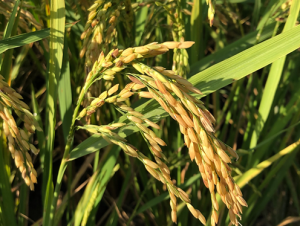
Transposon insertion polymorphisms (TIPs) are significant sources of genetic variation. Previous work has shown that TIPs can improve detection of causative loci on agronomic traits in rice. Here, we quantify the fraction of variance explained by single nucleotide polymorphisms (SNPs) compared to TIPs, and we explore whether TIPs can improve prediction of traits when compared to using only SNPs. We used eleven traits of agronomic relevance from by five different rice population groups (Aus, Indica, Aromatic, Japonica, and Admixed)
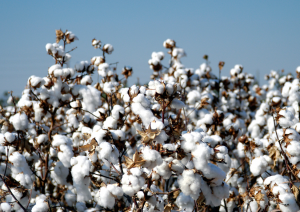
The confined field trials of genetically modified (GM) herbicide tolerant cotton and maize in India have been approved by the states of Haryana and Karnataka and by the Genetic Engineering Appraisal Committee (GEAC) under the Ministry of Environment, Forest and Climate Change (MoEF&CC). Following receipt of the No Objection Certificate (NOC) from the Governments of Haryana and Karnataka, the GEAC cleared the proposals submitted by Rallis India Limited to conduct BRL-1 (1st and 2nd year)