


News & Events
Harmonization in gene editing regulations in the Asia-Pacific region is necessary to promote the path-to-market and enable the benefits of the technology. This is according to Dr. Michael Jones of Murdoch University, Dr. Rhodora Romero-Aldemita of ISAAA Inc., and their co-authors in the review paper titled Enabling Trade in Gene-Edited Produce in Asia and Australasia: The Developing Regulatory Landscape and Future Perspectives published in Plants.
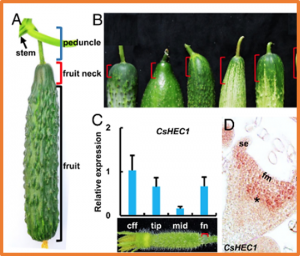
Fruit neck is the proximal portion of the fruit with undesirable taste that has detrimental effects on fruit shape and commercial value in cucumber. Despite the dramatic variations in fruit neck length of cucumber germplasms, the genes and regulatory mechanisms underlying fruit neck elongation remain mysterious. In this study, we found that Cucumis sativus HECATE1 (CsHEC1) was highly expressed in fruit neck.
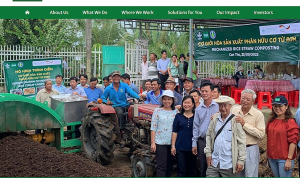
Supported by the CGIAR Initiative on Securing the Food Systems of Asian Mega-Deltas for Climate and Livelihood Resilience (AMD) and GIZ-funded Promotion of Sustainable Rice Straw Innovations (PINStraw), the event gathered almost 60 participants representing farmer groups, government agencies, extension offices, research organizations, and academic institutions to enhance their knowledge and awareness on mechanized rice straw composting through demonstration and training.
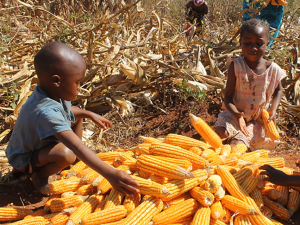
A brief from the CGIAR’s HarvestPlus biofortification program describes how HarvestPlus has worked with multiple partners in Zambia to catalyze development and delivery of yield-competitive varieties of hybrid maize that are enriched with vitamin A. The first three vitamin A maize (VAM) seed varieties were released in Zambia in 2012, followed by another three in 2015, and five more in 2018. Successive varieties have had improved nutrition and agronomic traits.
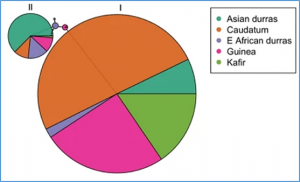
Enhancing plant transpiration efficiency (TE) by reducing transpiration without compromising photosynthesis and yield is a desirable selection target in crop improvement programs. While narrow individual leaf width has been correlated with greater intrinsic water use efficiency in C4 species, the extent to which this translates to greater plant TE has not been investigated. The aims of this study were to evaluate the correlation of leaf width with TE at the whole-plant scale and investigate the genetic control of leaf width in sorghum.
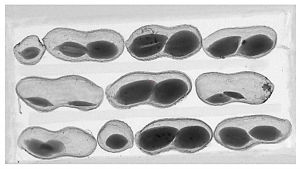
The study led by a team of researchers from the International Crops Research Institute for the Semi-Arid Tropics (ICRISAT) and the Fraunhofer Development Center for X-ray Technology (EZRT) demonstrated the potential of X-ray radiography for a rapid and non-destructive determination of key market-related traits from X-ray scans of peanuts while still inside the hull.
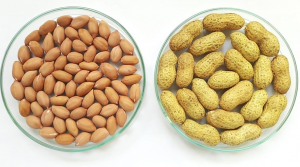
India’s first ‘Spanish type’ high oleic groundnut developed by researchers at ICRISAT in partnership with the Junagadh Agricultural University is advantageous compared to the initial varieties (Girnar 4 and 5) of the ‘Virginia-type’. Spanish lines occupy a significant area across India, Southeast Asia and Africa, while the less popular Virginia lines are limited to the Indian states of Rajasthan and parts of Gujarat.

Managing agricultural landscapes to support biodiversity conservation requires profound structural changes worldwide. Often, discussions are centered on management at the field level. However, a wide and growing body of evidence calls for zooming out and targeting agricultural policies, research, and interventions at the landscape level to halt and reverse the decline in biodiversity, increase biodiversity-mediated ecosystem services in agricultural landscapes, and improve the resilience and adaptability of these ecosystems.
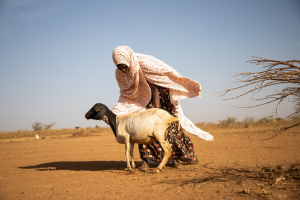
The number of people facing acute food insecurity worldwide is expected to continue to rise precipitously, as the food crisis tightens its grip on 19 ‘hunger hotspots’ – driven by rising conflict, weather extremes, and economic instability aggravated by the pandemic and the ripple effects of the crisis in Ukraine, a joint UN report released today has found. The ‘Hunger Hotspots – FAO-WFP early warnings on acute food insecurity’ report - issued by the Food and Agriculture Organization of the United Nations (FAO) and the UN World Food Programme (WFP)
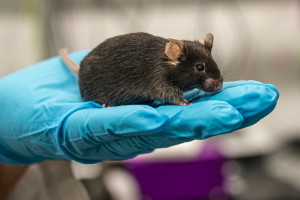
Previous attempts in chromosome engineering were only successful in yeast, but scientists in China were able to produce the first sustainable engineered karyotype on laboratory mice which now carries two chromosomes fused together. To achieve this, the scientists fused the two largest mouse chromosomes, labeled chromosomes 1 and 2, and two medium-size chromosomes, labeled chromosomes 4 and 5
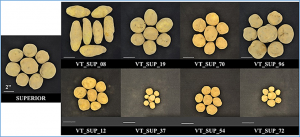
Potato vine and skin maturity, which refer to foliar senescence and adherence of the tuber periderm, respectively, are both important to production and therefore breeding. Our objective was to investigate the genetic architectures of these traits in a genome-wide association panel of 586 genotypes, and through joint linkage mapping in a half-diallel subset (N = 397). Skin maturity was measured by image analysis after mechanized harvest 120 days after planting.
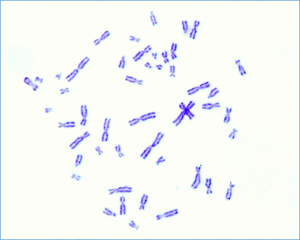
Researchers at the Karlsruhe Institute of Technology (KIT) used CRISPR to invert and deactivate nine-tenths of a chromosome to prevent genetic exchange. The results of their study are published in Nature Plants. To breed an ideal crop, it must possess traits that make it tasty, high-yielding, and pest and disease-resistant. However, if the genes that confer these traits are far from each other in the chromosome, some favorable traits could be lost during breeding