


News & Events
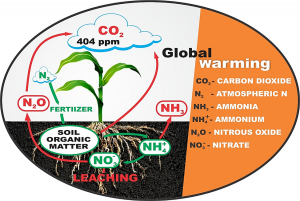
The success of the dwarf breeding of rice, called the Green Revolution in Asia, resulted from increased source and sink capacities depending on significant inputs of N fertilizer. Although N fertilization is essential for increasing cereal production, large inputs of N application have significantly impacted the environment. Transgenic rice overproducing Rubisco has demonstrated increased yields with improved N use efficiency for increasing biomass production under high N fertilization in a paddy field

Seasoned regulatory experts from around the world have come up with a protocol that developers of genetically modified (GM) biocontrol products will find useful in understanding the required safety data and information when generating a regulatory dossier to be used for the evaluation and decision making. Regulators will also likely benefit from the tool as it will help support their systematic and rigorous evaluation towards the product.
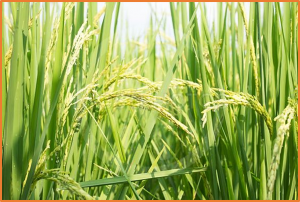
Researchers from Tohoku University and Iwate University in Japan released a review article on enhancing photosynthesis and yield in rice by improving nitrogen use efficiency. The report is published in Plant Science. The success of the dwarf breeding of rice, which led to the Green Revolution in Asia, is attributed to the increased source and sink capacities depending on significant N fertilizer applications. Though N fertilizer is vital for cereal production, large applications impact the environment.
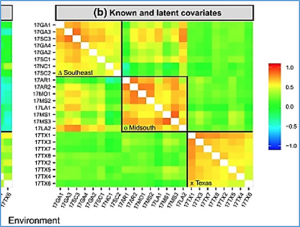
This paper develops a single-stage genomic selection approach which integrates known and latent environmental covariates within a special factor analytic framework. The factor analytic linear mixed model of Smith et al. (2001) is an effective method for analysing multi-environment trial (MET) datasets, but has limited practicality since the underlying factors are latent so the modelled genotype by environment interaction (GEI) is observable, rather than predictable.
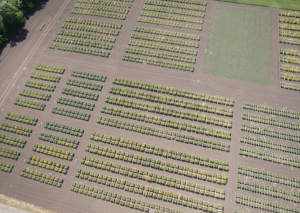
In the Federal Ex situ Gene Bank at the IPK Leibniz Institute in Germany, 150,000 old plant varieties are preserved. Aside from negative traits, old and exotic varieties possess many valuable gene variants that have been lost in modern varieties but may be crucial for plant breeding in the future. The IPK Leibniz Institute's extensive collection of old wheat varieties was tested for their yield performance and resistance to yellow rust not only in the laboratory but also in field trials.
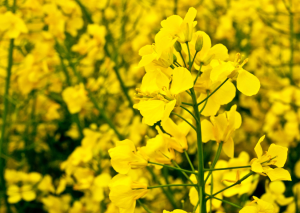
The European Food Safety Authority (EFSA) GMO Panel released their scientific opinion on herbicide tolerant (HT) genetically modified (GM) oilseed rape GT73, which is applied for renewal of authorization for food and feed uses. EFSA's assessment found no evidence for new hazards. Following the submission of application EFSA-GMO-RX-026/1 from Bayer Agriculture BV on behalf of Bayer CropScience LP, the EFSA GMO Panel assessed the post-market environmental monitoring reports
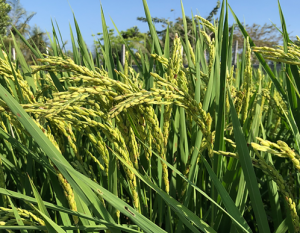
Grain size is an important agronomic trait determining grain yield and appearance quality in rice. Here, we report the discovery of rice mutant short and narrow grain1 (sng1) with reduced grain length, width and weight. Map-based cloning revealed that the mutant phenotype was caused by loss of function of gene OsHXK3 that encodes a hexokinase-like (HKL) protein. OsHXK3 was associated with the mitochondria and was ubiquitously distributed in various organs, predominately in younger organs.

Euroseeds, a group representing more than 36 national member associations and 67 direct company members in the European Union advocates for science-based decision-making with the aim of contributing to a fair and proportionate regulation of the European seed sector, freedom of choice for customers, and effective protection of intellectual property rights.
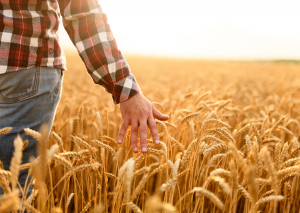
Scientists from the International Maize and Wheat Improvement Center (CIMMYT) and the Universidad Autónoma Agraria Antonio Narro analyzed bread wheat landraces to discover traits for resistance to the impacts of climate change. The team looked at seven climactic variables, including mean temperature, maximum temperature, precipitation, precipitation seasonality, heat index of mean temperature, heat index of maximum temperature,
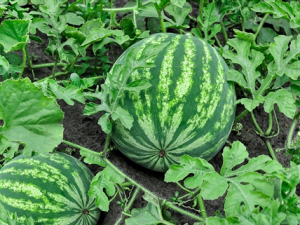
Watermelon is a xerophytic crop characterized by a long primary root and robust lateral roots. Therefore, watermelon serves as an excellent model for studying root elongation and development. However, the genetic mechanism underlying the primary root elongation in watermelon remains unknown. Herein, through bulk segregant analysis we identified a genetic locus, qPRL.Chr03, controlling primary root length (PRL) using two different watermelon species (Citrullus lanatus and Citrullus amarus) that differ in their root architecture.

Risk factors that could push the present food crisis into the future's food availability crisis are increasing. QU Dongyu, Director-General of the Food and Agriculture Organization of the United Nations, mentioned this to international policymakers at the G20 Joint Finance and Agriculture Ministers Meeting. “We must all work together to prevent such a scenario,” he stressed.

Taylor and Francis published a new book titled Genetically Modified Crops and Food Security: Commercial, Ethical, and Health Considerations. The book reviews a wide range of GM crops to understand how they are produced, their impacts on the agricultural industry, and their potential for improving food security. Jasmeet Kour, Vishal Sharma, and Imtiyaz Khanday are the book editors.