


News & Events
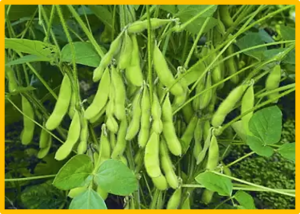
Soybean is one of the most important oilseed and fodder crops. Benefiting from the efforts of soybean breeders and the development of breeding technology, large number of germplasm has been generated over the last 100 years. Nevertheless, soybean breeding needs to be accelerated to meet the needs of a growing world population, to promote sustainable agriculture and to address future environmental changes. The acceleration is highly reliant on the discoveries in gene functional studies. The release of the reference soybean genome in 2010 has significantly facilitated the advance in soybean functional genomics.
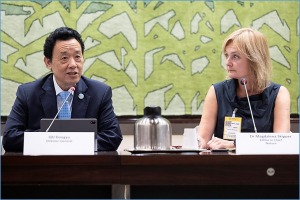
Science and data-based solutions must be the foundation of agricultural development projects, and those who work on them should make their cases more forcefully, QU Dongyu, Director-General of the Food and Agricultural Organization of the United Nations (FAO), said Wednesday during the World Food Forum. “Take your knowledge to policy makers,” the Director-General told participants in a special “Investments in agricultural research for development: Are we on the right track?” session.
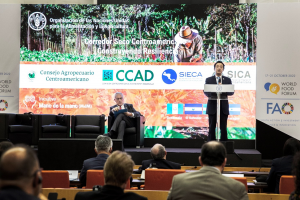
With rural hunger at very high levels in Central America’s Dry Corridor region, the time has come to “turn this emergency corridor into a corridor of opportunities,” QU Dongyu, Director-General of the Food and Agriculture Organization of the United Nations (FAO), said Tuesday during the World Food Forum. “More than half of the 10 million people living in the area, which extends between Guatemala, Honduras, El Salvador, Costa Rica and Nicaragua, are engaged in agricultural activities,
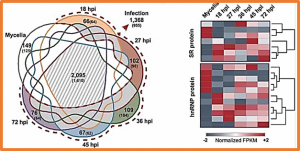
Alternative splicing (AS) contributes to diversifying and regulating cellular responses to environmental conditions and developmental cues by differentially producing multiple mRNA and protein isoforms from a single gene. Previous studies on AS in pathogenic fungi focused on profiling AS isoforms under a limited number of conditions. We analysed AS profiles in the rice blast fungus Magnaporthe oryzae, a global threat to rice production, using high-quality transcriptome data representing its vegetative growth (mycelia) and multiple host infection stages
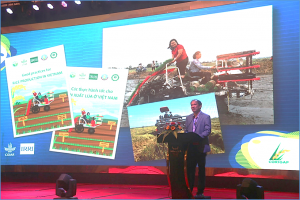
Almost 4,000 attendees; 80 companies with machinery demonstrations and displays from tillage and sowing to harvesting and grain handling; 22-hectare trial and demonstration plots – conferences on mechanization – official opening by Minister of Agriculture – 24-26 August in Mekong Delta, Vietnam. Held in Can Tho, Vietnam, last week, AGRITECHNICA ASIA Live, a 20-hectare outdoor event combining field demonstrations, exhibition and conference program, successfully concluded, attracting almost 4,000 farmers, traders, scientists and politicians.
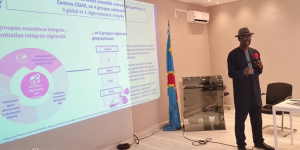
One CGIAR—the newly restructured consortium—held its first Informational and Consultative Meeting on 9 September in Bukavu, the capital of the South-Kivu province of the Democratic Republic of the Congo (DR Congo). Hosted and led by One CGIAR’s centers operating in DR Congo—IITA and the International Center for Tropical Agriculture and Bioversity International Alliance (CIAT-Bioversity Alliance)
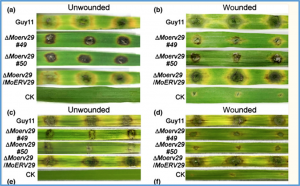
During plant-pathogenic fungi and host plants interactions, numerous pathogen-derived proteins are secreted resulting in the activation of the unfolded protein response (UPR) pathway. For efficient trafficking of secretory proteins, including those important in disease progression, the cytoplasmic coat protein complex II (COPII) exhibits a multifunctional role whose elucidation remains limited.
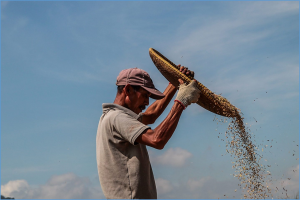
A recent Twitter conversation between the UN’s David Beasley and Tesla’s Elon Musk has shown that hunger is deceptively complex. There is a crucial difference between acute hunger, caused by shocks like war or natural disasters, and chronic hunger, which occurs when agricultural production (and distribution) fails to keep pace with threats such as soil degradation, erratic rainfall, or heatwaves, or when poverty renders food unaffordable.
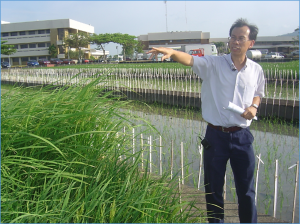
Dr. Hei Leung, a long-time respected plant pathologist and geneticist at the International Rice Research Institute (IRRI), passed away at home on 15 October 2022 in Gabriola, Canada, three weeks shy of his 67th birthday. He had fought a long battle with cancer. Hei served as IRRI’s program leader for Genetic Diversity and Gene Discovery and subprogram leader for Comparative Genomics in the Generation Challenge Program. He was given the distinction as an IRRI Principal Scientist in 2010 until his retirement in 2020.
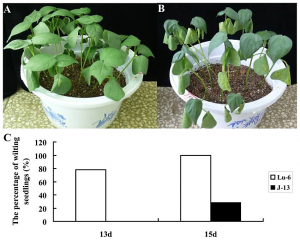
In order to understand the molecular mechanism of cotton's response to drought during the flowering and boll stage, transcriptomics and metabolomics were carried out for two introgression lines (drought-tolerant line: T307; drought-sensitive line: S48) which were screened from Gossypium hirsutum cv. ‘Emian22’ with some gene fragments imported from Gossypium barbadense acc. 3–79, under drought stress by withdrawing water at flowering and boll stage.
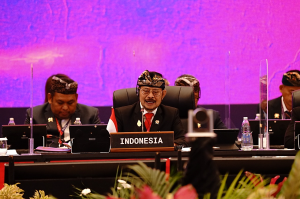
The G20 Agriculture Ministers met under this cloud on September 8 in Denpasar, Bali, Indonesia. Even though, the chair’s summary did reflect G20 members’ commitment to step-up efforts to make agriculture and food systems sustainable and more resilient against future shocks, ministers were unable to reach a consensus on a joint communiqué.
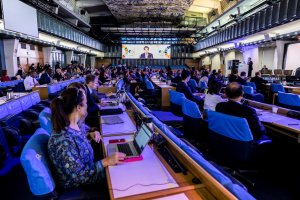
With the ongoing crisis and pandemic, more and more governments recognize the need to invest in long-term food security and poverty reduction, QU Dongyu, Director-General of the Food and Agriculture Organization of the United Nations (FAO), said today. “The Hand-in-Hand Initiative responds to this need,” he said while opening the Hand-in-Hand Investment Forum, an event hosted this week at FAO to introduce aspiring investors to projects designed to accelerate the transformation to sustainable agrifood systems.