


News & Events
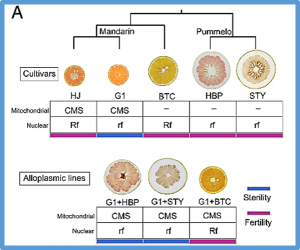
Although interactions between the cytoplasmic and nuclear genomes occurred during diversification of many plants, the evolutionary conflicts due to cytonuclear interactions are poorly understood in crop breeding. Here, we constructed a pan-mitogenome and identified chimeric open reading frames (ORFs) generated by extensive structural variations (SVs). Meanwhile, short reads from 184 accessions of citrus species were combined to construct three variation maps for the nuclear, mitochondrial, and chloroplast genomes.
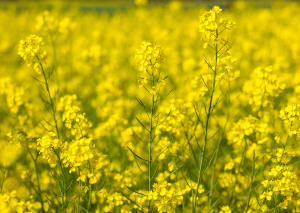
During the 147th meeting of India's Genetic Engineering Appraisal Committee (GEAC) of the Ministry of Environment, Forest and Climate Change (MoEF&CC) held on October 18, 2022, chaired by Shri Naresh Pal Gangwar, Additional Additional Secretary of MoEF&CC, the Committee recommended the environmental release of genetically modified (GM) mustard in the country.
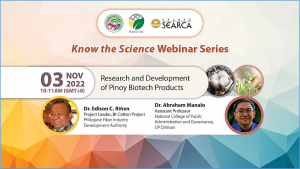
ISAAA Inc., in partnership with SEARCA Biotechnology Information Center and the Philippine Agriculture and Fisheries Biotechnology Program (DA Biotech Program), will hold the second session of the Know the Science Webinars to present the latest developments in the research and development of biotech crops in the Philippines. Registration is now open to the public.
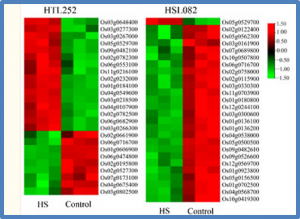
To elucidate the mechanism underlying the response of rice to heat stress (HS), the transcriptome profile of panicles was comparatively analyzed between the heat-tolerant line 252 (HTL252) and heat-susceptible line 082 (HSL082), two rice recombinant inbred lines (RILs). Our differentially expressed gene (DEG) analysis revealed that the DEGs are mainly associated with protein binding, catalysis, stress response, and cellular process.

GM Crops & Food published three peer-reviewed and open-access papers about the economic and environmental impacts of genetically modified (GM) crops from 1996 to 2020. These research articles are authored by Graham Brookes, agricultural economist and director of PG Economics. The first paper tackles the global environmental impact of GM crops with pesticide use change.
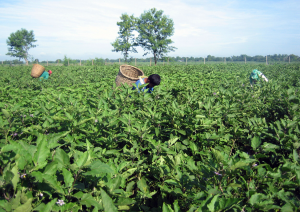
The Philippines' Department of Agriculture Bureau of Plant Industry (DA-BPI) has given its approval for the commercial cultivation of insect resistant Bt eggplant in the country. The "Biosafety Permit for Commercial Propagation of Bt Eggplant (Event EE-1)" was issued to the University of the Philippines Los Baños (UPLB) on October 18, 2022, pursuant to the DOST-DA-DENR-DOH-DILG Joint Department Circular (JDC) No. 1, Series of 2021
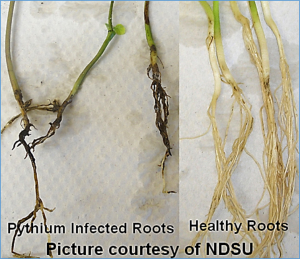
Pythium root rot is an important seedling disease of soybean [Glycine max (L.) Merr.], a crop grown worldwide for protein and oil content. Pythium irregulare and P. sylvaticum are two of the most prevalent and aggressive Pythium species in soybean producing regions in the North Central U.S. Few studies have been conducted to identify soybean resistance for management against these two pathogens.
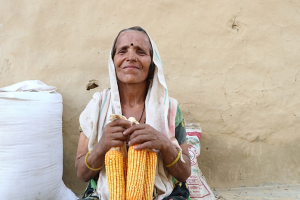
Experts at the International Maize and Wheat Improvement Center (CIMMYT) are working with partners to drive self-sufficiency in poultry feed and achieve more sustainable maize systems in Nepal thanks to the Nepal Seed and Fertilizer (NSAF) project. About 3,000 metric tons (t) of poultry feed is used in Nepal every day, with maize making up about half of feed ingredients. The Feed Association of Nepal estimates that more than 80% of maize for animal feed requirements are met through imports, which costs around $100 million a year. Maize imports are estimated to exceed $130 million in 2022.

The United Nation’s Food and Agriculture Organization (FAO), CGIAR and The Rockefeller Foundation announced today that they will host the official Food and Agriculture Pavilion at the 2022 United Nations Climate Change Conference (COP27) to be held from 6 to 18 November in Sharm El Sheikh, Egypt. This marks the first time that such a pavilion has been set up COP. A rich program of events will showcase innovative solutions to help countries take effective climate action to protect agrifood systems.
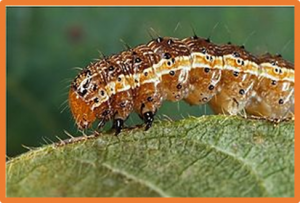
Nocturnal moths evolved ultrasound-triggered escape maneuvers for avoiding predatory bats emitting ultrasonic echolocation calls. Using ultrasound for pest control is not a novel concept, but the technique has not been systemized because of the moths’ habituation to sounds and the narrow directionality of conventional ultrasound speakers. Here, we report the use of pulsed ultrasonic white noise, which contributes to achieving ecologically concordant plant protection.
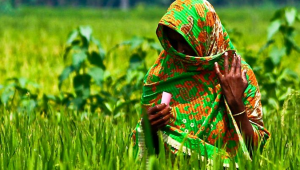
Abiotic stresses such as droughts and floods significantly constrain rice production in Bangladesh. One of the most significant recurring challenges to rice productivity in the rainfed lowlands of Southeast and South Asia is flash floods that lead to the submergence of plants for more than ten days. In Bangladesh, major setbacks to the realization of potential yield are abiotic stresses such as flooding (50%), drought (20%), and salinity (30%).

On September 20, 2022, on the sidelines of the 77th session of the United Nations General Assembly in New York, several nations, including the United States of America, the European Union and the African Union, came together to issue an appeal to governments, organizations and private industry to collaborate and respond to the urgent global food security needs of billions of people around the world.