


News & Events

For the first time, scientists have used CRISPR gene editing technology to substitute a gene to treat patients with cancer. The new approach first identifies T cells that specifically recognize and kill an individual patient's tumor cells. T cells are a type of immune cell, and the cells in question kill tumor cells when they encounter specific genetic mutations from cancer.
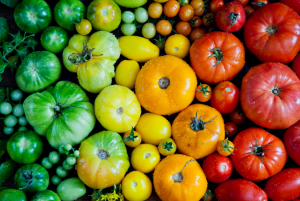
The tomato is known for its red, vibrant color, a vital trait that affects consumer preferences. Using CRISPR-Cas9, Chinese scientists developed tomato genotypes that come in yellow, light yellow, yellow-green, light green, brown, and pink. The tomato fruit color is a multigenic trait of the plant and is determined by the accumulation of different pigments like carotenoids and flavonoids.
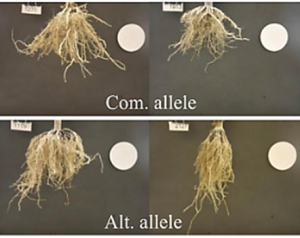
High-throughput, field-based characterization of root systems for hundreds of genotypes in thousands of plots is necessary for breeding and identifying loci underlying variation in root traits and their plasticity. We designed a large-scale sampling of root pulling force, the vertical force required to extract the root system from the soil, in a maize diversity panel under differing irrigation levels for two growing seasons.
An international team of scientists were able to identify candidate genes for further genetic research on the improvement of root phenotypes to respond to drought stress by examining the phenotypic and genetic correlations among rice root anatomical, morphological, and agronomic phenotypes.The team used more than 200 rice accessions from Southeast Asia for their study to identify root morphological and anatomical phenotypes related to rice productivity under stress.

Philippine Interagency Heads Officially Open the National Biotech Week Celebration on November 21, 2022. From L-R: Deputy Director Oscar Gutierrez Jr. of FDA, Dr. Claro Mingala of the DA Biotech Program Office, Dr. Rhodora Romero-Aldemita of ISAAA Inc., DTI Undersecretary Ceferino Rodolfo, Ma. Corazon Dichosa of the BOI, and Ms. Debbie Torres of the Bureau of Local Government Supervision, DILG. (Photo by Danellie Joy O. Medina, SEARCA)
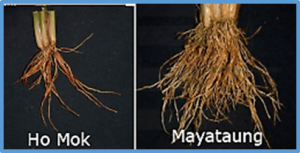
Drought stress in Southeast Asia greatly affects rice production, and the rice root system plays a substantial role in avoiding drought stress. In this study, we examined the phenotypic and genetic correlations among root anatomical, morphological, and agronomic phenotypes over multiple field seasons. A set of >200 rice accessions from Southeast Asia (a subset of the 3000 Rice Genomes Project) was characterized with the aim to identify root morphological and anatomical phenotypes related to productivity under drought stress.

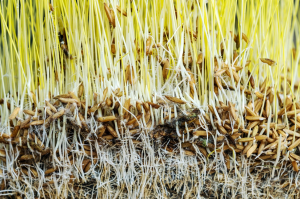
Enzyme-mycotic seed depletion (EMSD) is a leading cause of loss in grain crops, destroying up to 60% of the crop. The development of EMSD is associated with adverse weather conditions when an increase in enzyme activity breaks down grain biopolymers into simple sugars and amino acids. Maintaining humidity helps plants deal with EMSD, but developing EMSD resistant crops is a more efficient way.

The United Nations food standards body, the Codex Alimentarius Commission, is holding a hybrid session on November 21-25, 2022, to adopt food safety and quality standards. The Commission is a joint initiative of the Food and Agriculture Organization of the United Nations (FAO) and the World Health Organization (WHO). It is tasked to protect consumer health and ensure fair practices in the food trade.
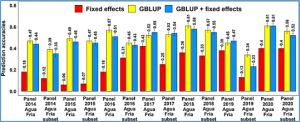
A major biotic stress challenging bread wheat production in regions characterized by humid and warm weather is spot blotch caused by the fungus Bipolaris sorokiniana. Since genomic selection (GS) is a promising selection tool, we evaluated its potential for spot blotch in seven breeding panels comprising 6736 advanced lines from the International Maize and Wheat Improvement Center.
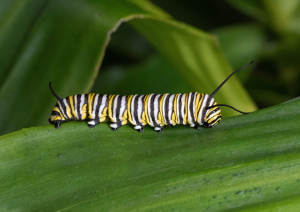
A study reports that the defense mechanisms plants use to recognize and respond to the caterpillar, a common plant pest, has arisen from a single gene that evolved over millions of years. The study also found that some plants, such as soybeans, have lost this protective gene over time and suggests that genetically engineering plants to reintroduce the gene could protect against crop failure.
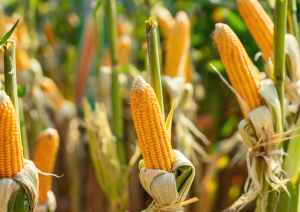
The European Food Safety Authority (EFSA) GMO Panel released its Scientific Opinion on the safety of genetically modified (GM) herbicide tolerant maize MON 87429, for import, processing, and food and feed uses within the European Union (EU), and does not include cultivation in the EU. Following the submission of application EFSA-GMO-NL-2019-161 under Regulation (EU) No 503/2013 from Bayer Agriculture, the EFSA GMO Panel was asked to deliver a Scientific Opinion on the safety of GM maize MON 87429
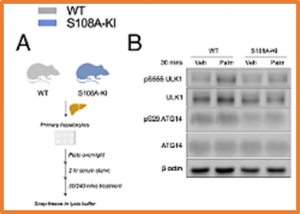
Fatty acids are vital for the survival of eukaryotes, but when present in excess can have deleterious consequences. The AMP-activated protein kinase (AMPK) is an important regulator of multiple branches of metabolism. Studies in purified enzyme preparations and cultured cells have shown that AMPK is allosterically activated by small molecules as well as fatty acyl-CoAs through a mechanism involving Ser108 within the regulatory AMPK β1 isoform.