


News & Events
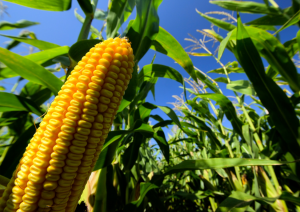
The European Food Safety Authority (EFSA) GMO Panel released its Scientific Opinion on the safety of genetically modified (GM) insect protected maize MON 95379, for import, processing, and food and feed uses within the European Union (EU) and does not include cultivation. Following the submission of application EFSA-GMO-NL-2020-170 under Regulation (EU) No 503/2013 from Bayer Agriculture BV, the EFSA GMO Panel was asked to deliver a Scientific Opinion on the safety of GM maize MON 95379

- Deputy Minister of MARD, Phùng Đức Tiến paid a visit of the IAS in November 7 2022 for research management discussion.
- The workshop with the title of “Demonstration of production & consuming safe vegetable under hi-tech farms in Ho Chi Minh city and Southern provinces” was co organized by the IAS and DARD, Nov. 11 2022
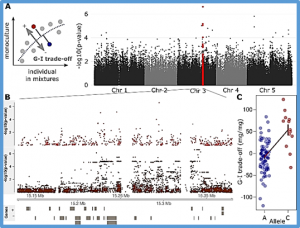
Historic yield advances in the major crops have, to a large extent, been achieved by selection for improved productivity of groups of plant individuals such as high-density stands. Research suggests that such improved group productivity depends on “cooperative” traits (e.g., erect leaves, short stems) that—while beneficial to the group—decrease individual fitness under competition. This poses a problem for some traditional breeding approaches, especially when selection occurs at the level of individuals,
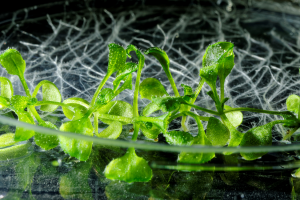
Swiss scientists from the University of Zurich and Agroscope were able to identify genes that promote cooperation and higher yields of plant populations when monoculturally grown. The findings can help breeders develop plants with increased productivity using conventional breeding methods. They theorized that the most cooperative genotype will perform best with similarly cooperative neighbors yet will exhibit poor performance when with a highly competitive company.
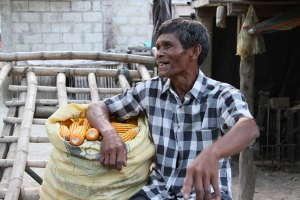
In its November 14, 2022, Agricultural Biotechnology Annual, the US Department of Agriculture Foreign Agricultural Service reports that the Philippines continues to be a leader in biotechnology in Southeast Asia, having been the first in the region to have a regulatory framework on genetically engineered (GE) crops. The report says the Philippines is a regional biotechnology leader and the first country in the world to approve Golden Rice for commercial propagation.
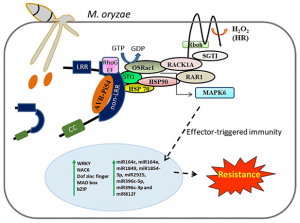
Rice is a global food grain crop for more than one-third of the human population and a source for food and nutritional security. Rice production is subjected to various stresses; blast disease caused by Magnaporthe oryzae is one of the major biotic stresses that has the potential to destroy total crop under severe conditions. In the present review, we discuss the importance of rice and blast disease in the present and future global context,

A study conducted at the Karolinska Institutet in Sweden reveals that CRISPR-Cas9, the widely used gene scissor, can modify the genetic content in cells to study the molecular roles of genes and has gained great clinical relevance in gene therapy to treat genetic diseases. The study found that the gene scissor leads to unexpected genomic changes. According to Claudia Kutter, principal researcher at the Department of Microbiology, Cell and Tumor Biology, at the Karolinska Institutet, they found that CRISPR-Cas9 can cause unpredictable on-target genomic effects that impact cancer cell growth.
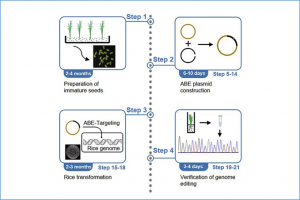
Based editing is one of the approaches used for genome editing to generate single-nucleotide variants (SNVs) in genomes. The protocol presented is specifically for targeted adenine to guanine substitution in rice using an adenine base editor. A detailed design of the sgRNA, CRISPR plasmid construction, rapid genetic transformation of rice, and genotyping of editing events are discussed. It can also be used for cytosine base editing.
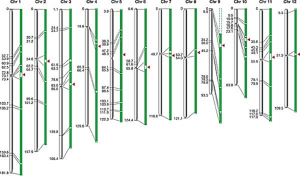
Base editing is a precision genome-editing approach that is widely utilized to generate single-nucleotide variants (SNVs) in genomes. Here, we present a protocol to perform targeted adenine (A)-to-guanine (G) substitution in rice using adenine base editor (ABE). We detail the design of sgRNA, CRISPR plasmid construction, rapid genetic transformation of rice, and genotyping of editing events. This protocol can be applied to cytosine base editing in rice as well.
Gene-edited agricultural products could have a significant market share of the Chinese seed market in the future, based on a survey conducted in 2019 among 111 Chinese seed companies. Seed companies play a role in the translation of technical advances into industrial advantages and in handing these benefits to the farmers. The study aimed to determine whether gene-edited crops will be available to farmers using the data from a survey conducted prior to the new policies that the Chinese government implemented in order to make it easier to industrialize gene-edited crops.

Researchers from North Carolina State University (NC State) reported that viruses engineered using CRISPR-Cas system could go through bacterial defenses and make selective changes to a targeted bacterium, even when other bacteria are nearby. Their findings are published in the Plant Journal. “Viruses are very good at delivering payloads. Here, we use a bacterial virus, a bacteriophage, to deliver CRISPR to bacteria, which is ironic because bacteria normally use CRISPR to kill viruses,” said Rodolphe Barrangou,
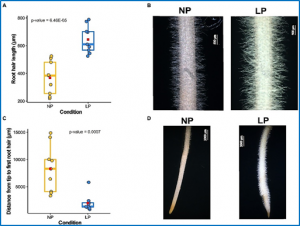
Root hairs (RH) are a single-cell extension of root epidermal cells. In low phosphorus (LP) availability, RH length and density increase thus expanding the total root surface area for phosphate (Pi) acquisition. However, details on genes involved in RH development and response to LP are missing in an agronomically important leguminous crop, chickpea. To elucidate this response in chickpea, we performed tissue-specific RNA-sequencing and analyzed the transcriptome modulation for RH and root without RH (Root-RH) under LP.