


News & Events

Kenya is experiencing a severe water shortage due to four failed rainy seasons and is in the middle of the worst droughts that happened in the East African region in four decades. These conditions lead to reduced crop production and indicate a possible famine. One of the solutions to such problems is the adoption of genetically modified (GM) crops resistant to drought and pest attacks. However, some farmers and campaign groups question their safety.
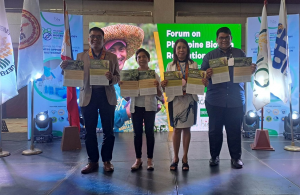
ISAAA Inc. and its long-time collaborator, the Southeast Asian Regional Center for Graduate Study and Research in Agriculture (SEARCA) launched two new policy briefs on Philippine biosafety by Ms. Ma. Lorelie U. Agbagala, Head Secretariat of the National Committee on Biosafety of the Philippines. The launch was held during the opening day of the 18th National Biotechnology Week of the Philippines on November 21, 2022, at the Philippine Trade Training Center, Pasay City.
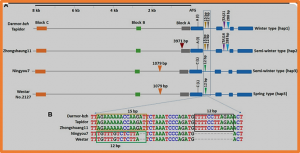
Florigen, encoded by FLOWERING LOCUS T (FT), plays key roles not only as a flowering hormone, but also a universal growth factor affecting several aspects of plant architecture. In rapeseed, BnaFT.A2 has been revealed as one of the major loci associated with flowering time and different ecotypes. However, it is unclear how allelic variations of BnaFT.A2 affect its function in flowering time regulation and beyond.

“From Farm to Table.” In recent years, different Latin American governments have used this and other similar slogans to promote the consumption of food produced by family farmers in their countries. Food from family farming has several advantages. It’s healthier and more nutritious and benefits the economy of local family farmers, who are responsible for one-third of global food production.

A crown-of-thorns seastar native to the Red Sea was this week named after WorldFish’s John Benzie in recognition of his groundbreaking genetic studies on crown-of-thorns seastars in the 1990s and early 2000s. The seastar, named Acanthaster benziei, has now been identified as a distinct species by a team led by Ludwig-Maximilians-Universität München's Gert Wörheide, professor of paleontology and geobiology and Gerhard Haszprunar, professor of systematic zoology, using morphological studies and genetic analyses.
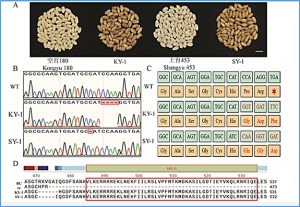
It is of great value to restore cultivated rice varieties to red rice with good rice quality and strong stress resistance. CRISPR/Cas9 gene editing technology was used to edit the Rc gene, restoring the red seed coat, and laying a data foundation for the improvement of rice quality and resistance. Using CRISPR/Cas9 technology, the target gene Rc mutant vector pYLCRISPR/ Cas9-Rc-gRNA was constructed and transformed into transgenic plants with Kongyu 180 and Shangyu 453 as materials.
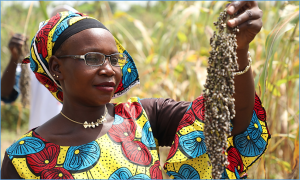
The World Food Programme, ICRISAT and partners have come together to support farming communities in Mali with improved dryland crop varieties and ‘Smart Food’ interventions. More than 300 farmers from two communes in Mali comprising of 162 women agri-food processors visited demonstration plots in their region growing high-yielding, climate-resilient, and biofortified varieties of sorghum, millet, groundnut and cowpea.
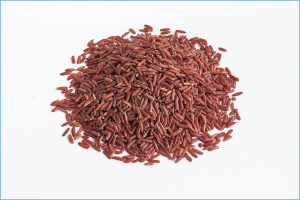
Chinese Journal of Rice Science published a study on the breeding of Rc function restoration red rice using CRISPR-Cas9. Restoring cultivated rice varieties to red rice with premium qualities and resistance to stress is important, especially for countries that use rice as staple food. Rc gene codes for a protein responsible for proanthocyanidins' accumulation into the inner seed coat below the pericarp, providing a red seed coat.
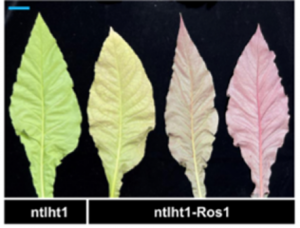
CRISPR/Cas9 genome-editing technology has revolutionized plant science and holds enormous promise for crop improvement. The exploration of this system received much attention regarding plant genome editing. Here, by editing the NtPDS gene in tobacco, we first verified that incorporating an OsU3-tRNA promoter combination into the CRISPR/Cas9 system contributed to the highest editing efficiency, as the sgRNA expression level was greater than that resulting from the AtU6-tRNA and AtU6 promoters

Science and data play a crucial role in the work of the Codex Alimentarius standard setting body, QU Dongyu Director-General of the Food and Agriculture Organization of the United Nations (FAO) said as he opened the Commission’s 45th annual session here today. The gathering is the first in-person meeting of the Commission, set up by FAO and the World Health Organization (WHO) for three years, with many delegates also participating virtually. Qu noted that technology has advanced rapidly in making such meetings possible in full transparency and making sure no one is left behind.
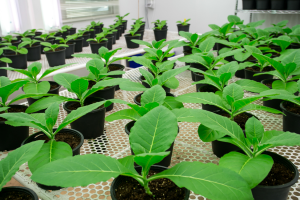
lant Science reports a highly efficient transgene-free genome editing in tobacco using an optimized CRISPR-Cas9 system, pOREU3TR. The emergence of CRISPR tools has revolutionized plant science and continues to bring an enormous potential for crop improvement. Researchers from the Technology Center of China Tobacco Yunnan Industrial Co. Ltd. explored using CRISPR-Cas9 to edit the NtPDS gene in tobacco.
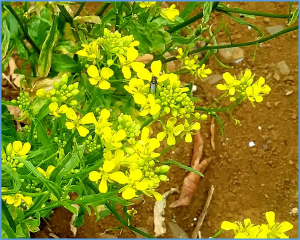
Yellow seed trait is considered an agronomically desirable trait with great potential for improving seed quality of Brassica crops. Mechanisms of the yellow seed trait are complex and not well understood. In this study, we performed an integrated metabolome, transcriptome and genome-wide association study (GWAS) on different B. rapa varieties to explore the mechanisms underlying the seed coat color formation