


News & Events
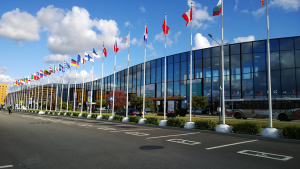
Canada's Prime Minister, Justin Trudeau, welcomed the delegates of the 15th Meeting of the Conference of Parties (COP15) to the United Nations Convention on Biological Diversity (CBD). Being one of the countries promoting conservation, Canada stepped up to be the host of COP15, which takes place from December 7 to 19, 2022. Biodiversity is a crucial topic of discussion that concerns human health and well-being, economic prosperity, food safety, and security, among other areas vital for the survival of humans and societies.
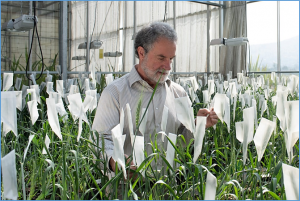
Increasing world populations as well as pandemics and regional conflicts require more and consistent crop production. Plant breeding is important to cope with climate change impacts, complementing crop management and policy interventions to ensure global food production. However, changes in environmental factors also affect the objectives, efficiency, and genetic gains of the current plant breeding system.
Research conducted by the International Maize and Wheat Improvement Center (CIMMYT) has determined that climate change is affecting current plant breeding objectives, efficiency, and genetic gains, causing limitations to the breeding approach of the next generation. The goals for breeding and developing new crops have been changed by the rising demands for climate-ready crops, originating from the urgent need to adapt to climate change
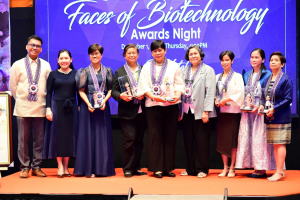
One of this year's awardees is Dr. Mariechel J. Navarro, former Director of ISAAA Global Knowledge Center on Crop Biotechnology (KC). She was recognized for her outstanding advocacy for biotech and expertise in science communication. She has been with the KC since its inception in September 2000. Her internship at the Centre for Agriculture and Bioscience International in the UK on managing a biotechnology information system led to the development of the weekly e-newsletter Crop Biotech Update.
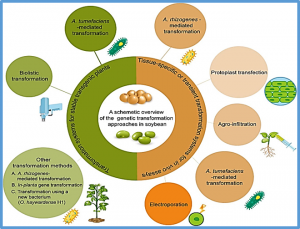
Soybean is one of the important food, feed, and biofuel crops in the world. Soybean genome modification by genetic transformation has been carried out for trait improvement for more than 4 decades. However, compared to other major crops such as rice, soybean is still recalcitrant to genetic transformation, and transgenic soybean production has been hampered by limitations such as low transformation efficiency and genotype specificity, and prolonged and tedious protocols.
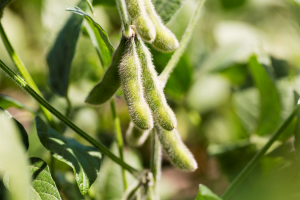
Researchers from Ottawa Research and Development Centre and partners investigated the role of the soybean 14-3-3 gene Glyma05g29080 on white mold resistance and nodulation using CRISPR-Cas9 editing and RNA silencing. Their findings are published in the journal Molecular Plant-Microbe Interactions. The 14-3-3 gene family plays a vital role in physiological processes, such as controlling metabolism, hormone signaling, cell division, and responses to various biotic and abiotic stresses.
Scientists from the John Innes Centre and CSIRO Australia discovered Rht13, a height-reducing gene in wheat. This new finding may allow farmers to plant wheat seeds deeper into the soil without the adverse effects on seed emergence that is common when using existing wheat varieties. Conventional wheat varieties that were produced during the Green Revolution put more energy into grain production causing lower plant heights.
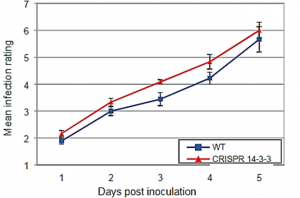
The role of soybean 14-3-3 gene (Glyma05g29080) in defense against white mold and in nodulation was investigated by loss-of-gene-function with CRISPR-Cas9 editing and RNAi silencing. Particle bombardment was used to introduce the CRISPR expression cassette to target the soybean 14-3-3 gene and an RNAi construct to silence gene transcription. Transmission of the edited14-3-3 gene and the RNAi construct was confirmed in their respective progeny.
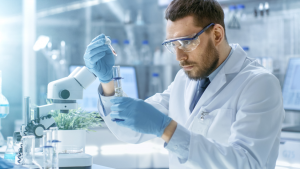
An Agrobacterium strain that cannot produce methionine is useful for switchgrass transformation, according to the University of Georgia and University of Colorado Boulder researchers. Their research paper is published in Transgenic Research. Agrobacterium tumefaciens has revolutionized plant science because it can transfer DNA into plant cells from a broad host range of species.
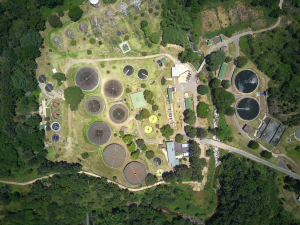
The 2022 United Nations Climate Change Conference (COP27) discussions at Sharm El-Sheikh, Egypt, highlighted the urgency to reduce greenhouse gas emissions. Thus, the Food and Agriculture Organization of the United Nations (FAO) looked into its expertise and experience to initiate actions on how agri-food systems could be modified and contribute towards climate change mitigation.
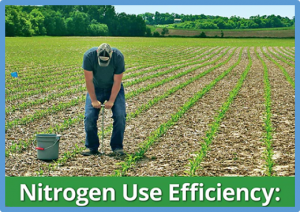
Teosinte, the wild ancestor of maize (Zea mays subsp. mays), has three times the seed protein content of most modern inbreds and hybrids, but the mechanisms that are responsible for this trait are unknown1,2. Here we use trio binning to create a contiguous haplotype DNA sequence of a teosinte (Zea mays subsp. parviglumis) and, through map-based cloning, identify a major high-protein quantitative trait locus, TEOSINTE HIGH PROTEIN 9 (THP9),
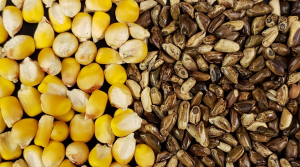
Teosinte high protein 9 (THP9) is a chromosome that encodes an enzyme vital to the nitrogen metabolism of teosinte, maize's ancestor. It is highly expressed by teosinte, but not by modern maize. Its recent discovery offers maize breeders better opportunities to develop new lines that can be grown under limited nitrogen conditions, while increasing the crop's seed protein content.