


News & Events
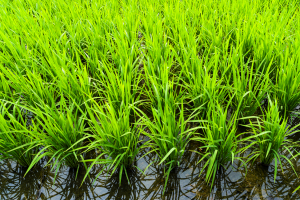
Alora, an ocean agriculture startup, is trying to activate dormant genes from seagrasses to use in terrestrial crops such as rice, wheat, and corn. In a press release, the group stated that if these genes could be activated, those crops could be grown in brackish water—or even directly in the ocean.Using CRISPR tools, Alora is piloting an effort to grow rice plants on land in salty waters.

Insect resistance in crops has been a major research objective in several crop improvement programs. However, the use of conventional breeding methods to develop high-yielding cultivars with sustainable and durable insect pest resistance has been largely unsuccessful. The use of molecular markers for identification and deployment of insect resistance quantitative trait loci (QTLs) can fastrack traditional breeding methods. Till date, several QTLs for insect pest resistance have been identified in field-grown crops, and a few of them have been cloned by positional cloning approaches.

The British Society of Plant Breeders (BSPB) has expressed its full support for the Genetic Technology (Precision Breeding) Bill and its objective to provide greater access to more precise new breeding methods with the potential to accelerate progress in crop-related innovation at a time when it is increasingly and urgently needed.

Massachusetts Institute of Technology scientists are one step closer to achieving the dream of programmable insertion of DNA thanks to a new CRISPR-based tool that they developed.The new tool is called PASTE, which stands for Programmable Addition via Site-specific Targeting Elements. The concept came from the desire to make a tool that could cut out a defective gene and replace it with a new one, without inducing any double-stranded DNA breaks
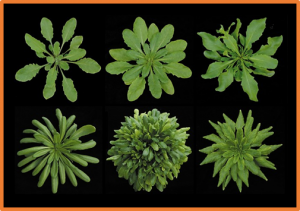
Vascular plants reinforce the cell walls of the different xylem cell types with lignin phenolic polymers. Distinct lignin chemistries differ between each cell wall layer and each cell type to support their specific functions. Yet the mechanisms controlling the tight spatial localization of specific lignin chemistries remain unclear. Current hypotheses focus on control by monomer biosynthesis and/or export, while cell wall polymerization is viewed as random and non-limiting
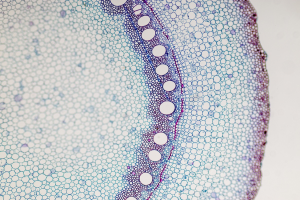
Plants were found to encode lignin to adapt to climate change by using different combinations of enzymes called LACCASEs to make specific lignin chemistries. These findings can help scientists and breeders in selecting trees and agricultural plants with the best lignin chemistry that makes them better adapted to climate challenges.

A team of researchers from the Paul Erlich Institute in Germany was able to develop a two-component measles virus rescue system that has all the elements ready in the required proportions. Their study is expected to create opportunities for better recombinant measles virus production for research and development.
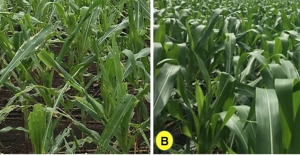
The fall armyworm [Spodoptera frugiperda (J.E. Smith); FAW] has emerged as a serious pest since 2016 in Africa, and since 2018 in Asia, affecting the food security and livelihoods of millions of smallholder farmers, especially those growing maize. Sustainable control of FAW requires implementation of integrated pest management strategies, in which host plant resistance is one of the key components. Significant strides have been made in breeding elite maize lines and hybrids with native genetic resistance to FAW in Africa, based on the strong foundation of insect-resistant tropical germplasm developed at the International Maize and Wheat Improvement Center, Mexico.

The Australian Office of the Gene Technology Regulator (OGTR) invites comments from the public to assess an application from Grasslanz Technology Australia Pty. Limited to conduct a field trial of perennial ryegrass genetically modified for increased metabolizable energy content. The field trial is proposed to run from April 2023 to December 2028 at up to seven sites per year, with a maximum total area of 12.5 hectares over the 5-year period.
Winter peas, also known as black peas, are annual legumes with excellent nitrogen-fixing abilities. Winter peas are mostly planted in the Pacific Northwest as a cover crop and for additional nitrogen in the soil. Aside from their nitrogen-fixing abilities, winter peas are also valuable for human consumption because of the high protein content with a nearly complete amino acid profile, absence of allergens common in soybeans and peanuts, and low glycemic index.
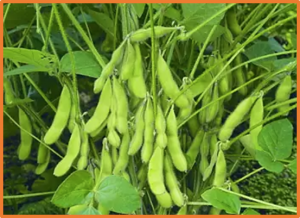
Breeding disease-resistant soybean [Glycine max (L.) Merr.] varieties is a common goal for soybean breeding programs to ensure the sustainability and growth of soybean production worldwide. However, due to global climate change, soybean breeders are facing strong challenges to defeat diseases. Marker-assisted selection and genomic selection have been demonstrated to be successful methods in quickly integrating vertical resistance or horizontal resistance into improved soybean varieties
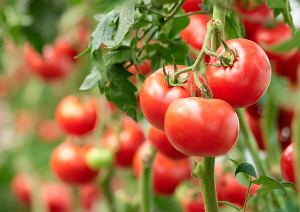
Researchers from the Boyce Thompson Institute (BTI) and Cornell University have completed the first study that provides a comprehensive picture of changes in gene expression in response to water stress in tomatoes and identified genes that could help plant breeders develop fruit that can cope with drought conditions. Led by BTI Assistant Professor Carmen Catalá, who is also a research associate in the School of Integrative Plant Science at Cornell and Philippe Nicolas