


News & Events
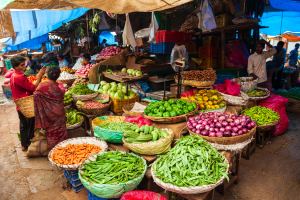
India remains undecided on adopting more genetically engineered crops, even if the regulatory authorities have granted environmental release approvals to GE eggplant and mustard. This report is according to the Agricultural Biotechnology Annual - 2022 for India by the Global Agricultural Information Network (GAIN). Insect resistant Bt cotton remains the only GE crop approved for commercial planting in India. Soy and canola oils derived from GE plants, along with some food ingredients from microbial biotechnology, are approved for importation.
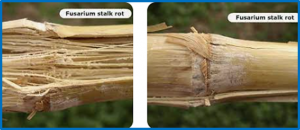
Fusarium stalk rot (FSR) of maize is an economically important post-flowering stalk rot (PFSR) disease caused by Fusarium verticillioides. The pathogen invades the plant individually, or in combination with other stalk rot pathogens or secondary colonizers, thereby making it difficult to make accurate selection for resistance. For identification and validation of genomic regions associated with FSR resistance, a genome-wide association study (GWAS) was conducted with 342 maize lines.
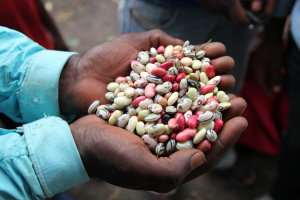
The USDA FAS Global Agricultural Information Network (GAIN) released updates on the status of agricultural biotechnology in Ghana. According to the report, Ghana recognizes the potential of biotechnology as a critical innovation to attain national food and nutrition security. The new administration of Ghana launched an initiative titled “Planting for Food and Jobs” to focus on increasing food security and domestic production of key crops, including corn, rice, and soybeans.
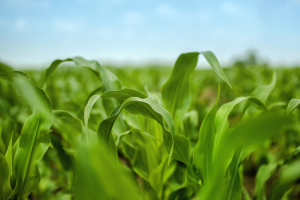
Scientists at the University of California San Diego (UC San Diego) have recently made a breakthrough in identifying the long-sought carbon dioxide (CO2) sensor in Arabidopsis plants and unraveled its functioning parts. Researchers have discovered more than 50 years ago that plants can sense CO2, but have not identified the sensor or explained how it works within plants.

Globally, sorghum is the fifth most important crop, which is used for food, feed and fuel. However, its production and productivity are severely limited by various stresses, including drought. Hence, this study aimed to determine the responses of different drought-tolerance related traits in the Ethiopian sorghum germplasm through multi-environment field trials, thereby identifying novel sources of germplasm that can be used for breeding the crop for drought-tolerance.
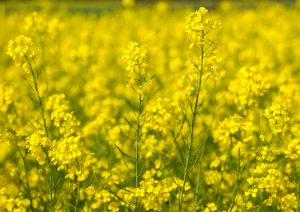
According to Union Minister of State (Independent Charge) of Science & Technology and Earth Sciences Dr. Jitendra Singh in a written reply to Parliamentarian Sushil Modi, field trials of genetically modified (GM) Dhara Mustard Hybrid-11 (DMH-11) showed approximately 28 percent more yield than the national check and 37 percent more than the zonal checks.
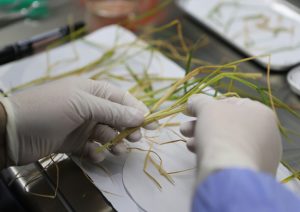
On December 4, 2022, the Chinese spaceflight Shenzhou-14 returned to Earth after six months in space. The third batch of space science experiment samples also arrived with the return capsule delivered to Beijing, including the world's first rice seedlings harvested in space. Together with the rice seedlings, experimental seeds of Arabidopsis thaliana, or thale cress, also grew vigorously in the space station.
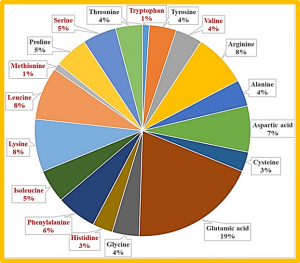
Soybean is an important crop for food, oil, and forage and is the main source of edible vegetable oil and vegetable protein. It plays an important role in maintaining balanced dietary nutrients for human health. The soybean protein content is a quantitative trait mainly controlled by gene additive effects and is usually negatively correlated with agronomic traits such as the oil content and yield.
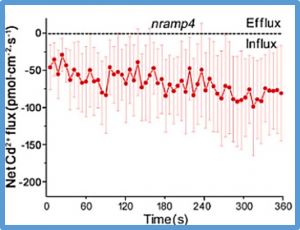
Researchers from the Hunan University of Arts and Science and Hunan Normal University in China reported that OsNramp4 aluminum transporter is involved in cadmium accumulation in rice grains. Their findings are published in the Reproduction and Breeding journal. Cadmium toxicity impacts several crops. Members of the OsNramp (Natural resistance-associated macrophage protein) gene family are vital in transporting specific cations in rice. To explore the role of OsNramp4 in cadmium ion transport, the researchers used CRISPR-Cas9 and generated OsNramp4 knockout lines.
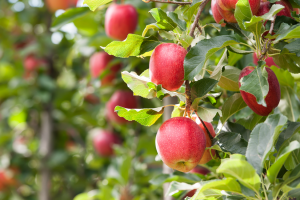
Experts from the Research and Innovation Centre of Edmund Mach Foundation and partners used CRISPR-Cas9 to MdPGT1 in apples, which led to reduced foliar phloridzin without impacting plant growth. The results are published in The Plant Journal. Phloridzin is the most abundant polyphenolic compound in apples, which results from the action of a critical phloretin-specific UDP-2′-O-glucosyltransferase (MdPGT1).

Crop wild relatives (CWRs) are recognized as the best potential source of traits for crop improvement. However, successful crop improvement using CWR relies on identifying variation in genes controlling desired traits in plant germplasms and subsequently incorporating them into cultivars. Epigenetic diversity may provide an additional layer of variation within CWR and can contribute novel epialleles for key traits for crop improvement. There is emerging evidence that epigenetic variants of functional and/or agronomic importance exist in CWR gene pools.

Scientists from Ghent University were able to increase the mutagenesis efficiency of the gene editing tool CRISPR by alternating heat shocks and recovery. The method was found to be useful for Cas9 and LbCas12a systems. CRISPR is a popular gene editing tool known for its precision and low-cost. Scientists continually try to improve the tool systems to achieve optimal results.