


News & Events

Seventy participants from 14 countries convened to discuss the possibility of setting up a global gene drive registry to determine its potential benefits and challenges that may be encountered in relation to the development and use of gene drive organisms.The registry could serve as a focal point for standardizing documentation, collating key information, and promoting situational awareness of projects coming from global multidisciplinary and multi-sector activities.
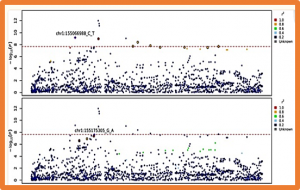
Critical COVID-19 is caused by immune-mediated inflammatory lung injury. Host genetic variation influences the development of illness requiring critical care or hospitalization after infection with SARS-CoV-2. The GenOMICC (Genetics of Mortality in Critical Care) study enables the comparison of genomes from individuals who are critically ill with those of population controls to find underlying disease mechanisms. Here we use whole-genome sequencing in 7,491 critically ill individuals compared with 48,400 controls to discover and replicate 23 independent variants that significantly predispose to critical COVID-19.

Researchers from the Amrita School of Biotechnology in India created a flexible CRISPR-Combo platform for simultaneous genome editing and gene activation in plants. The results of their study are summarized in Science Open. Plant genome engineering has benefited from CRISPR-Cas9, its derived base editors, and CRISPR activation systems. However, these systems are commonly applied separated, and thus their combined potential is not realized.
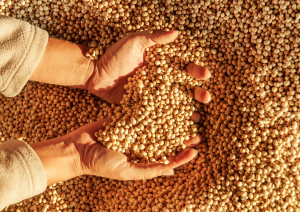
The European Food Safety Authority (EFSA) GMO Panel has released its Scientific Opinion on data submitted for the renewal of authorization applications for three genetically modified (GM) soybeans, including insect-resistant soybean MON 87701, insect-resistant and herbicide-tolerant soybean MON 87701 × MON 89788, and herbicide-tolerant 40-3-2 for food and feed uses, excluding cultivation within the European Union.
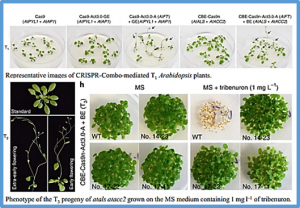
Plant genome engineering has greatly benefited from the use of CRISPR-Cas9, its derived base editors, and CRISPR activation systems. However, since these systems are typically used independently, their combined potential is largely unrealized. We create a flexible CRISPR-Combo platform for simultaneous genome editing (targeted mutagenesis or base editing) and gene activation in plants here, based on a single Cas9 protein
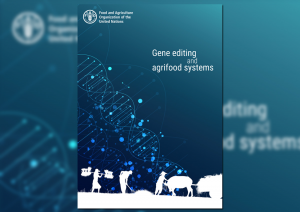
The Food and Agriculture Organization of the United Nations (FAO) has released Gene Editing and Agrifood Systems, a science- and evidence-based Issue Paper that presents a balanced discussion of the key aspects of gene editing, including the consequences for human hunger, human health, food safety, effects on the environment, animal welfare, socioeconomic impact and distribution of benefits.

A new public-private partnership project, Feed the Future Striga Smart Sorghum for Africa (SSSfA), has been launched in Kenya and Ethiopia. SSSfA is a project that utilizes CRISPR genome editing technology to develop new sorghum varieties resistant to Striga. Striga is a parasitic weed responsible for up to 100 percent yield loss in Africa's staple cereals, thus posing a great danger to the livelihoods of millions of smallholder farmers on the continent.
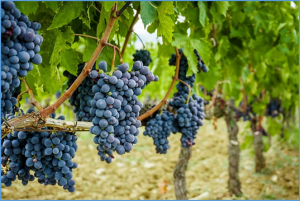
The improvement of grapevine through biotechnology requires identification of the molecular bases of target traits by studying marker-trait associations. The Vitis18K SNP chip provides a useful genotyping tool for genome-wide marker analysis. Most linkage maps are based on single mapping populations, but an integrated map can increase marker density and show order conservation.

With every record-breaking summer or unprecedented weather event, the need to understand and reduce our carbon emissions grows increasingly urgent. But not all greenhouse gases come from smokestacks and exhaust pipes. From methane bubbles to carbon dioxide diffusion, our planet’s freshwater systems are a significant, if under recognized, source of carbon. How can we better quantify these freshwater emissions? And is there anything we can to do to mitigate them?

The annual United Nations climate conference, held in Sharm el-Sheikh, Egypt, gathered 45,000 people from all over the world. Young folks from Africa sang and danced daily for Earth’s future in the Children and Youth Pavilion, adjacent to the first-ever Food and Agriculture Pavilion hosted by CGIAR, the UN Food and Agriculture Organization and the Rockefeller Foundation.

Variations in root system architecture (RSA) affect the functions of roots and thus play vital roles in plant adaptations and agricultural productivity. The aim of this study was to unravel the genetic relationship between RSA traits and shoot-related traits in soybean. This study characterized RSA variability at seedling stage in a recombinant inbred population, derived from a cross between cultivated soybean C08 and wild soybean W05, and performed high-resolution quantitative trait locus (QTL) mapping

November 2022 was a watershed moment when the world population crossed 8 billion. In 2011 the world population was 7 billion and by 2050 it is expected to touch 9.8 billion. The world’s population more than tripled between 1950 and 2020. More than half of the projected increase in the global population up to 2050 will be concentrated in eight countries: the Democratic Republic of the Congo, Egypt, Ethiopia, India, Nigeria, Pakistan, the Philippines and Tanzania. Countries of sub-Saharan Africa are expected to contribute more than half of the increase anticipated through 2050.