


News & Events

The plant breeding and CRISPR plant market in Latin America is projected to attain a market increase in the forecast period of 2021 to 2028, with a compound annual growth rate (CAGR) of 12.7 %, and is expected to reach USD 11.1 million by 2028. These figures are based on the market report of Data Bridge Market Research.
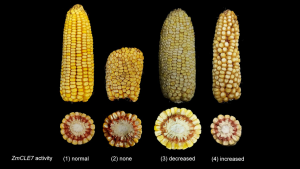
Low efficiency is the main obstacle to using prime editing in maize (Zea mays). Recently, prime-editing efficiency was greatly improved in mammalian cells and rice (Oryza sativa) plants by engineering prime editing guide RNAs (pegRNAs), optimizing the prime editor (PE) protein, and manipulating cellular determinants of prime editing. In this study, we tested PEs optimized via these three strategies in maize.

Efficiency is the main challenge in prime editing in maize. In research involving mammalian cells and rice, prime editing efficiency was significantly improved through prime editing guide RNAs (pegRNAs) that led to optimizing the primer editor (PE) protein and modifying cellular determinants of prime editing. Thus, the research team tested the same strategy in maize using a system called ePE5.

Chinese scientists were able to multiply sweet potatoes by utilizing both Agrobacterium rhizogenes and the crop's natural transgenic trait. Their method skips the need for tissue culture to obtain genetically modified sweet potato plants. According to previous studies, sweet potato is a naturally transgenic plant that contains two Agrobacterium transfer DNAs: IbT-DNA1 and IbT-DNA2.

Recent calls to establish a global project registry before releasing any gene-drive-modified organisms (GDOs) have suggested a registry could be valuable to coordinate research, collect data to monitor and evaluate potential ecological impacts, and facilitate transparent communication with community stakeholders and the general public. Here, we report the results of a multidisciplinary expert workshop on GDO registries convened on 8–9 December 2020 involving 70 participants from 14 countries.

A project that will generate high-quality reference genomes for the nearly 1,000 known species of euglenoids was launched in November by the Euglena International Network (EIN), a network of scientists who believe that the initiative has the potential to drive breakthroughs ranging from new biofuels and sustainable foods to cancer medicines.

The New Zealand Intellectual Property Office announced that the New Plant Variety Rights Act and Regulations will come into force on January 24, 2023. According to the recommendations of the Wai 262 report, the following changes will be implemented:
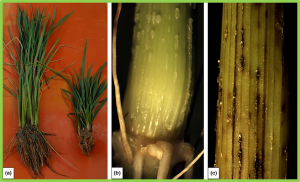
Rice black-streaked dwarf virus disease is one of the most destructive rice viral diseases in China and East Asia. Progress has been limited in RBSDVD resistance breeding due to inadequate knowledge on the underlying functional genes. In this study, a major QTL for RBSDV (rice black-streaked dwarf virus) independent of SBPH (small brown planthopper) resistance was mapped in a 1.8 Mb interval on chromosome 6 by using an F2:3 population originated from resistant rice variety Wuke.

As future scientific experts and scholars on the subject of genetically modified organisms (GMOs), students of life sciences became the subject of a study that was meant to assess the correctness of their knowledge of GMOs and GM foods. The results of the study further emphasized the need for robust science education to understand both topics better.

A team of scientists has combined three advanced research techniques that are rarely used together and found how different types of plants protect themselves from harsh conditions. The three techniques reveal a surprising amount of information about the chemical processes inside plants.Scientists working under the Facilities Integrating Collaborations for User Science (FICUS) program examined the effects of drought on chemical processes inside the roots of three tropical rainforest species
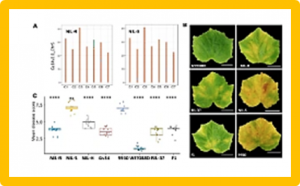
Downy mildew (DM) caused by the oomycete pathogen Pseudoperonospora cubensis is an important disease of cucumber and other cucurbits. Our knowledge on molecular mechanisms of DM resistance is still limited. In this study, we reported identification and functional characterization of the candidate gene for the major-effect QTL, dm5.3 for DM resistance originated from PI 197088.

A new public-private partnership project, Feed the Future Striga Smart Sorghum for Africa (SSSfA), has been launched in Kenya and Ethiopia. SSSfA is a project that utilizes CRISPR genome editing technology to develop new sorghum varieties resistant to Striga. Striga is a parasitic weed responsible for up to 100 percent yield loss in Africa's staple cereals, thus posing a great danger to the livelihoods of millions of smallholder farmers on the continent.