


News & Events
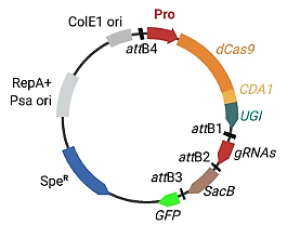
Phytopathogenic bacteria play important roles in plant productivity, and developments in gene editing have potential for enhancing the genetic tools for the identification of critical genes in the pathogenesis process. CRISPR-based genome editing variants have been developed for a wide range of applications in eukaryotes and prokaryotes. However, the unique mechanisms of different hosts restrict the wide adaptation for specific applications. Here, CRISPR-dCas9 (dead Cas9) and nCas9 (Cas9 nickase) deaminase vectors were developed for a broad range of phytopathogenic bacteria.
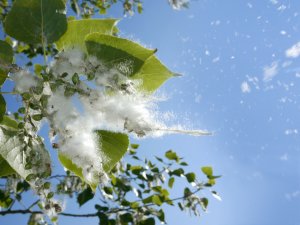
Researchers from the University of Georgia (UGA) used CRISPR gene-editing to make poplar trees flower within months instead of seven to 10 years. This breakthrough may help speed up breeding trees with improved traits such as cold or drought tolerance. The findings are published in New Phytologist. “Previous methods for inducing early flowers in poplars were inconsistent and labor intensive. This is a major barrier to research,” said CJ Tsai, professor and eminent scholar with the Georgia Research Alliance.
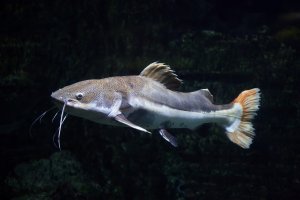
A team of scientists from the United States and the Philippines used CRISPR-Cas9 to establish a sterile catfish line with enhanced disease resistance to fish pathogens while lowering the potential environmental risks of introgression if escape happens. This development improves not only the consumer-valued traits of the fish, but also guards against genetic contamination. Using CRISPR-Cas9, the scientists successfully integrated the cathelicidine gene from an alligator into the target luteinizing hormone (LH) locus of the channel catfish.
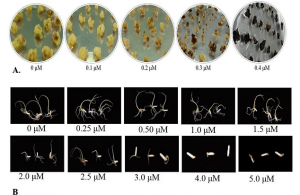
Rice (Oryza sativa) is one of the primary food crops which contribute major portion of daily calories intake. It is used as model crop for various genome editing studies. Basmati rice was also explored for establishing non-homologous end joining based genome editing. But it was not clear whether homology directed repair-based genome editing can be done in Basmati rice. The current study was designed to establish homology directed repair-based genome editing in Basmati rice to develop herbicide tolerance.
CRISPR-Cas systems have diverse proteins and functions that help protect themselves against foreign invaders. This defense is based on a common mechanism, a CRISPR ribonucleic acid (crRNA), a "guide RNA" that helps detect regions of a foreign genome, such as the DNA of a virus, for targeted cleavage. The CRISPR-associated (Cas) nuclease directed by a crRNA can cut its target like a pair of scissors, a strategy of nature that humans have harnessed in many technologies.

In December 2022, GDM, an Argentinean company working on improving soybeans, announced that Brazil's National Technical Biosafety Commission (CNTBio) has approved its first gene-edited drought tolerant soybean. André Beló, manager of new technologies at GDM, said that the gene-edited soybean was approved by CNTBio in Brazil in May, and greenlighted by the Argentine government in November. The company plans to commercialize the variety in Brazil during the 2027/28 harvest.

Drought is an important constraint to agricultural productivity worldwide and is expected to worsen with climate change. To assist farmers, especially in sub-Saharan Africa (SSA), to adapt to climate change, continuous generation of stress-tolerant and farmer-preferred crop varieties, and their adoption by farmers, is critical to curb food insecurity. Maize is the most widely grown staple crop in SSA and plays a significant role in food security.

Even if U.S. consumers are reluctant to gene-edited foods, they are most concerned about the taste of foods. This is according to a survey conducted by Washington State University published in PLOS One journal. Over 2,800 U.S. consumers were asked about their acceptance of gene-edited table grapes, even if there is no such product yet on the market.

Scientists from the Max Planck Institute of Molecular Plant Physiology use a ground-breaking twist to the CRISPR tool to edit plant genomes. The discovery, signaling a methodology change, could simplify and speed up the development of novel, genetically stable commercial crop varieties by combining grafting with a ‘mobile' CRISPR tool.
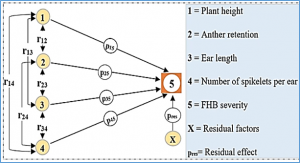
With the high interest for semi-dwarf cultivars in wheat, finding locally adapted resistance sources against Fusarium head blight (FHB) and FHB-neutral reduced height (Rht) genes is of utmost relevance. In this study, 401 genotypes of European origin without/with dwarfing alleles of Rht-D1 and/or Rht24 were analysed across five environments on FHB severity and the morphological traits such as plant height (PH), anther retention (AR), number of spikelets per ear, ear length and ear density.

Chinese scientists developed a new tool to unravel fungal genomes to help identify medically valuable compounds. The Multiplex Base-Editing (MBE) platform not only reduced their research timeline by 80%, but it also generated at least five fungal compounds that have not been documented before. According to reports, this is the first time the MBE was used to identify fungal genomes for medically valuable compounds.
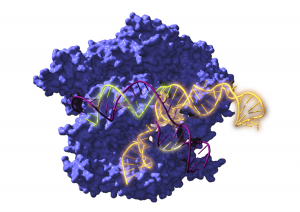
For the first time, an international research group has reconstructed the ancestors of the well-known CRISPR-Cas system dating back 2.6 billion years and studied their evolution over time. Led by Ikerbasque research professor Rául Pérez-Jiménez of CIC nanoGUNE, the researchers find that the revitalized systems not only work but are more versatile than current versions.