


News & Events
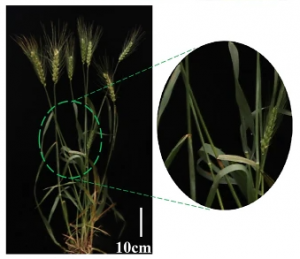
Broad-spectrum disease resistance genes are desirable in crop breeding for conferring stable, durable resistance in field production. Pm21(4#) is a gene introduced from wild Haynaldia villosa into wheat that confers broad-spectrum resistance to wheat powdery mildew and has been widely used in wheat production for approximately 30 years. The discovery and transfer of new functional haplotypes of Pm21 into wheat will expand its genetic diversity in production and avoid the breakdown of resistance conferred by a single gene on a large scale.
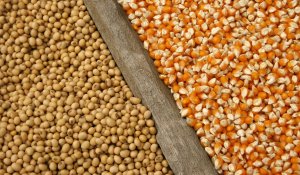
China's Yuan Longping High-tech Agriculture has received biosafety certificates for genetically modified (GM) corn and soybean seeds. These approvals will pave the way for the commercial cultivation of the GM seeds. The GM corn was developed in partnership with the Biotechnology Research Institute of the Chinese Academy of Agricultural Sciences. It exhibits significant resistance to main corn pests and can tolerate four times the normal dosage of glyphosate herbicide.

To decrease the effects of herbicide resistance on weeds, scientists from the College of Agriculture and Biotechnology in Zhejiang University developed a dual herbicide tolerant maize that aims to assist Chinese farmers in crop management. Glyphosate resistance in weeds is considered a severe threat to weed management systems. To address this, the scientist developed and characterized herbicide tolerant maize event SCB-29 that expresses cp4 esps and bar genes.
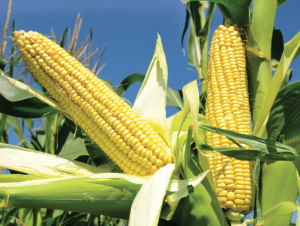
Genetically modified (GM) crops tolerant to glyphosate have delivered significant economic benefits in farm management. However, the evolution of glyphosate resistance in weeds due to prolonged intensive use of glyphosate poses a serious threat to this weed management system. It is highly desirable in China to deploy dual herbicide-tolerant corn at the very beginning of GM corn release to delay the development of weed resistance to herbicides. Here, we report the creation and characterization of a herbicide-tolerant corn event SCB-29 that expresses both cp4 epsps and bar genes.

ISAAA Inc., in partnership with Winrock International through the Building Safe Agricultural Food Enterprises (B-SAFE) Project, will hold the webinar on Biotechnology Applications and Impact on the Philippine Livestock Industry on January 31, 2023, at 10:00 AM (GMT+8). The registration is now open. The online event is part of a webinar series to raise awareness of the general public on the impact of livestock and fishery biotechnology.

To attain transformation in the agrifood systems, changes in the policies, mindsets, and business models must also take place. This message was highlighted by QU Dongyu, Director-General of the Food and Agriculture Organization of the United Nations, during the virtual dialogue of the UN Food Systems Coordination Hub held on January 12, 2023. The virtual dialogue was attended by over 200 participants from 100 countries, including high-level national officials.
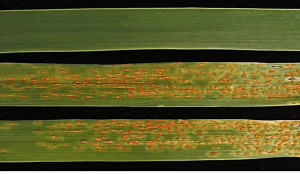
Leaf rust (Puccinia triticina) is one of the most devastating fungal diseases of wheat (Triticum aestivum L.). Discovery and identification of new resistance genes is essential to develop disease-resistant cultivars. An advanced breeding line Yang16G216 was previously identified to confer adult-plant resistance (APR) to leaf rust. In this research, a recombinant inbred line (RIL) population was constructed from the cross between Yang16G216 and a highly susceptible line Yang16M6393, and genotyped with exome capture sequencing and 55 K SNP array.
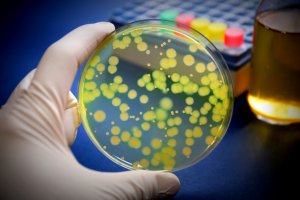
A team of researchers from the University of Missouri and partners reported efficient CRISPR-Cas9-based cytosine base editors for phytopathogenic bacteria. The results are published in Communications Biology. Phytopathogenic have crucial functions in plant productivity. The advances in gene editing could help improve the genetic tools used in the identification of vital genes in the pathogenesis process.

Scientists were able to establish a template-directed CRISPR-Cas9 system for Super Basmati Rice by detecting desired substitutions at the target site Acetolactate Synthase (ALS) gene. Using the template, they developed a genome-edited herbicide tolerant Basmati rice. Rice is a staple food in many countries, especially in Asia. Weed management is vital to rice cultivation and some farmers find it convenient to use herbicides.
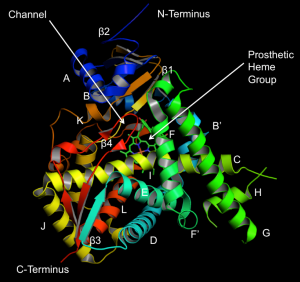
The utilization of male sterility in cotton plays a vital role in improving yield and fiber quality. A complete male sterile line (ms5ms6) has been extensively used to develop hybrid cotton worldwide. Using Zhongkang-A (ZK-A) developed by transferring Bt and ms5ms6 genes into the commercial cultivar Zhongmiansuo 12, the duplicate genes were map-based cloned and confirmed via the virus-induced gene silencing (VIGS) assays. The duplicate mutations of GhCYP450 genes encoding a cytochrome P450 protein were responsible for producing male sterility in ms5ms6 in cotton.
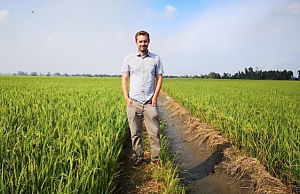
A new study from the University of Sheffield reveals that genetically modifying rice for better salt tolerance could allow it to be grown in places it would otherwise fail, making the crop adapted to survive in environments that have become harsher due to climate change and also help tackle global food insecurity. As sea levels rise as a result of climate change, saltwater floods more land and destroys crops that cannot cope with increased salinity.
China's Ministry of Agriculture and Rural Affairs (MARA) issued new and renewed biosafety certificates for eight genetically modified (GM) crops on January 13, 2023, following the conclusion of the National Biosafety Committee (NBC) meeting in December 2022. The approvals include eight new and two renewed certificates issued for GM crops approved for import as processing materials.