


News & Events
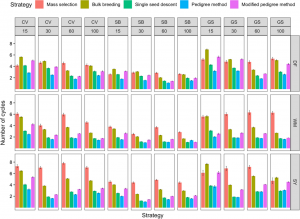
Dry beans (Phaseolus vulgaris L.) are a nutrient dense legume that is consumed by developed and developing nations around the world. The progress to improve this crop has been quite steady. However, with the continued rise in global populations, there are demands to expedite genetic gains. Plant breeders have been at the forefront at increasing yields in the common bean. As breeding programs are both time-consuming and resource intensive, resource allocation must be carefully considered. To assist plant breeders, computer simulations can provide useful information that may then be applied to the real world.
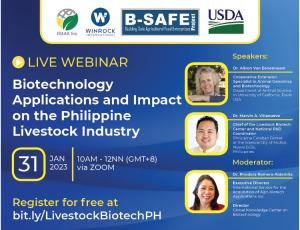
ISAAA Inc., in partnership with Winrock International through the Building Safe Agricultural Food Enterprises (B-SAFE) Project, will hold the webinar on Biotechnology Applications and Impact on the Philippine Livestock Industry on January 31, 2023, at 10:00 AM (GMT+8). The registration is now open. The online event is part of a webinar series to raise awareness of the general public on the impact of livestock and fishery biotechnology. It also aims to highlight the current opportunities and potential benefits of trait improvements related to food and agriculture and resilience to climate change.
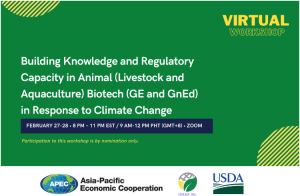
ISAAA Inc., in cooperation with the US Department of Agriculture under the Asia-Pacific Economic Cooperation (APEC) High-Level Policy Dialogue on Agricultural Biotechnology (HLPDAB) Forum, organizes the virtual workshop titled Building Knowledge and Regulatory Capacity in Animal (Livestock and Aquaculture) Biotech (GE and GnEd) in Response to Climate Change to be held on February 27-28, 2023. ISAAA Inc. will host the event via Zoom.
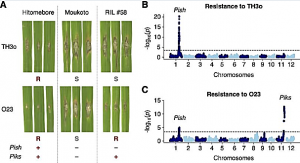
Studies focused solely on single organisms can fail to identify the networks underlying host-pathogen gene-for-gene interactions. Here, we integrate genetic analyses of rice (Oryza sativa, host) and rice blast fungus (Magnaporthe oryzae, pathogen) and uncover a new pathogen recognition specificity of the rice nucleotide-binding domain and leucine-rich repeat protein (NLR) immune receptor Pik, which mediates resistance to M. oryzae expressing the avirulence effector gene AVR-Pik. Rice Piks-1, encoded by an allele of Pik-1, recognizes a previously unidentified effector encoded by the M. oryzae avirulence gene AVR-Mgk1, which is found on a mini-chromosome.
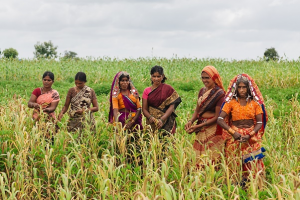
When women are more involved in the workforce, the dietary diversity of their households improves. The extra time that women use at work does not have adverse effects on their health. Women’s paid and unpaid work impacts dietary diversity in different ways: paid work results in financial independence and empowerment in household decision-making that allows women to diversify diets. Unpaid work increases the number of food groups produced by women for consumption by their households.

Climate change is a worldwide emergency, a global issue that challenges the international community and calls for holistic solutions. As the impacts of climate change intensify, human security is increasingly under pressure. These threats are most prevalent in the Global South, which is least prepared to face climate-related security crises. The case of North Africa’s Sahel, one of the most vulnerable regions in the world, confirms this. The Sahel region is experiencing increased climate stress, which is contributing to resource scarcity and fueling tensions over resource accessibility.
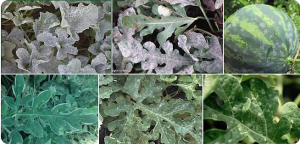
Powdery mildew (PM) is one of the most destructive fungal diseases of melon, which significantly reduces the crop yield and quality. Multiple studies are being performed for in-depth genetic understandings of PM-susceptibility or -resistance mechanisms in melon plants, but the holistic knowledge of the precise genetic basis of PM-resistance is unexplored. In this study, we characterized the recessive gene “Cmpmr2F” and found its association with resistance against the PM causative agent “Podosphaera xanthii race 2F.” Fine genetic mapping revealed the major-effect region of a 26.25-kb interval on chromosome 12, which harbored the Cmpmr2F gene corresponding to the MELO3C002403, encoding allantoate amidohydrolase.
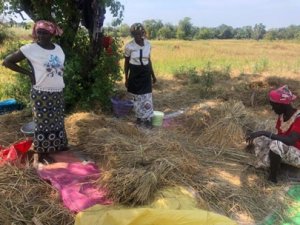
Close to the border of Guinea Bissau, two small villages recently started resettling efforts after having left their homes abandoned for more than 30 years. The villages of Bissine and Singhere were among the strongest affected by the separatist Movement of Democratic Forces of Casamance in southern Senegal in the 1990s. Severe security issues remained until 2021 when de-mining activities by Humanity & Inclusion, an NGO, and the government made the zone safe for resettlement.

Today the FAO Director-General, QU Dongyu, met at FAO headquarters in Rome with H.E. Antonio Tajani, Deputy Prime Minister and Minister for Foreign Affairs and International Cooperation of Italy. The Director-General thanked the Minister for the long-term generous support from Italy as host country to FAO and many other UN agencies, for the steadfast commitment to achieving a hunger-free world, and looked forward to further strengthening collaboration to tackle global food security challenges.
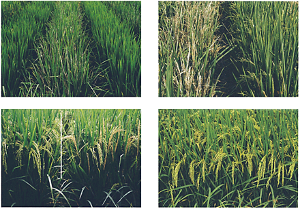
Transgene escape could lead to genetically modified rice establishing wild populations in the natural environment, where they would compete for survival space with weeds. However, whether the expression of Bacillus thuringiensis (Bt) gene in rice will alter the relationship between transgene plants and weeds and induce undesirable environmental consequences are poorly understood. Thus, field experiments were conducted to investigate the weed competitiveness and assess the ecological risk of transgenic Bt rice under herbicide-free and lepidopterous pest controlled environment.
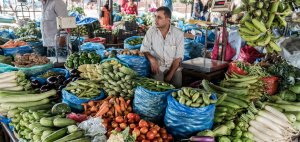
Asia’s cities are growing at such a fast pace that nearly 55 percent of the region’s enormous population is expected to reside in urban areas by 2030, and that will have equally enormous consequences for urban food security and nutrition, according to the main findings of a new report by four United Nations agencies. But the threat is not only a future concern, the results are being felt now, according to the ‘Asia and the Pacific Regional Overview of Food Security and Nutrition 2022 – Urban Food Systems and Nutrition’.

Researchers from the Huazhong Agricultural University in Wuhan, China conducted field trials to investigate weed competitiveness and assess the ecological risk of transgenic Bt rice in herbicide-free and lepidopteran pest-controlled environments. They found out that the ecological risk of the Bt rice is comparable to its non-Bt counterpart. The researchers aimed to understand better if the expression of the Bt gene in rice will affect the relationship between transgene plants and weeds and then cause undesirable environmental consequences.