


News & Events
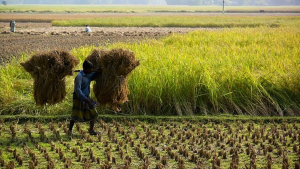
Over the last 50 years, the Bangladesh Rice Research Institute (BRRI) has developed and released new varieties and conducted variety trials to assess their performance. Within this period, the yield has increased due to improved management (agronomic trend) and plant breeding efforts (genetic trend). Genetic gain can be defined as the rate of increase in performance over a period of time that is achieved through artificial selection and breeding programs.
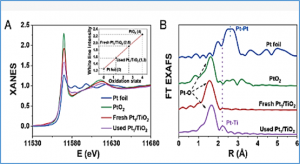
Nitrogen oxide (NOx) pollution presents a severe threat to the environment and human health. Catalytic reduction of NOx with H2 using single-atom catalysts poses considerable potential in the remediation of air pollution; however, the unfavorable process of H2 dissociation limits its practical application. Herein, we report that the in situ formation of PtTi cocatalytic sites (which are stabilized by Pt–Ti bonds) over Pt1/TiO2 significantly increases NOx conversion by reducing the energy barrier of H2 activation.
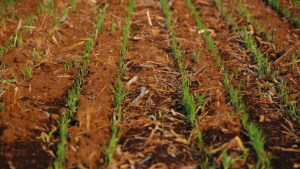
Rice is one of the major food cash crops in the Philippines, yet the cost of producing it in the country remains higher than the other top rice-producing countries in Southeast Asia. In 2013, rice farmers in the Philippines–as represented by Nueva Ecija–expended USD 0.22/KG to produce unmilled rice, whereas their Thai (in Suphanburi) and Vietnamese (in Can Tho) counterparts spent only USD 0.16/kg and USD 0.12/kg, respectively
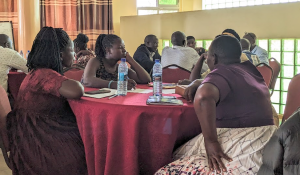
On Monday February 6th, a co-design workshop was organized in Iganga, Uganda. The objective of the workshop was to get ideas for the design of an intervention that highlights consumption-related traits of improved seed varieties, which in turn is expected to increasing varietal turnover of seed among smallholder farmers. The workshop was attended by District Agricultural Officers, scientists from the National Agricultural Research Organization (NARO), extension officers, maize farmers, agro-input dealers, traders, and maize processors
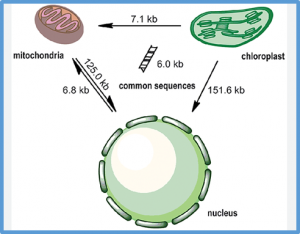
Here, through analyzing the polymorphisms of these organelles in 2580 soybean accessions including 107 wild soybeans, we found that the chloroplast genome is more variable than the mitochondrial genome in terms of variant density. Consistent with this, more haplotypes were found in the chloroplast genome (44 haplotypes) than the mitochondrial genome (30 haplotypes). These haplotypes were distributed extremely unevenly with the top two haplotypes (CT1 and CT2 for chloroplasts, MT1 and MT2 for mitochondria)
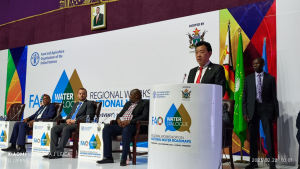
“We clearly need to rethink how we use the water we have in a sustainable and equitable way – with innovations in agriculture being at the forefront”, the Director-General of the Food of Agriculture Organization of the United Nations (FAO), QU Dongyu, told African leaders and experts during the high-level opening of the first FAO regional workshop on National Water Roadmaps in Zimbabwe.

As the sheer devastation provoked by the earthquake that hit Türkiye and the Syrian Arab Republic on 6 February 2023 continues to be revealed, the Food and Agriculture Organization of the United Nations (FAO) is scaling operations on the ground in both countries focusing on the needs of rural communities who have been less visible in this crisis but are also reeling from the impacts, including those hosting earthquake victims from nearby towns and cities.
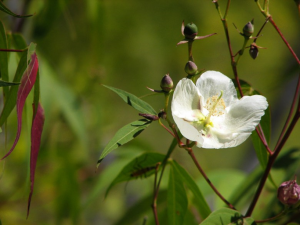
Cotton can undergo low-temperature stress at the seedling emergence stage, which adversely affects growth and yield; however, the regulatory mechanism underlying cold tolerance remains nebulous. Here, we analyze the phenotypic and physiological parameters in 200 accessions from 5 ecological distributions under constant chilling (CC) and diurnal variation of chilling (DVC) stresses at the seedling emergence stage.
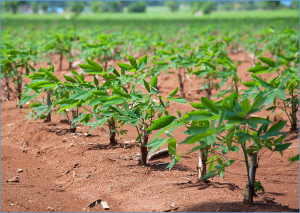
Pioneering research led by Rebecca Bart from Donald Danforth Plant Science Center and her collaborators at the University of California Los Angeles and the University of Hawaii at Manoa shows that epigenome editing can reduce cassava bacterial blight (CBB) symptoms in cassava plants while maintaining normal growth and development.CBB is a devastating disease that causes crop losses worldwide. CBB is a devastating disease that causes crop losses worldwide.

Grain and oilseed groups forwarded their comments to the White House of Science and Technology (OSTP) to call for more transparency, better communication, and broader accountability of the US government agencies in developing and commercializing biotech products in the country. The coalitions recommended some amendments in the Coordinated Framework for the Regulation of Biotechnology, which was last updated in 2017.
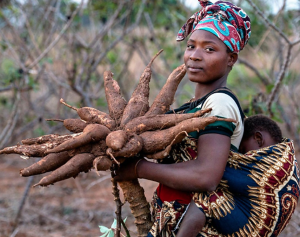
Cytosine DNA methylation is involved in transposable element (TE) silencing, imprinting and X‐chromosome inactivation. Plant DNA methylation is mediated by MET1 (mammalian DNMT1), DRM2 (mammalian DNMT3) and two plant‐specific DNA methyltransferases, CMT2 and CMT3. To dissect the haplotype‐resolved DNA methylome of cassava, we conducted methylome studies in two haplotype genome‐resolved accessions of cassava (TME7 and TME204) using whole‐genome bisulfite sequencing (WGBS) and enzymatic methyl‐seq (EM‐seq), respectively.
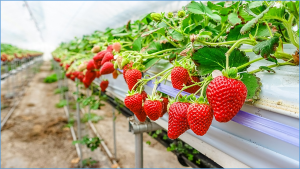
A Singapore-based company recently launched the world's first climate-resilient strawberry. Their purpose is to make strawberries more affordable to consumers while reducing the environmental impact of their production.Genomics-based science is gaining popularity in the food industry, especially in developing nutrient-dense plant varieties resilient to drought and diseases. Advanced genomics is expected to aid strawberries' large-scale production in tropical countries by breaking seasonal and temperature barriers.