


News & Events
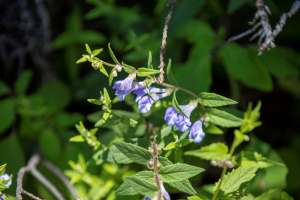
An international collaboration of researchers led to sequencing of skullcap plant's genome. It helped identify how the plant produces a compound called scutebarbatine A that is known to act against a range of cancer cells.The skullcap plant (Scutellaria barbata) is more commonly known in China as banzhilian. It is used for the treatment of different medical conditions in Traditional Chinese Medicine (TCM). TCM practitioners would boil the plant for two hours and dry the extract to produce a powder that has its isolated medicinal chemistry.
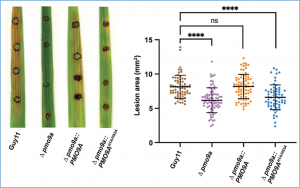
Blast disease in cereal plants is caused by the fungus Magnaporthe oryzae and accounts for a significant loss in food crops. At the outset of infection, expression of a putative polysaccharide monooxygenase (MoPMO9A) is increased. MoPMO9A contains a catalytic domain predicted to act on cellulose and a carbohydrate-binding domain that binds chitin. A sequence similarity network of the MoPMO9A family AA9 showed that 220 of the 223 sequences in the MoPMO9A-containing cluster of sequences have a conserved unannotated region with no assigned function

Australia's Gene Technology Regulator (OGTR) has issued license DIR 191 to International Flower Developments Pty. Ltd., authorizing the commercial import and distribution of chrysanthemums genetically modified (GM) for altered flower color. GM chrysanthemum cut flowers are authorized to be sold throughout Australia, but they will not be grown in the country or used in commercial human food and animal feed.
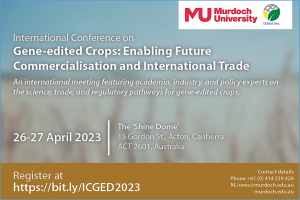
Murdoch University, ISAAA Inc., and partners aim to assist both small and large-scale exporters in understanding the potential of gene editing for crop improvement, and the issues related to trade in gene-edited produce. Thus, a two-day international meeting titled International Conference on Gene-edited Crops: Enabling Future Commercialisation and International Trade is being organised on April 26-27, 2023 at The Shine Dome, ACT, Australia.
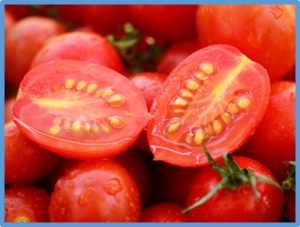
Seeds are essential for plant reproduction, survival, and dispersal. Germination ability and successful establishment of young seedlings strongly depend on seed quality and on environmental factors such as nutrient availability. In tomato (Solanum lycopersicum) and many other species, seed quality and seedling establishment characteristics are determined by genetic variation, as well as the maternal environment in which the seeds develop and mature.
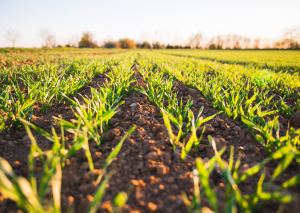
Gene drive technology is a genetic phenomenon occurring in nature and causing an identified trait to spread through a species through sexual reproduction over several generations, with an inheritance rate higher than the Mendelian rate of 50%. While gene drives have been used for public health and conservation, the approach could also be used in other species that reproduce sexually in short generation times, including agricultural pests.
Researchers from Australia and New Zealand studied the relationship of trust with social attitudes and motivations in forming perspectives on scientific issues such as climate change, vaccines, and gene drives. The findings are published in the Journal of Trust Research. Trust in science and scientists (TSS) is an emerging field of interest that explores science applications and their impact to society.
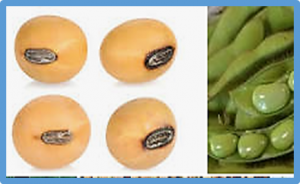
Soybean isoflavones are secondary metabolites of great interest owing to their beneficial impact on human health. Herein, we profiled the seed isoflavone content by HPLC in 1551 soybean accessions grown in two locations for two years and constructed two extreme pools with high (4065.1 µg g−1) and low (1427.23 µg g−1) isoflavone contents to identify candidate genes involved in isoflavone biosynthesis pathways using bulk segregant analysis sequencing (BSA-seq) approach.
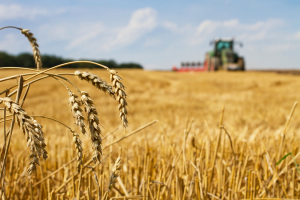
Rothamsted Research reported the completion of the field trial of the United Kingdom's gene-edited wheat. Researchers are now a step closer to bringing the wheat variety with lower asparagine levels to farmers and consumers. The field trial exhibited that the gene-edited wheat's asparagine level was 50% lower than Cadenza, the variety used as control during the study. Asparagine in wheat grains are converted to acrylamide, a potential carcinogen that can cause cancer, when cooked.
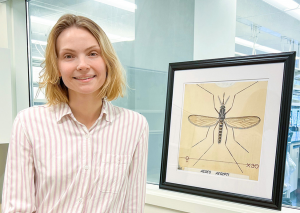
A 2017 report from the World Health Organization reports that mosquito-transmitted diseases such as malaria, dengue, and Chikungunya affect an estimated 347.8 million people each year and are responsible for nearly 450,000 deaths, making mosquitoes one of the most dangerous animals in the world. Kathryn Rozen-Gagnon, assistant professor at the department of molecular genetics in the Temerty Faculty of Medicine of the University of Toronto, is now studying the relationship between mosquito-borne viruses and their mosquito and human hosts.
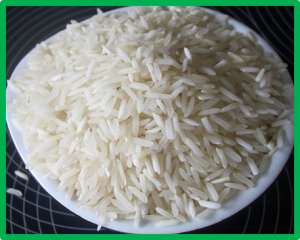
Fragrance is one of the most important quality traits for breeding in rice. The natural aroma substance 2-acetyl-1-pyrroline (2-AP) is a key fragrance compound among over 200 volatiles identified in fragrant rice. In addition to rice, there are other plant species that contain a germplasm that naturally produces a fragrant aroma. These other plant species all have lower activity levels of the enzyme BETAINE ALDEHYDE DEHYDROGENASE 2 (BADH2).

One of the most essential characteristics considered in rice breeding is fragrance. A key fragrance compound known as 2-acetyl-1-pyrroline (2-AP) is just one of the over 200 substances present in fragrant rice. Other plants also contain such substances that provides fragrant aroma, and they exhibit low levels of BETAINE ALDEHYDE DEHYDROGENASE 2 (BADH2). Experts from South China Agricultural University and University of Western Ontario reviewed the recent research involving BADH2 engineering using CRISPR-Cas9.