


News & Events
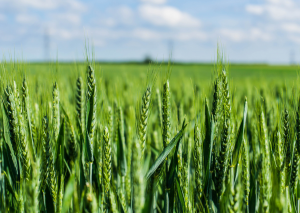
An international group of scientists found that the right number of copies of a specific group of genes can stimulate longer root growth, enabling wheat plants to pull water from deeper supplies, with the resulting plants producing more biomass and higher grain yield. The study published in the journal Nature Communications provides novel tools to modify wheat root architecture to help the plants withstand low water conditions,
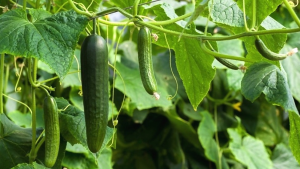
The compact (cp) phenotype in cucumber (Cucumis sativus L.) is an important plant architecture-related trait with a great potential for cucumber improvement. In this study, we conducted map-based cloning of the cp locus, identified and functionally characterized the candidate gene. Comparative microscopic analysis suggested that the short internode in the cp mutant is due to fewer cell numbers.
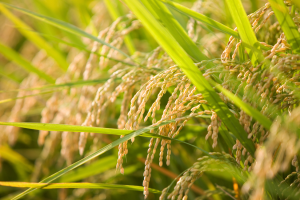
A study published in CABI Reviews takes a look at gene editing techniques and suggests that the CRISPR-Cas method could be a possible ‘savior' for rice crops threatened by climate change and high food demand. The review highlights that while rice is one of the most consumed cereals worldwide and feeds about three billion people, climate-induced abiotic and biotic stresses have affected the production and quality of rice crops
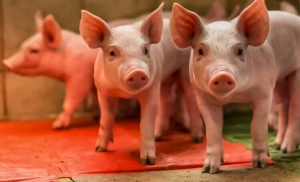
Researchers from South China Agricultural University and partners explored the digestion and utilization of plant-based diets by transgenic pigs. The results of their study are released in Transgenic Research. Transgenic pigs with three microbial enzymes (β-glucanase, xylanase, and phytase) in their saliva were developed for reduced phosphorus and nitrogen emissions and improved growth performances.
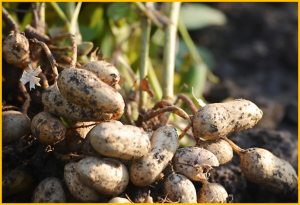
A genome-wide association study (GWAS) on component traits of LLS resistance in an eight-way multiparent advance generation intercross (MAGIC) population of groundnut in the field and in a light chamber (controlled conditions) was performed via an Affymetrix 48 K single-nucleotide polymorphism (SNP) ‘Axiom Arachis’ array. Multiparental populations with high-density genotyping enable the detection of novel alleles.

Murdoch University, ISAAA Inc., and partners aim to assist both small and large-scale exporters in understanding the potential of gene editing for crop improvement, and the issues related to trade in gene-edited produce. Thus, a two-day international meeting titled International Conference on Gene-edited Crops: Enabling Future Commercialisation and International Trade is being organised on April 26-27, 2023 at The Shine Dome, ACT, Australia.
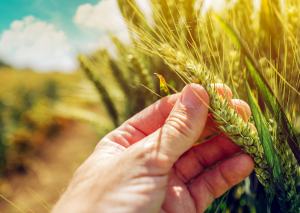
This approval follows Brazil's previous approval for food and feed use of HB4 Wheat flour in November 2021. The approval also enables the acceleration of Bioceres' collaboration with EMBRAPA (Brazil's Agricultural Research Corporation) to develop subtropical wheat varieties to increase the supply of local materials in the region. HB4 Wheat offers the potential for double cropping – rotating wheat with a summer legume – in regions of the country that are currently limited by water availability.
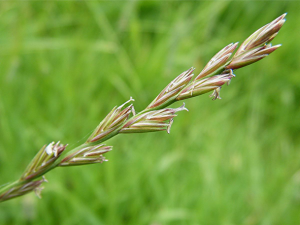
Perennial ryegrass breeding has focused on biomass yield, but expansion into a broader set of traits is needed to benefit livestock industries whilst also providing support for intellectual property protection of cultivars. Numerous breeding objectives can be targeted simultaneously with the development of sensor-based phenomics and genomic selection (GS). Of particular interest are nutritive value (NV), which has been difficult and expensive to measure using traditional phenotyping methods
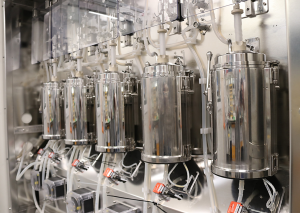
Israeli start-up Ever After Foods, previously known as Plurinuva has officially launched its patented bioreactor platform to produce cultivated meat. The company claims that its patented technology can transform the unit economics of cultivated meat by reducing expenses for facilities and increasing tissue production. Instead of growing cells in large stir tank bioreactors, Ever After Foods uses a two-stage approach in smaller packed bed vessels, and is planning a pilot facility in Israel in 2024.
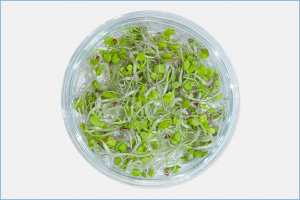
Two biologists from the University of Colorado (UC) Boulder have ventured into turning soybeans into chemical factories using a platform they developed that infuses genetic instructions into the beans. In time, their research can potentially produce compounds essential for infant milk, vaccines, and cancer treatment. Essential compounds used in pharmaceuticals are often sourced from live plants and animals
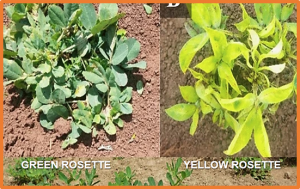
Groundnut is cultivated in several African countries where it is a major source of food, feed and income. One of the major constraints to groundnut production in Africa is groundnut rosette disease (GRD), which is caused by a complex of three agents: groundnut rosette assistor luteovirus, groundnut rosette umbravirus and its satellite RNA. Despite several years of breeding for GRD resistance, the genetics of the disease is not fully understood.
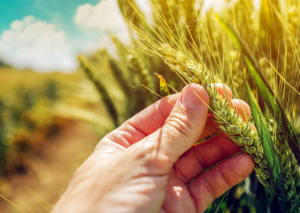
On March 3, 2023, Bioceres Crop Solutions Corp. announced that CTNBio, the National Biosafety Commission of Brazil's Ministry of Science, Technology, and Innovation, has given the full approval for commercialization and cultivation of HB4 Wheat after the conclusion of the safety evaluation. This approval follows Brazil's previous approval for food and feed use of HB4 Wheat flour in November 2021.