


News & Events
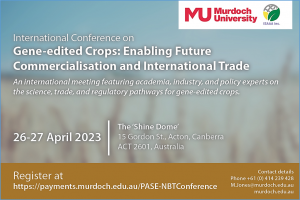
Murdoch University, ISAAA Inc., and partners aim to assist both small and large-scale exporters in understanding the potential of gene editing for crop improvement, and the issues related to trade in gene-edited produce. Thus, a two-day international meeting titled International Conference on Gene-edited Crops: Enabling Future Commercialisation and International Trade is being organised on April 26-27, 2023 at The Shine Dome, ACT, Australia.
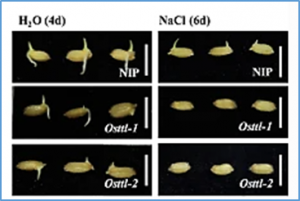
Rice is a salt-sensitive crop, and its seed germination determines subsequent seedling establishment and yields. In this study, 168 accessions were investigated for the genetic control of seed germination under salt stress based on the germination rate (GR), germination index (GI), time at which 50% germination was achieved (T50) and mean level (ML). Extensive natural variation in seed germination was observed among accessions under salt stress.
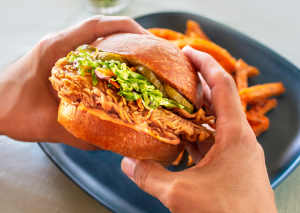
As the global population continues to grow, it is estimated to reach around 10 billion by 2050. The need for sustainable food systems has become more urgent. Cellular agriculture is emerging as one of the key technologies for decarbonizing protein production systems by directly producing products from cells, without the need to raise animals for slaughter or growing crops, says leading data and analytics company GlobalData.

The Hershey Company announced the release of two new products made with dairy alternatives: the vegan chocolate bar Hershey's Plant Based Extra Creamy with Almonds and Sea Salt, and Reese's Plant Based Peanut Butter Cups. Consumers can still expect the usual chocolate confections' texture but without the milk. This makes the products more accessible to vegans and those who need to limit their milk in-take due to health-related reasons
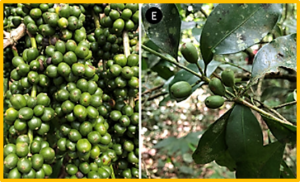
Uganda is a major global coffee exporter and home to key indigenous (wild) coffee resources. A comprehensive survey of Uganda's wild coffee species was undertaken more than 80 years ago (in 1938) and thus a contemporary evaluation is required, which is provided here. We enumerate four indigenous coffee species for Uganda: Coffea canephora, C. eugenioides, C. liberica (var. dewevrei) and C. neoleroyi. Based on ground point data from various sources, survey of natural forests, and literature reviews we summarise taxonomy, geographical distribution, ecology, conservation, and basic climate characteristics, for each species.
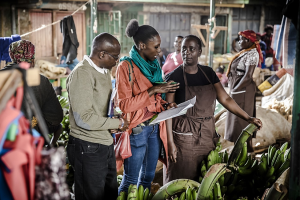
The Food and Agriculture Organization of the United Nations (FAO) has finalized the latest update of a toolkit that aims to revolutionize small and middle-sized rural entrepreneurship. RuralInvest, the methodology developed by the FAO Investment Centre, offers its users a path from theory to practice, to assist entrepreneurs in creating sustainable and bankable business plans.

Scientists from the Imperial College London are using artificial intelligence (AI) to optimize yeast strains and enhance precision fermentation. They aim to maximize the technology's full potential in pharmaceuticals and food production. Precision fermentation uses genetically engineered yeasts and other microorganisms to create customized molecules of all sorts. The technology has gained popularity among start-up companies that want to use it to develop low-value products
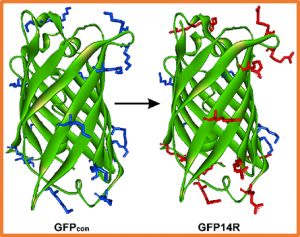
Previously, we developed a technique to introduce a superfolder green fluorescent protein (sGFP) fusion protein directly into plant cells using atmospheric-pressure plasma. In this study, we attempted genome editing using CRISPR/Cas9 (clustered regularly interspaced short palindromic repeats/CRISPR associated protein 9) system using this protein introduction technique. As an experimental system to evaluate genome editing, we utilized transgenic reporter plants carrying the reporter genes L-(I-SceI)-UC and sGFP-waxy-HPT. The L-(I-SceI)-UC system allowed the detection of successful genome editing by measuring the chemiluminescent signal observed upon re-functionalization of the luciferase (LUC) gene following genome editing.

A team of researchers from the RIKEN Center for Sustainable Resource Science and partners attempted genome editing using the atmospheric-pressure plasma as protein introduction technique. Their findings are published in an open-access article in PlosOne journal. Transgenic reporter plants were used as an experimental system to assess genome editing. The transgenic plants carried the reporter genes L-(I-SceI)-UC and sGFP-waxy-HPT.

Iowa State University researchers examined how the adoption of gene-edited crops is linked with public trust in institutions and values. Their findings are published in Rural Sociology. CRISPR-Cas9 and other gene editing tools paved the way to speed up the development of new food products with improved qualities. However, there is limited information about the public perception of US consumers about such products, compared to products of genetic modification.
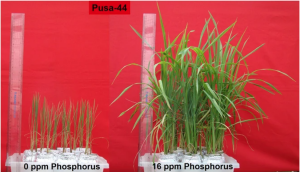
Phosphorus (P)-deficiency is one of the major nutrient constraints for global rice production. P-deficiency tolerance in rice involves complex regulatory mechanisms. To gain insights into the proteins involved in phosphorus acquisition and use efficiency in rice, proteome analysis of a high-yielding rice cultivar Pusa-44 and its near-isogenic line (NIL)-23 harboring a major phosphorous uptake (Pup1) QTL, grown under control and P-starvation stress, was performed. Comparative proteome profiling of shoot and root tissues from the plants grown hydroponically with P (16 ppm, +P) or without P (0 ppm, -P) resulted in the identification of 681 and 567 differentially expressed proteins (DEPs) in shoot of Pusa-44 and NIL-23, respectively.

A law expert from the University of Passau in Germany explains that there is currently no validated method of identifying gene-edited plants that carry only naturally occurring mutations or those that can be achieved through conventional mutagenesis. Hence, reforms based on a scientific and academic point of view are being proposed to make room for gene editing under the European Union's (EU) regulatory framework for genetically modified organisms (GMOs).