


News & Events
In Saptari, Nepal, one family’s greatest challenges in keeping buffalo are low market prices and mastitis, an infection in the udder that reduces milk yield. Down the road is the only dairy cooperative in the area. Serving 620 farmers, this cooperative buys and sells milk but cannot provide adequate health and feed services to farmers. Saptari is one of the districts where CGIAR’s Sustainable Animal Productivity for Livelihoods, Nutrition and Gender Inclusion (SAPLING)
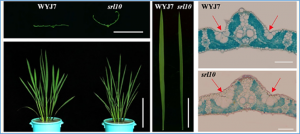
Plant architecture and stress tolerance play important roles in rice breeding. Specific leaf morphologies and ideal plant architecture can effectively improve both abiotic stress resistance and rice grain yield. However, the mechanism by which plants simultaneously regulate leaf morphogenesis and stress resistance remains elusive. Here, we report that SRL10, which encodes a double-stranded RNA-binding protein, regulates leaf morphology and thermotolerance in rice through alteration of microRNA biogenesis
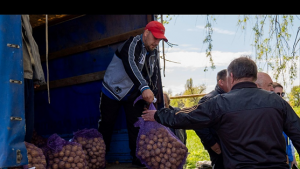
The contribution will fund 17 country and regional projects; including four in the Near East and North Africa (Lebanon, Palestine, Türkiye and Yemen); six in sub-Saharan Africa (Ethiopia, Ghana, Malawi, Namibia, Somalia and a multicountry project aimed at mitigating the impact of drought for the most vulnerable pastoral and agropastoral communities in Djibouti, Ethiopia, Kenya, Somalia and Uganda); four in Asia and Oceania (Afghanistan, Pakistan, the Philippines and Sri Lanka); and three in Europe (one in Republic of Moldova and two in Ukraine).
The benchmark index of international food commodity prices declined for the 12th consecutive month in March, driven by declines in world quotations for cereals and vegetable oils, the Food and Agriculture Organization of the United Nations (FAO) reported today. The FAO Food Price Index, which tracks monthly changes in the international prices of commonly-traded food commodities, averaged 126.9 points in March 2023, down 2.1 percent from the previous month and 20.5 percent below its peak level of March 2022.
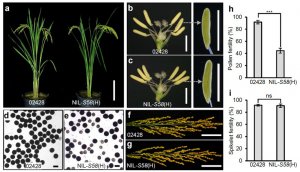
Hybrids between Asian cultivated rice (Oryza sativa L.) and African cultivated rice (Oryza glaberrima Steud) display severe hybrid sterility (HS), hindering the utilization of strong heterosis in hybrids between these species. Several African rice selfish loci causing HS in Asian–African cultivated rice hybrids have been identified, but few such Asian rice selfish loci have been found. In this study, we identified an Asian rice selfish locus, S58, which causes hybrid male sterility (HMS) in hybrids between the Asian rice variety 02428 and the African rice line CG14.

In preparation for the anticipated implementation of animal biotechnology regulations in the Philippines, the government finds it important to equip stakeholders with knowledge on animal biotechnology. Two experts explained what opportunities biotechnology can provide to marine scientists, fisherfolk, and consumers during a webinar organized by ISAAA Inc. on March 31, 2023, that aimed to raise public awareness and acceptance of genetically modified (GM) and gene-edited fish and aquaculture products.
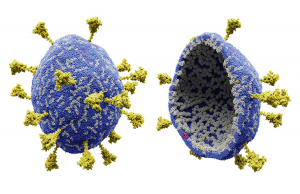
A new study led by the Worcester Polytechnic Institute (WPI) brings into sharper focus the structural details of SARS-CoV-2, the virus that causes COVID-19. The study reveals that an elliptical shape “breathes,” or changes shape, as it moves in the body. Structural bioinformatics and computational biophysics were used to create a picture of what the SARS-CoV-2 particle looks like. The picture showed that the virus is more elliptical than spherical and can change its shape.
Current food systems are challenged by relying on a few input-intensive, staple crops. The prioritization of yield and the loss of diversity during the recent history of domestication has created contemporary crops and cropping systems that are ecologically unsustainable, vulnerable to climate change, nutrient poor, and socially inequitable. For decades, scientists have proposed diversity as a solution to address these challenges to global food security
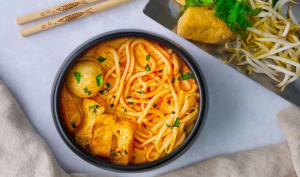
Cell Agritech, Malaysia's first cultivated meat company, is set to start the construction of its first plant in Penang by 2024. While regulations for cultivated meat are still unclear in Malaysia, Cell Agritech aims to launch its products into the Asian market by 2025. The announcement was made in mid-March by Jason Ng Chin Aikm, Cell AgriTech's founder, during Malaysia's first Cultivated Meat Conference held at the Kuala Lumpur Convention Centre.

U.S. President Joe Biden calls on Federal departments and agencies to harness biotechnology and biomanufacturing innovation through a National Biotechnology and Biomanufacturing Initiative of the Executive Order 14081. The initiative has five bold goals for the US bioeconomy, which includes the following sections and examples stated in the report of The White House Office of Science and Technology Policy:
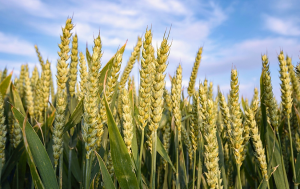
Genomic prediction is a powerful tool to enhance genetic gain in plant breeding. However, the method is accompanied by various complications leading to low prediction accuracy. One of the major challenges arises from the complex dimensionality of marker data. To overcome this issue, we applied two pre-selection methods for SNP markers viz. LD-based haplotype-tagging and GWAS-based trait-linked marker identification.
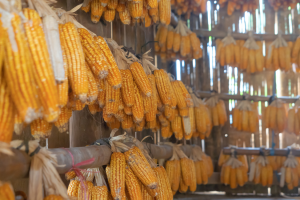
Researchers from the International Institute of Tropical Agriculture (IITA) and the University of Ibadan, Nigeria, reported that micronutrient deficiency is the major culprit of hidden hunger, which demands consumption of foods enriched with enough amount of bioavailable micronutrients. Malnutrition, particularly micronutrient deficiency, has been linked with anemia, fatigue, blindness, and 17% of deaths in children younger than five years in developing countries.