


News & Events
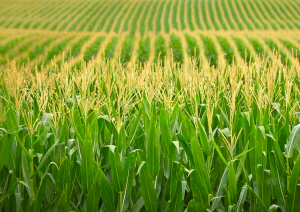
Scientists in China have identified a gene involved in alkaline tolerance in crops that may help improve yields in sodic environments through genetic engineering. The study, led by Prof. Xie Qi's team from the Institute of Genetics and Developmental Biology of the Chinese Academy of Sciences, in collaboration with seven other institutions, has been published in Science.
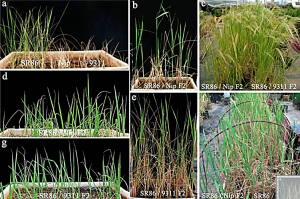
Salt stress seriously affects plant growth and development and reduces the yield of rice. Therefore, the development of salt-tolerant high-yielding rice cultivars through quantitative trait locus (QTL) identification and bulked segregant analysis (BSA) is the main focus of molecular breeding projects. In this study, sea rice (SR86) showed greater salt tolerance than conventional rice. Under salt stress, the cell membrane and chlorophyll were more stable and the antioxidant enzyme activity was higher in SR86 than in conventional rice. Thirty extremely salt-tolerant plants and thirty extremely salt-sensitive plants were selected from the F2 progenies of SR86 × Nipponbare (Nip) and SR86 × 9311 crosses during the whole vegetative and reproductive growth period and mixed bulks were generated.
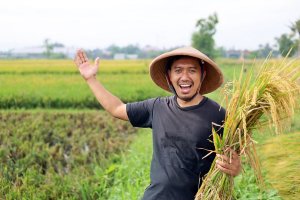
Researchers from the College of Development Communication at the University of the Philippines Los Baños (CDC-UPLB) revisited their original study conducted in 2006 that focused on understanding and communicating Filipino stakeholders' public perception of biotech crops. Almost 20 years later, they found that this knowledge has made significant progress, enough to continuously guide stakeholders into accepting biotechnology and products derived from it in the Philippines.
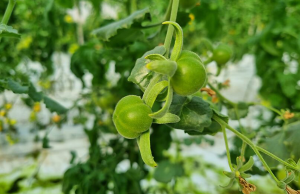
Israeli researchers Shai Torgeman and Professor Dani Zamir from the Hebrew University of Jerusalem have developed a new tomato variety that is more resistant to drought conditions and could help with the destructive impact of climate change. The scientists crossbred two species of tomatoes, a wild variety from the deserts of western Peru, with a common commercial cultivar that is widely available. They identified interactions between two areas of the tomato's genome that lead to increased yield and resistance to dry conditions.
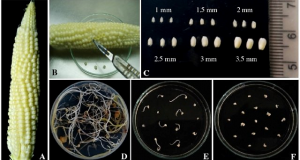
Embryonic callus (EC) induction in immature maize embryos shows high genotype dependence, which limits the application of genetic transformation in transgenic breeding and gene function elucidation in maize. Herein, we conducted a genome-wide association mapping (GWAS) for four EC induction-related traits, namely rate of embryonic callus induction (REC), increased callus diameter (ICD), ratio of shoot formation (RSF), and length of shoot (LS) across different environments. A total of 77 SNPs were significantly associated these traits under three environments and using the averages (across environments).
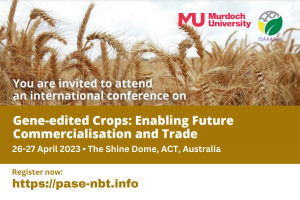
Murdoch University, ISAAA Inc., and partners aim to assist both small and large-scale exporters in understanding the potential of gene editing for crop improvement, and the issues related to trade in gene-edited produce. A two-day international meeting titled International Conference on Gene-edited Crops: Enabling Future Commercialisation and Trade is being organised on April 26-27, 2023 at The Shine Dome, ACT, Australia. Registration is open to all interested participants.
In 2015, the United Nations adopted the Sustainable Development Goals to end poverty, protect the planet, and ensure a better world by 2030. What have we achieved, and how far are we in attaining the global goals? According to The Sustainable Development Goals Report 2022, the cascading and interlinked crises have placed global goals in grave danger, along with humanity's survival. These crises were dominated by the COVID-19 pandemic, climate change, and conflicts, generating a whirlwind of impacts on food and nutrition, health, education, the environment, peace, and security.
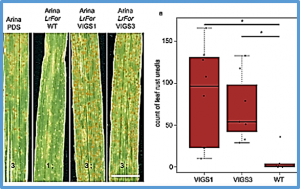
Race-specific qualitative resistance genes (R-genes) are conferring complete resistance in many pathosystems, but are frequently overcome by new virulent pathogen races. Once the deployed R-genes are overcome, a wide variation of quantitative disease resistance (QDR) can be observed in a set of previously race-specific, i.e., completely resistant genotypes—a phenomenon known as “vertifolia effect.”
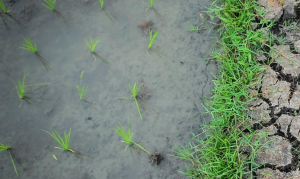
At the core of the Vietnamese agricultural revolution are the reforms in agricultural policies from land access and enhancing the productivity and efficiency of farmers, said Dr. Cao Đức Phát, former Minister of Agriculture and Rural Development of Vietnam. He is the current Chair of the International Rice Research Institute (IRRI) Board of Trustees. IRRI is the leading international research institution focused on finding solutions to the challenges of rice-based economies worldwide.
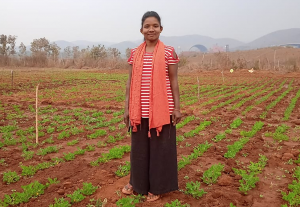
Ms Rajeswari Majhi, 29, has allotted one hectare of her land for planting a seed varietal cafeteria after receiving training at ICRISAT. She and a co-trainee plan to identify the best varieties for the area and increase production on a larger patch in the next season. Rajeswari a groundnut farmer from the Raygada district of Odisha, is the sole earner for her family. Determined to overcome the challenges posed by traditional methods of production and access to seeds, Rajeshwari has been seeking ways to make farming climate-resilient and profitable.
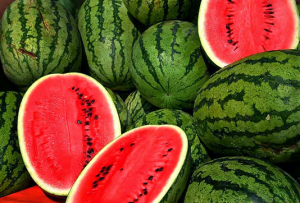
Seed coat crack (scc) is a special characteristic of watermelon compared with other cucurbit crops. However, information regarding the genetic basis of this trait is limited. We conducted a genetic analysis of six generations derived from PI 192938 (scc) and Cream of Saskatchewan (COS) (non-scc) parental lines and found that the scc trait was regulated by a single recessive gene through two years. Bulk segregant analysis sequencing (BSA-seq) and initial mapping placed the scc locus into an 808.8 kb region on chromosome 3.
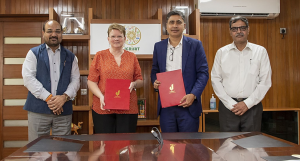
Zuari Farmhub Ltd (ZFHL) has announced a new research partnership with the International Crops Research Institute for the Semi-Arid Tropics (ICRISAT) aimed to promote sustainable agricultural practices to improve farmer incomes in Maharashtra, Karnataka, and Uttar Pradesh. The two-year project will prioritize carbon sequestration to reduce agricultural greenhouse gases, thereby mitigating the impact of climate change on the farming community.