


News & Events
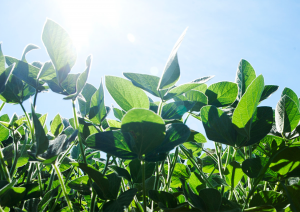
Earlier in 2019, the group worked on the initial assembly of the P. pachyrhizi genome, but its large size and complexity required more effort to complete the annotation and analysis. A significant challenge with P. pachyrhizi is that it has two nuclei with separate sets of genetic instructions. Each had to be separately determined, which was recently made possible by newer, long-read sequencing technology.
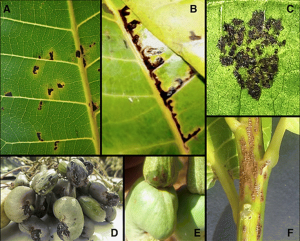
Cashew (Anacardium occidentale L.) angular leaf spot is caused by pigmented and non-pigmented strains of Xanthomonas citri pv. anacardii, which have been isolated from infected plants in Brazil. The disease symptoms may be observed in leaves, stems, and fruits. Given that infection in young fruits results in fruits unsuitable for commercialization, angular leaf spot represents a serious threat to the cashew crop in Brazil.
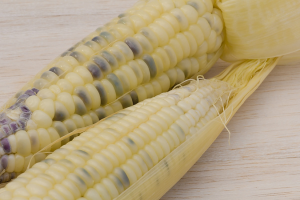
The Ministry of Health, Labour, and Welfare and the Ministry of Agriculture, Forestry, and Fisheries in Japan gave their green light to a high-starch maize variety on March 20, 2023. This is the fourth genome-edited food product that Japan did not subject to regulations for genetically engineered (GE) food, feed, and biodiversity. The said maize variety had its waxy gene deleted using CRISPR-Cas9 technology to increase its starch amylopectin proportion to almost 100%, compared to the 75% amylopectin and 25% pectin proportion of conventional maize.

Murdoch University, ISAAA Inc., and partners aim to assist both small and large-scale exporters in understanding the potential of gene editing for crop improvement, and the issues related to trade in gene-edited produce. A two-day international meeting titled International Conference on Gene-edited Crops: Enabling Future Commercialisation and Trade is being organised on April 26-27, 2023 at The Shine Dome, ACT, Australia. Registration is open to all interested participants.
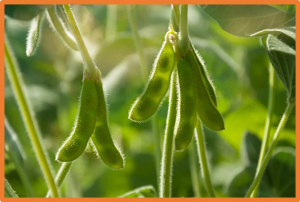
Recombination is crucial for crop breeding because it can break linkage drag and generate novel allele combinations. However, the high-resolution recombination landscape and its driving forces in soybean are largely unknown. Here, we constructed eight recombinant inbred line (RIL) populations and genotyped individual lines using the high-density 600K SoySNP array, which yielded a high-resolution recombination map with 5636 recombination sites at a resolution of 1.37 kb.
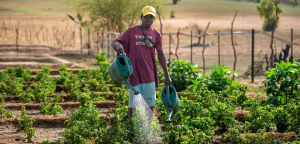
The International Fund for Agricultural Development (IFAD) today issues its first-ever euro private placement for €65 million to four German pension funds with the Hamburger Pensionskasse (HPK) as key investor. HPK is one of Germany’s largest company pension funds and works with the German food and beverages sector as well as the retail industry. This investment will enable IFAD to help thousands of small-scale farmers and their families in rural areas of developing countries adapt to climate change
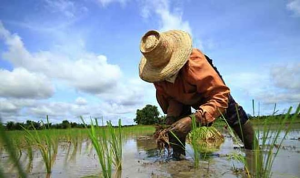
This week, the International Fund for Agricultural Development (IFAD) is hosting two sessions starting with the fifth global meeting of the Farmers’ Forum February 17-20th in Rome, Italy. The Farmers’ Forum is a bottom-up consultation process which creates a dialogue between small farmers’ and rural producers’ organizations, IFAD, and governments centered around rural development and poverty reduction.
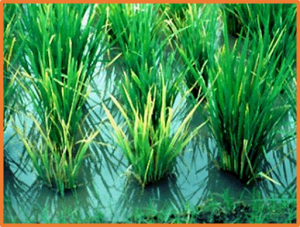
Rice grassy stunt virus (RGSV), a typical negative single-stranded RNA virus, invades rice and generates several disease signs, including dwarfing, tillering, and sterility. Previous research has revealed that RGSV-encoded proteins can force the host's ubiquitin-proteasome system to utilize them for viral pathogenesis. However, most of the studies were limited to a single omics level and lacked multidimensional data collection and correlation analysis on the mechanisms of RGSV-rice interactions.
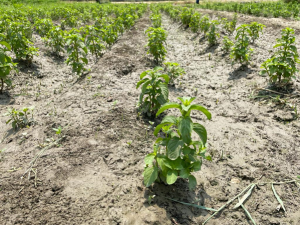
Farmers predominantly follow the rice-based cropping system in various regions of India. However, the continuous practice of rice-based cropping systems causes soil depletion, pest and disease outbreaks, and weed infestation. The introduction of crop diversification could mitigate the adverse impact of monocropping on the environment. Crop diversification is cultivating different crops on the same piece of arable land. It enhances farm productivity and soil biodiversity disrupts the pest and disease cycle, and helps farmers obtain additional income in the event of crop failure.
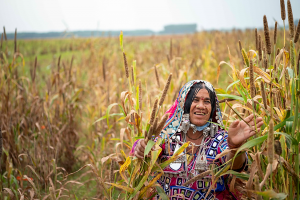
The much-debated issues of low productivity levels in India and the resultant perennial struggle of Indian farmers of low income are being examined by the International Crops Research Institute for the Semi-Arid Tropics (ICRISAT) based at Hyderabad & the US Water Tech Company, Plasma Water Solutions India Pvt Ltd based at Mumbai.
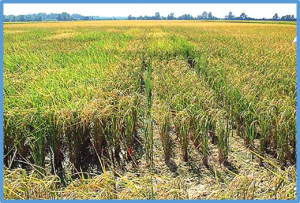
Plants have evolved various mechanisms for low P tolerance, one of which is changing their membrane lipid composition by remodeling phospholipids with non-phospholipids. The objective of this study was to investigate the remodeling of membrane lipids among rice cultivars under P deficiency. Rice (Oryza sativa L.) cultivars (Akamai, Kiyonishiki, Akitakomachi, Norin No. 1, Hiyadateine, Koshihikari, and Netaro) were grown in 0 (-P) and 8 (+P) mg P L-1 solution cultures.
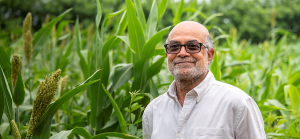
When the Green Revolution began, India was facing massive hunger and starvation. The focus of the Green Revolution was a major boost to the calorie supply, and the new varieties of rice and wheat helped to do that. But the government was focused on just these two crops. All the infrastructure that was built, the policy environment, and the incentives for farmers were focused on these crops only. That resulted in the crowding out of more traditional crops that are higher in nutrition, such as millets and pulses.