


News & Events
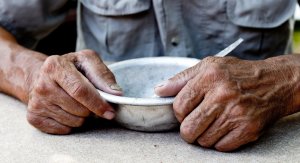
About 259 million people in 58 countries and territories experienced acute food insecurity in 2022, up from 193 million individuals from 53 countries in 2021. These figures are according to the Global Report on Food Crises released by the Food Security Information Network. “More than a quarter of a billion people are now facing acute levels of hunger, and some are on the brink of starvation. That's unconscionable,” UN Secretary-General António Guterres wrote in the report's foreword.
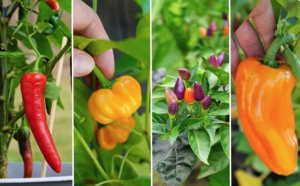
The deciduous character of ripe fruit, which is controlled by the dominant S locus, is a domesticated trait with potential value in the pepper processing industry (Capsicum spp.). However, the gene associated with the S locus has not been identified. Here, one major QTL designated S10.1 was detected by using the F2 population (n = 155) derived from BA3 (Capsicum annuum) × YNXML (Capsicum frutescens) and was further verified in an intraspecific backcross population (n = 254) derived from the cross between BB3 (C. annuum)

All participants of the International Rice Congress 2023 are required to register officially. It is important to read all the information on the website before you commence the registration process. The IRC 2023 organizers do not employ any other third party agency to process payments on its behalf. IRC 2023 registrations and payments are processed strictly within this official platform and is facilitated by the IRC 2023 Secretariat. Please contact us at ricecongress@irri.org before making payments related to registrations.
The International Rice Research Institute (IRRI) and Africa Rice Center (AfricaRice) team were among the winners in the inaugural Milken-Motsepe Prize in AgriTech, a global competition for innovative solutions to increase economic value to farmers. The IRRI-AfricaRice team was awarded US$150,000 for their project on flood-proofing Africa’s vulnerable rice farmers’ livelihoods. The Milken-Motsepe Prize in Agritech seeks to incentivize scalable agricultural technology solutions for the problems faced by farmers on small to medium-sized farms in Africa.
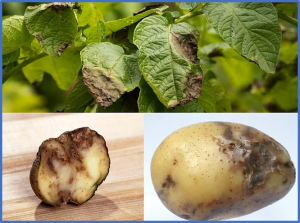
To combat pathogen infection, plants employ local defenses in infected sites and elicit systemic acquired resistance (SAR) in distant tissues. MicroRNAs have been shown to play a significant role in local defense, but their association with SAR is unknown. In addition, no such studies of the interaction between potato and Phytophthora infestans have been reported. We investigated the role of miR160 in local and SAR responses to P. infestans infection in potato.
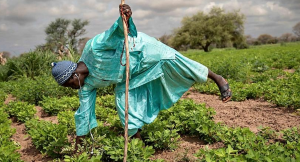
Legumes are true green manure for crops, as they are able to fix nitrogen from the air in the soil and thus boost the growth of plants grown alongside them. In Africa, several farming systems use certain legumes in association with cereals: cowpeas, groundnuts, etc. Could legumes partially replace mineral fertilizers? What role could they play in food security on the African continent?
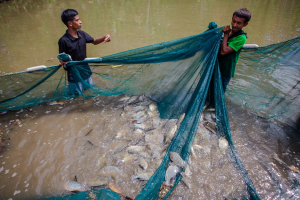
For Timor-Leste, as with most other islands in the Pacific, fortunes are to be found in fish – an equity food available to all regardless of status. Nevertheless, the island is highly exposed to the impacts of climate change, hampering domestic food production and contributing to Timor-Leste’s ranking of 110th out of 121 countries for malnutrition. Meanwhile, the country is highly dependent on imported foods – including aquatic foods.
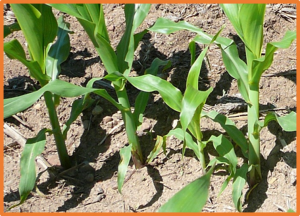
Lead (Pb) is one of the most toxic heavy metal pollutants, which can penetrate plant cells via root absorption and thus cause irreversible damages to the human body through the food chain. To identify the key gene responsible for Pb tolerance in maize, we performed a trait-associated co-expression network analysis at a genome-wide level, using two maize lines with contrasting Pb tolerances.
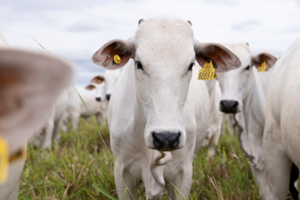
On 7 March 2023, the CGIAR Research Initiatives on Livestock and Climate and Climate Resilience, along with the CGIAR Hub for Sustainable Finance, organized a multi-stakeholder session at the Global Landscapes Forum 6th Investment Case Symposium in Luxembourg. The session, titled ‘Sustainable livestock value chain investments for rangeland restoration’, presented two investment cases supported by the CGIAR initiatives which highlight the importance of rangelands and their restoration.
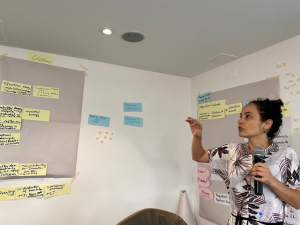
Sometimes projects introduce a new concept that has, at the outset, little meaning other than a word. And then through engagement of different scientists, stakeholders and partners working together, this word acquires real meaning and starts becoming an actionable concept. This process is not always smooth and requires a lot of patience, confidence and respect for each other’s different opinions, interests, schools of thoughts and positionalities – and if operating on a global level, also for different cultures.
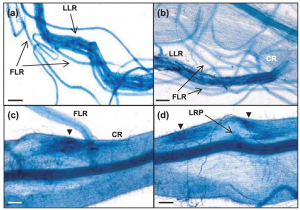
Root hairs are tubular outgrowths generated by the root epidermal cells. They effectively enlarge the soil-root contact area and play essential roles for nutrient and water absorption. Here, in this study, we demonstrated that the Oryza sativa UDP-glucose 4-epimerase 1-like (OsUGE1) negatively regulated root hair elongation and was directly targeted by Oryza sativa growth regulating factor 6 (OsGRF6). Knockout mutants of OsUGE1 using CRISPR-Cas9 technology showed longer root hairs than those of wild type.

Reversing the upward trend in acute food insecurity seen throughout 2022 requires boosting investment in anticipatory action and agriculture-based livelihoods of the people affected by crises, Director-General of the Food and Agriculture Organization of the United Nations (FAO), QU Dongyu, said today at a high-level virtual event to release the seventh Global Report on Food Crises.