


News & Events
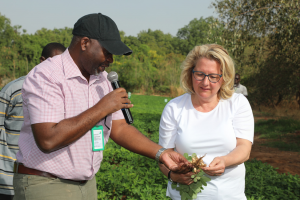
The visit of Svenja Schulze, the Federal Minister of Economic Cooperation and Development in Germany, to the International Crops Research Institute for the Semi-Arid Tropics (ICRISAT) in Mali was a significant event that emphasized the importance of strategic collaborations in promoting climate-resilient agriculture technologies and Smart Food crops. During her visit on April 14th, Minister Schulze was impressed by ICRISAT's climate-smart initiatives.
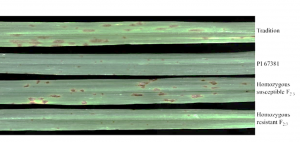
Spot form net blotch (SFNB), caused by the necrotrophic fungal pathogen Pyrenophora teres f. maculata (Ptm), is an economically important foliar diseases in barley. Although various resistance loci have been identified, breeding for SFNB-resistant varieties has been hampered due to the complex virulence profile of Ptm populations. One resistance locus in the host may be effective against one specific isolate, but it may confer susceptibility to other isolates. A major susceptibility QTL on chromosome 7H, named Sptm1, was consistently identified in many studies. In the present study, we conduct fine mapping to localize Sptm1 with high resolution.
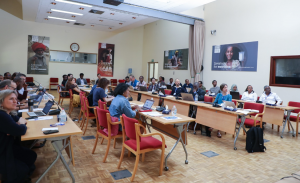
On 24–25 April 2023, the CGIAR Initiative on One Health held its annual planning meeting at the Addis Ababa campus of the International Livestock Research Institute, with some participants joining online via Microsoft Teams. The goal of the meeting was to bring together the work package leaders and core team to review the initiative’s achievements of 2022 and plan the research activities and deliverables for 2023.
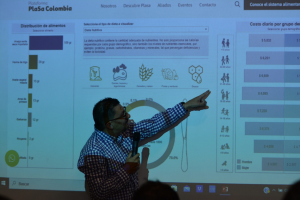
The national launch of the Food Systems Platform – PlaSA Colombia, developed within the framework of the National Policies and Strategies initiative, took place on April 27th at the Universidad de Los Andes in Bogota. This initiative contributes to the construction of more solid policies and strategies, with greater coherence and capacity, to help meet current policy demands and future development needs
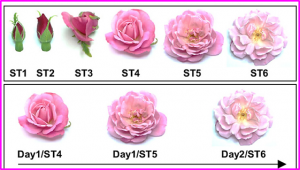
Geraniol derived from essential oils of various plant species is widely used in the cosmetic and perfume industries. It is also an essential trait of the pleasant smell of rose flowers. In contrast to other monoterpenes which are produced in plastids via the methyl erythritol phosphate pathway, geraniol biosynthesis in roses relies on cytosolic NUDX1 hydrolase which dephosphorylates geranyl diphosphate (GPP)
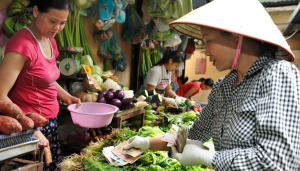
A shift towards permanent “crisis resilience” from short-term aid is crucial to mitigate increasingly frequent shocks to the global food system and tackle rising global hunger, say food policy researchers. Disruption to food systems from multiple crises such as economic downturn, conflict, climate change-related weather events and the COVID-19 pandemic, has caused a surge in acute food insecurity in recent years.
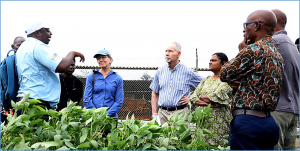
With the high cost of fertilizers, bio-stimulants are becoming an affordable source for increasing farmers’ productivity. They are also known to enhance nutrition efficiency, abiotic stress tolerance, and the quality of crops while preserving the environment. A Bill & Melinda Gates Foundation team—Senior Program Officer Dr Lakshmi Manavalan, Program Officer Dr Jeff Ehlers, and Crops Research and Development Director Dr Renée Lafitte—visited IITA–CGIAR Ibadan recently as part of efforts to ensure that Africa is food secure.
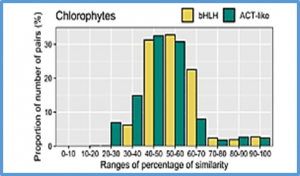
Basic helix–loop–helix (bHLH) proteins are one of the largest families of transcription factor (TF) in eukaryotes, and ~30% of all flowering plants’ bHLH TFs contain the aspartate kinase, chorismate mutase, and TyrA (ACT)-like domain at variable distances C-terminal from the bHLH. However, the evolutionary history and functional consequences of the bHLH/ACT-like domain association remain unknown.
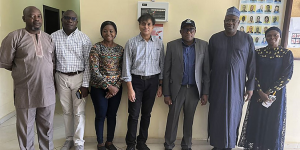
IITA–CGIAR, in collaboration with the National Agricultural Seeds Council (NASC) and Catholic Relief Services (CRS), launched a cassava seed quality self-compliance reporting module on its SeedTracker platform in Abuja on 3 April. This new module enables cassava seed entrepreneurs (CSEs) to report on the quality and condition of seed production fields. The three Institutions are collaborating under the BASICS project, which aims to integrate the cassava seed value chain to produce and deliver high-quality seeds of improved cassava varieties at affordable prices.

Leading research portal, Research.com, publishes annual rankings in multiple fields of science, including plant science and agronomy. The platform recently released the ranking of best scientists in 2022, with four IITA–CGIAR scientists appearing on the list. IITA Interim Director General Bernard Vanlauwe, Plant Pathologist Ranajit Bandyopadhyay, Maize Breeder Abebe Menkir, and DG Emeritus Nteranya Sanginga were all listed on the latest ranking based on metrics acquired in December 2022
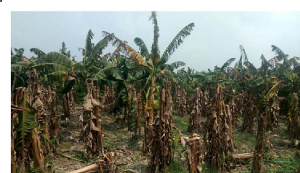
Fusarium wilt of banana (FWB) is a serious soil-borne fungal disease. In the previous century, FWB already destroyed Gros Michel-based banana cultures in Central America, and currently, the disease threatens all major banana-producing regions of the world. The causal agents of these epidemics, however, are diverse. Gros Michel was infected by a wide range of Fusarium species, the so-called Race 1 strains, whereas the contemporary Cavendish-based cultures are affected by Fusarium odoratissimum, colloquially called Tropical Race 4 (TR4).
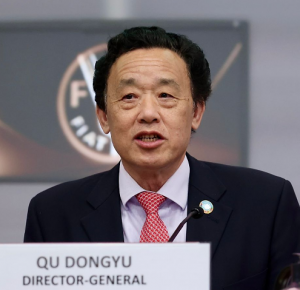
The Food and Agriculture Organization of the United Nations (FAO) today marked International Day of Plant Health 2023, highlighting how protecting plant health can help end hunger, reduce poverty, protect biodiversity and boost economic development. This year’s focus was on the links between plant health and environmental protection. Addressing the challenges of plant health must involve “sharing knowledge, best practices, resources to develop innovative solutions for plant disease, invasive and alien species and also climate change impacts,“ FAO Director-General, QU Dongyu said in opening remarks at a global event hosted by the International Plant Protection Convention (IPPC) and FAO’s Plant Production and Protection Division.