


News & Events
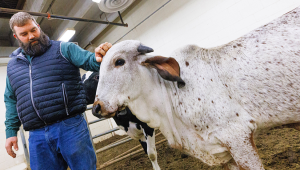
Scientists at the United States Department of Agriculture Agricultural Research Service (USDA ARS), the University of Nebraska–Lincoln (UNL), the University of Kentucky, and industry partners Acceligen and Recombinetics, Inc. have developed the first gene-edited calf with resistance to bovine viral diarrhea virus (BVDV), which costs the U.S. cattle sector billions of dollars annually.
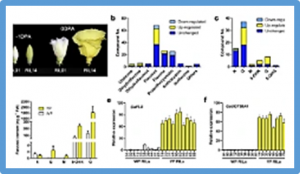
Petal color is pivotal to ornamental value and reproduction of plants. Yellow coloration in plant petals is mainly attributed to colorants including carotenoids, aurones and some flavonols. To date, the genetic regulatory mechanism of flavonol biosynthesis in petals is still to be elucidated. Here, we employed Asiatic cottons with or without deep yellow coloration in petals to address this question.
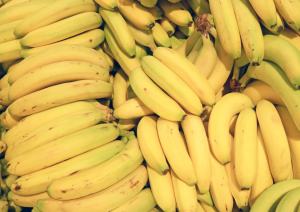
In Australia, the Queensland University of Technology (QUT) seeks the approval of the Gene Technology Regulator (OGTR) for commercial cultivation of genetically modified (GM) banana plants modified for resistance to Fusarium wilt tropical race 4, also known as Panama disease. QUT does not intend to replace the current Cavendish banana growing in Australia with the GM banana plants, but rather to provide a safety net to the country's banana industry should it be heavily impacted by Panama disease.
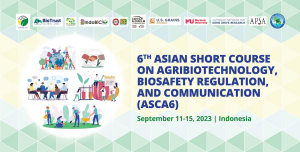
The course is a capacity building initiative of ISAAA Inc. and the Malaysian Biotechnology Information Centre (MABIC). It was first organized in 2018 as a platform for Asian scientists and regulators to be more competent in the regulations and policies related to biotechnology. Since then, the short course has been offered to promote strong collaboration among key biotechnology stakeholders for science and regulation to co-evolve and bring the benefits of modern biotechnology to society, while reducing its potential risks.
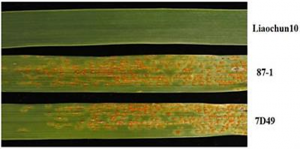
‘Thatcher’ wheat near isogenic line RL6149, a putative derivative of Triticum dicoccoides, was previously determined to carry leaf rust resistance gene Lr64 on chromosome arm 6AL and a second gene temporarily named LrX on chromosome arm 1DS. The objective of this study was to map and characterize LrX in a population of recombinant inbred lines (RILs) that segregated for a single gene.
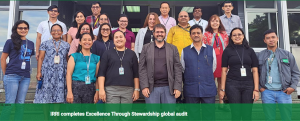
The International Rice Research Institute (IRRI) recently completed the Global Audit Process implemented by Excellence Through Stewardship (ETS), a globally-recognized non-profit organization that advocates management best practices for biotechnology-derived products worldwide. “This successful audit by ETS reflects the institute’s strong and continued commitment to the highest standards of responsible stewardship and quality management of agricultural biotechnology products and its related processes and technologies
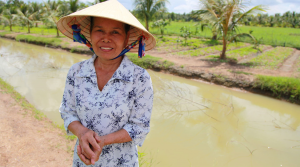
The International Fund for Agricultural Development (IFAD), the UN’s rural development agency, and the Socialist Republic of Viet Nam last week signed a loan agreement to promote inclusive and sustainable agricultural growth in the Mekong Delta. The Climate-smart Agricultural Value Chain Development (CSAT) project will generate sustainable income opportunities and improved rural livelihoods for 60,000 families engaged in small-scale farming.
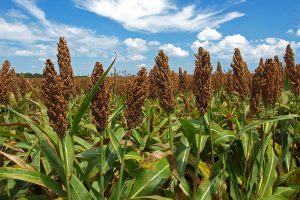
Crop biofortification is a successful strategy to ameliorate Vitamin A deficiency. Sorghum is a good candidate for vitamin A biofortification, as it is a staple food in regions with high prevalence of vitamin A deficiency. β-carotene-the main provitamin A carotenoid-is below the target concentration in sorghum grain, therefore biofortification breeding is required. Previous studies found evidence that sorghum carotenoid variation is oligogenic, suggesting that marker-assisted selection can be an appropriate biofortification method. However, we hypothesize that sorghum carotenoids have both oligogenic and polygenic components of variation.
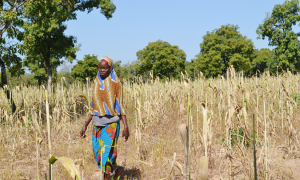
Two of Belgium’s top agricultural research institutes are collaborating with the International Crops Research Institute for the Semi-Arid Tropics (ICRISAT) to launch a new climate adaptation initiative in Mali that aims to safeguard sorghum yield – a crop that millions depend on for food and income in the West African nation. The Flemish Institute for Technological Research (VITO) and the Flanders Research Institute for Agriculture, Fisheries and Food (ILVO) along with the Mali Institut d’Economie Rurale (IER) and the Agene Nationale de la Meteorologie (Mali-METEO), launched the ‘StratAdapt-Mali’ project on the 4th of April 23.
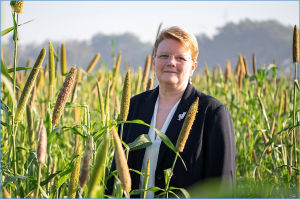
The International Year of Millets will provide a great opportunity to promote available technologies on millets and the benefits that come with millets to encourage consumption and utilisation of millets. ICRISAT is taking the opportunity created by the UN declaration by joining partners such as FAO, AGRA, and FARA to demonstrate and showcase its work on millets as a world leader in providing solutions for dryland areas. ICRISAT is a pioneering, international non-profit research for development organisation, specialising in improving dryland farming and agri-food systems.
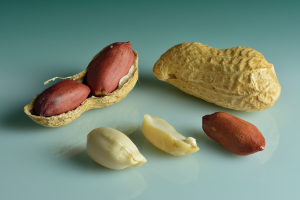
Cultivated peanut (Arachis hypogaea), a progeny of the cross between A. duranensis and A. ipaensis, is an important oil and protein crop from South America. To date, at least six Arachis genomes have been sequenced. WRKY transcription factors (TFs) play crucial roles in plant growth, development, and response to abiotic and biotic stresses. WRKY TFs have been identified in A. duranensis, A. ipaensis, and A. hypogaea cv. Tifrunner; however, variations in their number and evolutionary patterns across various Arachis spp. remain unclear.
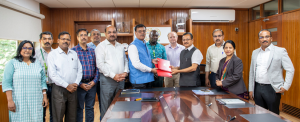
The International Crops Research Institute for the Semi-Arid Tropics (ICRISAT), the Groundwater Surveys and Development Agency (GSDA), and the Water Supply and Sanitation Department, Government of Maharashtra have signed a Memorandum of Agreement (MoA) on May 16, to propel a new era in groundwater augmentation across seven districts in Maharashtra using a landscape approach. Mr Chintamani Joshi (IAS), Commissioner of GSDA, expressed his enthusiasm about collaborating with a world-class organization like ICRISAT.