


News & Events

The FAO Director-General, QU Dongyu, today met at FAO headquarters in Rome with H.E. Nataša Pirc Musar, President of Slovenia. The Director-General thanked the President for Slovenia’s longstanding partnership with FAO, the long history of friendship and cooperation, and for visiting the FAO Headquarters in Rome to mark the World Bee Day 2023 celebrations. The pair discussed ways to further enhance cooperation on beekeeping and honey value chain development.
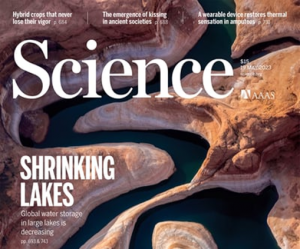
The use of alkaline salt lands for crop production is hindered by a scarcity of knowledge and breeding efforts for plant alkaline tolerance. Through genome association analysis of sorghum, a naturally high-alkaline-tolerant crop, we detected a major locus, Alkaline Tolerance 1 (AT1), specifically related to alkaline-salinity sensitivity. An at1 allele with a carboxyl-terminal truncation increased sensitivity, whereas knockout of AT1 increased tolerance to alkalinity in sorghum, millet, rice, and maize. AT1 encodes an atypical G protein γ subunit that affects the phosphorylation of aquaporins to modulate the distribution of hydrogen peroxide (H2O2).

Scientists from Chris Richardson's lab at UC Santa Barbara reported a new method that boosts the efficiency of CRISPR-Cas9 editing without needing a viral material to transport the template that edits the target gene sequence. Their study is published in Nature Biotechnology. Viruses are often used to deliver the repair template DNA to the cell's nucleus. While viruses are effective, viral overflows are pricey, difficult to scale, and could be toxic to cells.

Ninety percent (90%) of deaths due to mushroom ingestion are caused by death caps (Amanita phalloides). Drug developers from Sun Yat-sen University in Guangzhou, China, discovered a potential antidote for death cap's toxin using CRISPR technology. Their findings are reported in Nature Communications. Qiaoping Wang and team previously developed a method to find an antidote for the jellyfish venom. They used CRISPR-Cas9 to develop a pool of human cells, each with a mutation in a different gene.
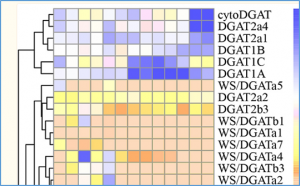
Here, we identified soybean DGAT genes via a bioinformatics method, thereby laying a solid foundation for further research on their function. Based on our bioinformatics analyses, including gene structure, protein domain characteristics, and phylogenetic analysis, 26 DGAT putative gene family members unevenly distributed on 12 of the 20 soybean chromosomes were identified and divided into the following four groups: DGAT1, DGAT2, WS/DGAT, and cytoplasmic DGAT.

Scientists from the University of San Diego published the results of their proof-of-concept study that demonstrated how a cell can last longer by genetically rewiring its circuits that control aging. The findings can be useful in medical research, as the study's aim is to extend the life of cells within organisms to prevent degenerative diseases. Using computer simulations, the researchers studied how cells follow a sequence of molecular changes from their existence until they degenerate and die.
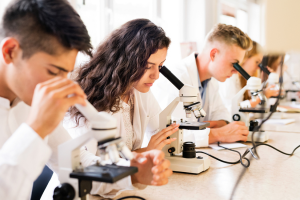
Through a grant from the United States Department of Agriculture (USDA), the University of Hawaii (UH) Manoa will be expanding its CRISPR laboratory course capacity and providing workshops for students at other campuses with significant minority enrollment. The program aims to provide Hawaii's future workforce with knowledge about cutting-edge technologies to enhance the islands' food and agriculture capacity.
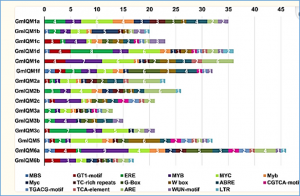
IQM, a plant-specific calmodulin-binding protein, plays multiple roles in plant growth and development. Although a comprehensive analysis has been carried out on the IQM family genes in Arabidopsis and rice, the number and functions of IQM genes in other species have not been explored. In this study, we identified 15 members of the soybean (Glycine max) IQM gene family using BLASTP tools.

Dr. Alison Bentley, Director of the Global Wheat Programme at the International Maize and Wheat Improvement Center (CIMMYT), has been hailed as the 2023 Borlaug CAST Communication Award recipient. The award was granted by the Council for Agricultural Science and Technology (CAST), an international consortium of scientific and professional societies, universities, companies, nonprofits, libraries, and individuals.
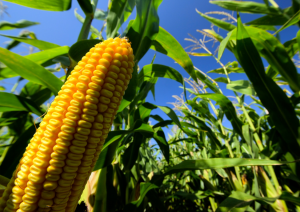
In The Netherlands, Bayer Agriculture has filed for a second renewal of the authorization for food (including pollen), feed, import and processing of genetically modified (GM) maize MON810 with the cry1Ab gene, resulting in tolerance to certain lepidopteran pests. MON810 was first authorized for food, feed, import, and processing, and cultivation in Europe in 1998. Market authorizations in Europe remain valid for 10 years, and a request to renew the authorization was submitted in 2007.
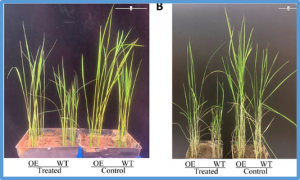
Transcription factors (TFs) play critical roles in mediating the plant response to various abiotic stresses, particularly heat stress. Plants respond to elevated temperatures by modulating the expression of genes involved in diverse metabolic pathways, a regulatory process primarily governed by multiple TFs in a networked configuration. Many TFs, such as WRKY, MYB, NAC, bZIP, zinc finger protein, AP2/ERF, DREB, ERF, bHLH, and brassinosteroids, are associated with heat shock factor (Hsf) families
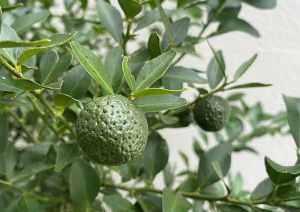
Researchers at The University of Queensland (UQ) Australia have sequenced the genome of the Australian round lime, also known as the Gympie lime, in an effort to identify a gene that provides resistance to Huanglongbing (HLB) or 'citrus greening'. The comprehensive map of the genome of the Gympie lime, a native lime species that is resistant to citrus greening, could be the key to preventing that disease from entering Australia.