


News & Events
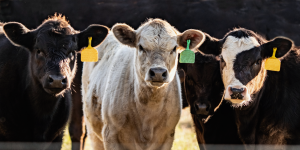
A joint project between the United States (US) Food and Drug Administration (FDA) and the National Institute of Standards and Technology (NIST) will help standardize measurements for characterizing both intended and unintended alterations in genome-edited cattle and swine, thus providing developers with a roadmap to better determine intentional genetic alterations (IGAs) in animals.
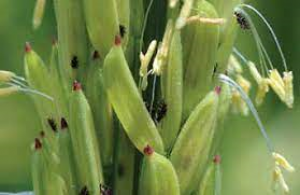
Heading date is a critical agronomic trait for rice that determines the utilization of light and temperature conditions and thereby affects grain yield. Rice is a short day (SD) plant, and its photoperiodic information is processed by complex pathways and integrated by florigens to control flowering. In this study, we identified a novel allele for the florigen gene Heading date 3a (Hd3a), characterized by a C435G substitution in its coding region, by a genome-wide association study (GWAS) approach in a panel of 199 high-latitude japonica rice varieties. The C435G substitution induces plants to flower 10 days earlier in high-latitude area (long day condition).
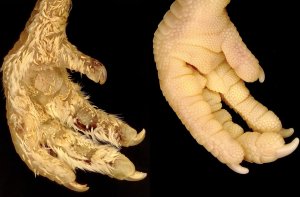
Scientists from the University of Geneva found evidence that some evolutionary gaps do not require large changes in genome composition or expression. Rather, it only takes a transient expression in one gene to produce a cascade of development events such as permanently turning scales in chicken feet to feathers. Existing literature states that embryonic development of skin appendages of different species begins in a similar way – cells express particular genes to develop structures and produce a localized thickening on the skin surface.
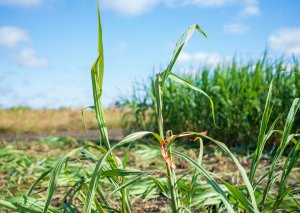
In a groundbreaking research collaboration, scientists at the Center for Advanced Bioenergy and Bioproducts Innovation (CABBI) have identified the types of microbes that associate with engineered oilcane. Exploring the oilcane microbiome may reveal opportunities for plant-microbial interactions in these feedstocks and also increase oil yields for sustainable bioenergy production.

Rust is a devastating disease in sunflower that is damaging to the sunflower production globally. Identification and utilization of host-plant resistance are proven to be preferable means for disease control. The rust resistance gene R12 with broad-spectrum specificity to rust was previously localized to a 2.4 Mb region on sunflower chromosome 11. To understand the molecular mechanism of resistance, we conducted whole-genome sequencing of RHA 464 (R12 donor line) and reference genome-based fine mapping of the gene R12.
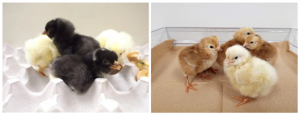
Scientists from Hiroshima University produced OVM knocked out chickens (colored chickens) using genome editing tools. Photo Source: Ryo Ezaki, et al./Food and Chemical Toxicology. Researchers in Japan have created a gene-edited allergen-free chicken egg called the OVM-knockout that may be safe for people who are allergic to egg whites. The researchers used genome editing to produce the egg without the protein ovomucoid, which accounts for approximately 11% of all the protein in egg whites.
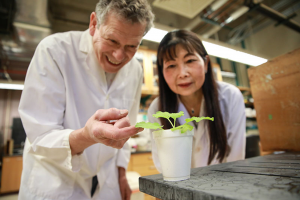
Agri-biotech researchers will soon have access to an innovation of Purdue University that can be used to introduce valuable traits to plants without leaving a foreign DNA in a plant's genome. Conventional Agrobacterium strains deliver transfer DNA, or T-DNA, into plants to be part of the plant's genome. This introduction can lead to expression of valuable traits such as enhanced drought tolerance or improved nutritional content.
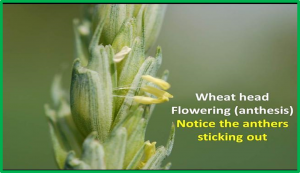
Heading date (HD) is a complex quantitative trait that determines the regional adaptability of cereal crops, and identifying the underlying genetic elements with minor effects on HD is important for improving wheat production in diverse environments. In this study, a minor QTL for HD that we named Qhd.2AS was detected on the short arm of chromosome 2A by Bulked Segregant Analysis and validated in a recombinant inbred population.
The course is a capacity building initiative of ISAAA Inc. and the Malaysian Biotechnology Information Centre (MABIC). It was first organized in 2018 as a platform for Asian scientists and regulators to be more competent in the regulations and policies related to biotechnology. Since then, the short course has been offered to promote strong collaboration among key biotechnology stakeholders for science and regulation to co-evolve and bring the benefits of modern biotechnology to society, while reducing its potential risks.
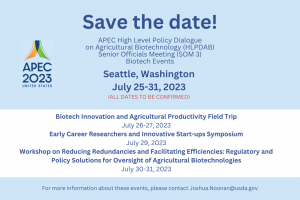
The United States would like to cordially invite you to attend the APEC High Level Policy Dialogue on Agricultural Biotechnology's suite of events, to be held from July 26-31, 2023, (TBC), as part of the APEC Third Senior Officials Meeting. The events will build on the intersessional work of HLPDAB's APEC member economies in promoting science-based, risk proportionate regulations for products of agricultural biotechnology. The suite of hybrid events includes:
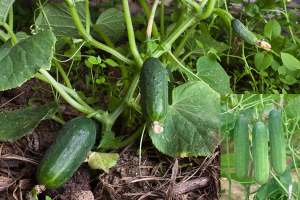
Crop disease represents a serious and increasing threat to global food security. Lanthanum oxide nanomaterials (La2O3 NMs) with different sizes (10 and 20 nm) and surface modifications (citrate, polyvinylpyrrolidone [PVP], and poly(ethylene glycol)) were investigated for their control of the fungal pathogen Fusarium oxysporum (Schl.) f. sp cucumerinum Owen on six-week-old cucumber (Cucumis sativus) in soil.

This is an area where "the FAO Investment Centre is leading that charge," QU Dongyu, the Director-General of the Food and Agriculture Organization of the United Nations (FAO), wrote in the foreword of the 2022 Annual Review of the Centre, which for nearly 60 years has been helping countries and financing partners make more and better agrifood investments to reduce poverty, hunger and malnutrition, improve rural livelihoods and protect the environment.