


News & Events
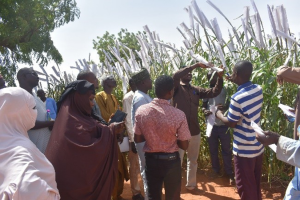
The ICRISAT Niamey Regional genebank recently hosted two workshop training sessions from April 26th to May 06th, 2023. The sessions were specifically organized for the National Agricultural and Research Services of Niger and Chad, with a focus on various aspects of seed production. The primary objective of the training was to strengthen the seed delivery systems in both Niger and Chad, from research to the diffusion and utilization of improved varieties.
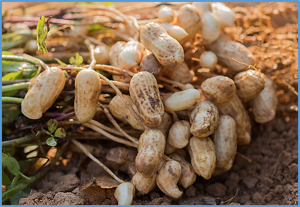
Bulked segregant analysis sequencing (BSA-seq) has been widely used for identifying the genomic regions affecting a certain trait. In this study, we developed a modified BSA/bulked segregant RNA-sequencing (BSR-seq) method, which we named phenotypic recombination BSA/BSR (PR-BSA/BSR), to simultaneously identify candidate genomic regions associated with two traits in a segregating population.
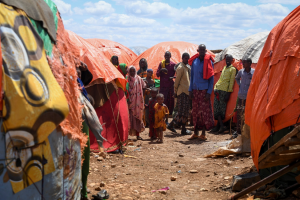
The Horn of Africa is prone to natural shocks and hazards. The region has faced three severe drought phenomena in the last 12 years. Now, after five consecutive below average rainfall seasons, the region was back to its normal pattern during the long rains this year from a precipitation standpoint. However, floods are of great concern in the upcoming months. The combined effect of the long-lasting impacts of drought and the current floods continues to devastate people’s lives and livelihoods

FAO Director-General QU Dongyu outlined today three key sets of transformative actions FAO is working on to help make agrifood systems more efficient, more inclusive, more resilient and more sustainable. “Actions are needed now,” the Director-General stressed while addressing the conference, SDG 16 as a compass for navigating intersecting crises hosted by the International Development Law Organization (IDLO) in Rome.
Neurodegenerative diseases (NDs) are a family of disorders that cause progressive structural and functional degeneration of neurons. Among all the organs in the body, the brain is the one that is the most affected by the production and accumulation of ROS. Various studies have shown that an increase in oxidative stress is a common pathophysiology for almost all NDs, which further affects various other pathways. The available drugs lack the wide spectrum necessary to confront these complexities altogether. Hence, a safe therapeutic approach to target multiple pathways is highly desirable.
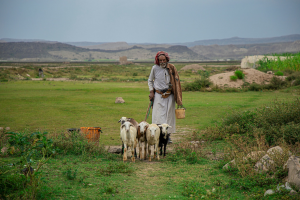
The food security situation in Yemen’s districts under the control of the Government of Yemen (GoY) slightly improved during the first five months of this year, while acute malnutrition increased, compared to the same period in 2022. However, the outlook for the period between now until the end of 2023 indicates the need for more programme investments, as the modest improvements may be eroded, UN agencies have warned.

According to the latest Integrated Food Security Phase Classification (IPC) analysis (March 2023), 4.9 million people in Haiti - nearly half of the country's population - are experiencing high levels of acute food insecurity. This figure represents an increase of 200 000 people in just five months. And of the total number of people affected, 1.8 million are in Emergency (IPC Phase 4) – up from the analyses in the last three years
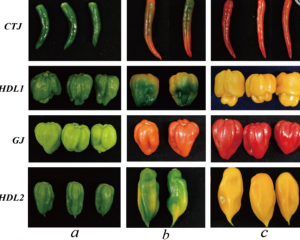
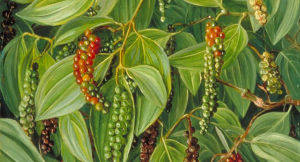
Aroma is a crucial attribute affecting the quality of pepper and its processed products, which has significant commercial value. However, little is known about the composition of volatile aroma compounds (VACs) in pepper fruits and their potential molecular regulatory mechanisms. In this study, HS-SPME-GC-MS combined with transcriptome sequencing is used to analyze the composition and formation mechanism of VACs in different kinds and development stages of pepper fruits.

Researchers from Iowa State University and partners conducted key interviews to build the first US-based typology of proponent and critic priorities for developing public trust in gene editing in agriculture and food. The results of their study are released in the Agriculture and Human Values journal. Gene editing tools have received significant acclaim because of their potential to provide solutions to various problems faced in agriculture.
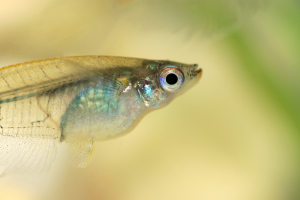
A team of scientists from Stanford, United States developed an efficient and precise knock-in approach using CRISPR-Cas9 tool that establishes the African turquoise killifish as a system for precise genetic engineering scale, which has been challenging to do in vertebrates. The new approach can offer opportunities for the establishment of humanized disease models and the development of cell-type-specific molecular probes for studying complex vertebrate biology.
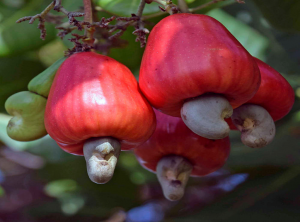
The "Agricultural Promotion Policy (2016-2020)" is an initiative of Nigeria's government, designed to create jobs and wealth for participants in the agricultural value chains through value addition to export crops such as cashew. However, it is not known how cashew processors have exploited this opportunity to improve their economic returns from value-added cashew products, processed in the Southeast zone, Nigeria.
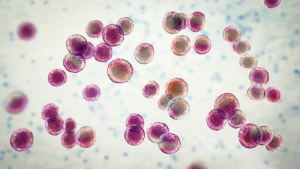
Scientists from the University of Exeter in the United Kingdom published the results of their study that explained how they used CRISPR-Cas gene editing system to engineer a plasmid that specifically targets the resistance gene for Gentamicin, a commonly used antibiotic. Resistance among bacteria is developed when resistant genes are transported between hosts