


News & Events
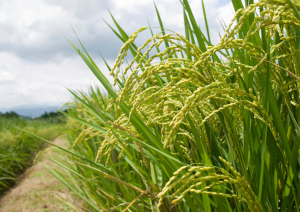
Brian Staskawicz, Director of Innovative Genomics Institute (IGI) Sustainable Agriculture, together with his research team have used CRISPR to open a new path towards developing drought tolerant rice. The gene STOMAGEN (short for “stomata generator”) is crucial for the development of stomata. Researchers have previously reduced the number of stomata by disabling or “knocking out” the STOMAGEN gene in rice, leading to an ~80% reduction in the number of stomata
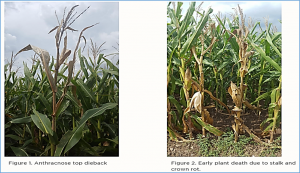
Photoperiod sensitivity is a key factor affecting the adaptation of maize (Zea mays L.) to high-latitude growing areas. Although many genes associated with flowering time have been identified in maize, no gene that inhibits photoperiod sensitivity has been reported. In our previous study, we detected large differences in photoperiod sensitivity among maize inbred lines with the same photoperiod-sensitive allele at the ZmCCT10 locus.

Most public engagements of researchers and academics on gene editing are focused on its relevance in agriculture. Scientific literature, patent publications, and market reports have shown a sharp increase on its usage during the past decade. Since it is still a new technology, understanding public views and stakeholders' perspectives about gene editing is vital in projecting future applications.
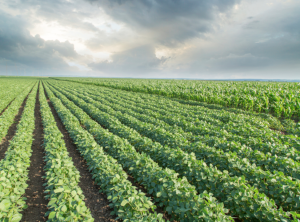
Researchers at Tel Aviv University (TAU) have developed a genome-scale technology that makes it possible to reveal the role of genes and traits in plants that may have been hidden by functional redundancy. This technology is expected to revolutionize the development of agricultural crops and how they are improved, as it can be applied to most crops and agricultural traits, such as increased yield and resistance to drought or pests.
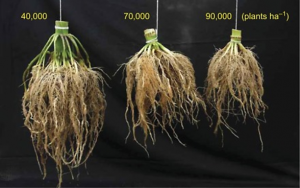
Root system architecture (RSA) is crucial for crops productivity and stress tolerance. In maize, few RSA genes are functionally cloned, and effective discovery of RSA genes remains a great of challenge. In this work, we established a strategy to mine maize RSA genes by integrating functionally characterized root genes, root transcriptome, weighted gene co-expression network analysis (WGCNA) and genome-wide association analysis (GWAS) of RSA traits based on public data resources.
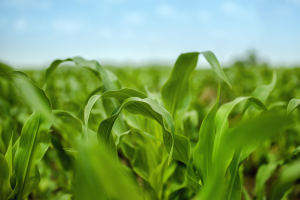
Researchers from the University of California San Diego and Stanford University have provided insights into a new understanding of essential root chemicals that are responsible for plant growth. Using a mass spectrometer, the researchers produced a “roadmap” that shows the distribution of small molecules along stem cells of maize plant roots and how their placement factors into the plant's maturation.
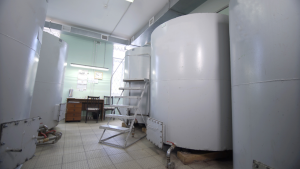
Synthetic biology can be used to make more drugs or raw materials for the transformation of the pharmaceutical supply chains. This is according to Dr. Christian Smolke, CEO and co-founder of Antheia—science and technology company developing next-generation plant-inspired medicines. Dr. Smolke explained that this transformation could be achieved through the use of engineered yeast that can yield active pharmaceutical ingredients (APIs).
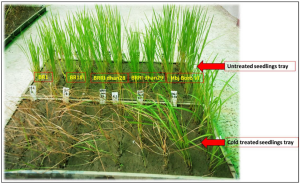
Cold tolerance at the booting stage (CTB) in rice can significantly affect yield in high-latitude regions. Although several CTB genes have been isolated, their ability to induce cold tolerance is insufficient to ensure adequate rice yields in cold regions at high latitudes. Here, we identified the PHD-finger domain-containing protein gene qCTB7 using QTL-seq and linkage analysis through systematic measurement of CTB differences and the spike fertility of the Longjing31 and Longdao3 cultivars
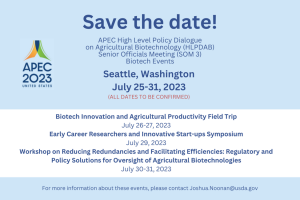
The United States would like to cordially invite you to attend the APEC High Level Policy Dialogue on Agricultural Biotechnology's suite of events, to be held from July 26-31, 2023, (TBC), as part of the APEC Third Senior Officials Meeting. The events will build on the intersessional work of HLPDAB's APEC member economies in promoting science-based, risk proportionate regulations for products of agricultural biotechnology. The suite of hybrid events includes:
The course is a capacity building initiative of ISAAA Inc. and the Malaysian Biotechnology Information Centre (MABIC). It was first organized in 2018 as a platform for Asian scientists and regulators to be more competent in the regulations and policies related to biotechnology. Since then, the short course has been offered to promote strong collaboration among key biotechnology stakeholders for science and regulation to co-evolve and bring the benefits of modern biotechnology to society, while reducing its potential risks.
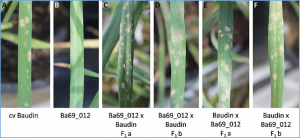
Barley powdery mildew is a globally significant disease, responsible for reduced grain yield and quality. A major effect adult plant resistance gene, RBgh2, was previously found in a landrace from Azerbaijan. The atypical phenotype suggested different underlying genetic factors compared to conventional resistance genes and to investigate this, genome-wide gene expression was compared between sets of heterogeneous doubled haploids.
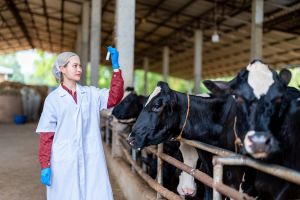
Researchers from public and private institutions are collaborating to manage the harmful effects of the Asian blue tick to cattle, which causes billions of dollars in losses globally. The partnership aims to provide farmers with a highly effective alternative from using chemicals to cope the pest. Oxitec will be working with the leading livestock research experts of the Roslin Institute to develop solutions against the invasive Asian blue tick (Rhipicephalus microplus). Using Oxitec's Friendly™ solution, the researchers will work to develop a self-limiting tick with a gene that will prevent its offspring from reaching adulthood.