


News & Events
The course is a capacity building initiative of ISAAA Inc. and the Malaysian Biotechnology Information Centre (MABIC). It was first organized in 2018 as a platform for Asian scientists and regulators to be more competent in the regulations and policies related to biotechnology. Since then, the short course has been offered to promote strong collaboration among key biotechnology stakeholders for science and regulation to co-evolve and bring the benefits of modern biotechnology to society, while reducing its potential risks.
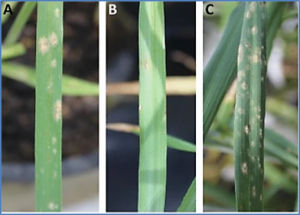
Barley powdery mildew is a globally significant disease, responsible for reduced grain yield and quality. A major effect adult plant resistance gene, RBgh2, was previously found in a landrace from Azerbaijan. The atypical phenotype suggested different underlying genetic factors compared to conventional resistance genes and to investigate this, genome-wide gene expression was compared between sets of heterogeneous doubled haploids.
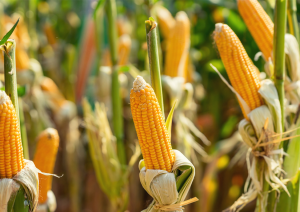
The European Food Safety Authority (EFSA) Panel on Genetically Modified Organisms (GMO Panel) has published its assessment on the safety of the six-event stack genetically modified (GM) herbicide-tolerant and insect-resistant maize Bt11 × MIR162 × MIR604 × MON 89034 × 5307 × GA21. The Scientific Opinion is published based on the application EFSA-GMO-DE-2018-149 under Regulation (EC) No. 1829/2003 received from Syngenta Crop Protection NV/SA.
Italy's political groups voted unanimously to authorize field experimentation of products of new breeding technologies (NBTs). This is a turning point for the country's agricultural industry. "It is a step that changes the country's perception of genetic innovation," said Luigi Cattivelli, Director of the Genomics and Bioinformatics Center of the Council for Agricultural Research and Economics (CREA), the largest Italian research center in the agri-food sector.
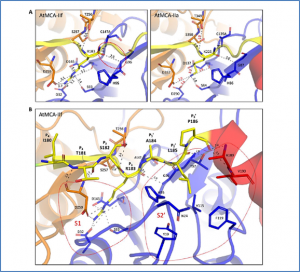
Metacaspases are part of an evolutionarily broad family of multifunctional cysteine proteases, involved in disease and normal development. As the structure–function relationship of metacaspases remains poorly understood, we solved the X-ray crystal structure of an Arabidopsis thaliana type II metacaspase (AtMCA-IIf) belonging to a particular subgroup not requiring calcium ions for activation.

The US Environment Protection Agency has announced that it will exempt gene-edited plants from rigorous assessment procedures if the change is also possible to be attained through traditional breeding methods. In the US, the EPA, together with the US Department of Agriculture and Food and Drug Administration (FDA), is tasked to regulate biotech crops. In 2022, the USDA announced an exemption for gene-edited trait changes in plants that already exist naturally in a sexually compatible plant.
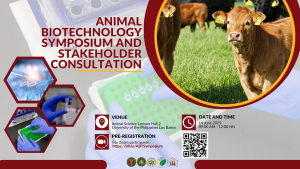
ISAAA Inc. in partnership with the Institute of Animal Science of the University of the Philippines Los Baños (UPLB) will hold a hybrid event titled Animal Biotech Symposium and Stakeholder Consultation on June 14, 2023, from 9 AM to 12 PM (GMT+8). Registration is now open. The event is part of the 114th anniversary celebration of the Institute of Animal Science. It aims to serve as an avenue for discussing the science of animal biotechnology and the proposed guidelines for genetically modified animals and animal products in the Philippines.
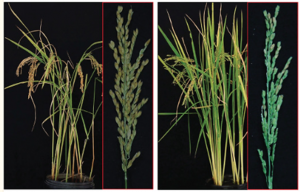
Extreme high temperature at the meiosis stage causes a severe decrease in spikelet fertility and grain yield in rice. The rice variety grain size on chromosome 2 (GS2) contains sequence variations of OsGRF4 (Oryza sativa growth-regulating factor 4; OsGRF4AA ), escaping the microRNA miR396-mediated degradation of this gene at the mRNA level. Accumulation of OsGRF4 enhances nitrogen usage and metabolism, and increases grain size and grain yield.
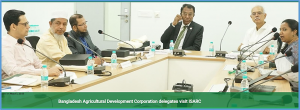
A delegation from the Bangladesh Agricultural Development Corporation (BADC) visited the IRRI South Asia Regional Centre (ISARC), Varanasi to harness IRRI’s knowledge and experiences in modern rice research. This visit featured demonstrations and interactions around IRRI’s latest developments in rice technologies such as varietal development and testing protocols, quality seed production, varietal positioning methods, value chain propositions, and post-production practices.
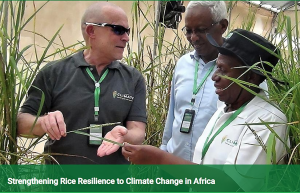
Researchers, students, and representatives from African institutions recently attended the Annual Meeting of the Climate Smart African Rice Project in Morogoro, Tanzania, to review the progress of the project aimed at developing varieties tolerant to abiotic stresses such as flooding, salinity, and germination under anaerobic conditions. Stakeholders from the Tanzania Agricultural Research Institute (TARI), the Tanzania Ministry of Agriculture, and representatives from Sokoine University of Agriculture (SUA),
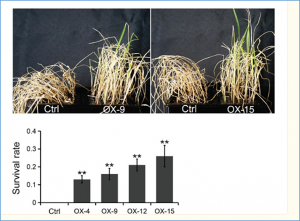
High-salinity and blast disease are two major stresses that cause dramatic yield loss in rice production. GF14 (14-3-3) genes have been reported to play important role in biotic and abiotic stresses in plants. However, the roles of OsGF14C remain unknown. To understand the functions and regulatory mechanisms of OsGF14C in regulating salinity tolerance and blast resistance in rice, we have conducted OsGF14C-overexpressing transgenic experiments in the present study.
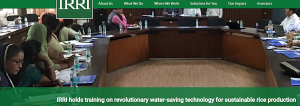
The International Rice Research Institute (IRRI) South Asia Regional Centre (ISARC) organized a training and hands-on demonstration to acquaint participants with alternate wetting and drying (AWD) technology for irrigation water management at Chaudhary Charan Singh Haryana Agriculture University (CCSHAU) on 11-12 May. Around 30 master trainers from Jind and Fatehabad Districts in Haryana participated in the program under the Credit Offsetting Rice Emissions (CORE) Project funded by Deutsche Gesellschaft für Internationale Zusammenarbeit (GIZ).