


News & Events
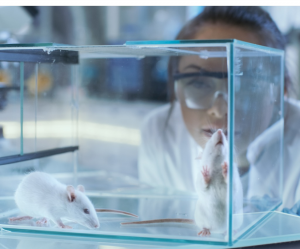
Therapeutic agents have difficulty accessing the brain due to a blood-brain barrier (BBB) that prevents substances from entering the brain via blood. To help with this issue, the researchers from Boise State University and Cognigenics conducted an intranasal delivery of CRISPR-Cas9 to check if it could cross the blood-brain barrier and knock out the HTR2A gene. The HTR2A gene modulates the availability of serotonin and regulates mood.
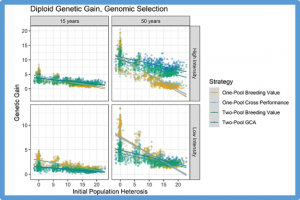
Breeding can change the dominance as well as additive genetic value of populations, thus utilizing heterosis. A common hybrid breeding strategy is reciprocal recurrent selection (RRS), in which parents of hybrids are typically recycled within pools based on general combining ability. However, the relative performances of RRS and other breeding strategies have not been thoroughly compared.

New resources on biotechnology in the Philippines are now available on the ISAAA website. These informational materials are developed to raise awareness, understanding, and acceptance of the country's biotech products derived from conventional and modern biotechnology. Creating information, education, and communication materials is part of the ISAAA Inc. project called Pinoy Biotek, in partnership with Philippine Agriculture and Fisheries Biotechnology Program.
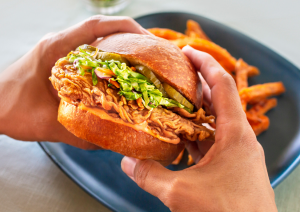
The United States Department of Agriculture (USDA) has given the final approval to two companies, UPSIDE Foods and Good Meat to sell lab-grown meat in the country. With these approvals, the US becomes the second country after Singapore to allow the sales of cultivated meat. UPSIDE Foods' cultivated chicken is made from chicken cells grown in the lab. The company completed the pre-market regulatory review process for its cultivated chicken after receiving the Grant of Inspection (GOI) from USDA.
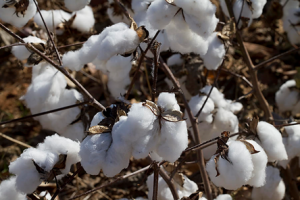
Gossypium herbaceum is a species of cotton native to Africa and Asia that is one of the 2 domesticated diploids. Together with its sister-species G. arboreum, these A-genome taxa represent models of the extinct A-genome donor of modern polyploid cotton, which provide about 95% of cotton grown worldwide. As part of a larger effort to characterize variation and improve resources among diverse diploid and polyploid cotton genomes, we sequenced and assembled the genome of G. herbaceum cultivar (cv.)

Computer scientists at DePaul University in the United States used a bioinformatics workflow to reconstruct one of the most complete genomes of a top cotton species, the African domesticated Gossypium herbaceum cultivar Wagad, giving scientists a more complete picture of how wild cotton was domesticated over time. The research team is led by Thiru Ramaraj, assistant professor of computer science at DePaul's Jarvis College of Computing and Digital Media and also the lead author of the publication in the journal G3: Genes, Genomes, Genetics. Their work began with crunching DNA sequence data.
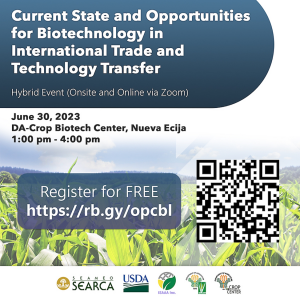
The Southeast Asian Regional Center for Graduate Study and Research in Agriculture (SEARCA), in partnership with ISAAA Inc., Philippine Rice Research Institute (PhilRice), Crop Biotechnology Center (CBC), and the United States Department of Agriculture, will hold the hybrid event Current State and Opportunities for Biotechnology in International Trade and Technology Transfer on June 30, 2023, from 1:00PM to 4:00 PM (GMT+8) at CBC, PhilRice Campus, Science City of Muñoz, Philippines. Registration is now open.
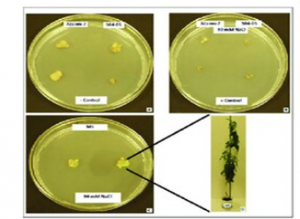
Soil salinity is a worldwide problem that reduces crop yields, but the development of salt-tolerant crops can help overcome this challenge. This study was conducted with the purpose of evaluating the morpho-physiological and genetic characteristics of a new salt-tolerant mutant KA-1285 developed using gamma-ray irradiation in soybean (Glycine max L.). The morphological and physiological responses of KA-1285 were compared with salt-sensitive and salt-tolerant genotypes after treatment with 150 mM NaCl for two weeks.
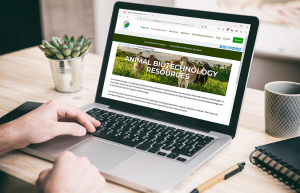
ISAAA, in partnership with the US Department of Agriculture (USDA) and Virginia Polytechnic Institute and State University (Virginia Tech), released the Animal Biotechnology Resource. It serves as a public repository of information materials on animal biotechnology sourced from international workshops organized by ISAAA, USDA, Virginia Tech, and partners. The animal biotech resources include workshop proceedings, videos, podcasts, and presentation slides tackling the latest developments in the field as well as the regulatory approaches for consideration.
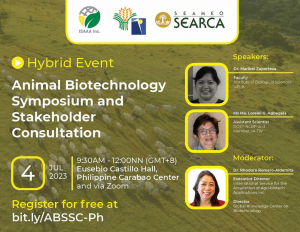
ISAAA Inc., in partnership with the Southeast Asian Regional Center for Graduate Study and Research in Agriculture (SEARCA) and the Philippine Carabao Center (PCC), will hold the hybrid event Animal Biotechnology Symposium and Stakeholder Consultation on July 4, 2023, from 9:30 AM to 12:00 PM (GMT+8) in Eusebio Castillo Hall, PCC, Science City of Muñoz, Philippines. Registration is now open.
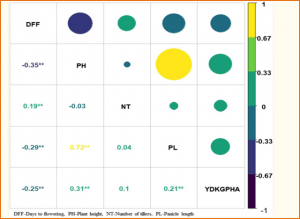
Hybrid rice technology offers great promise to further enhance rice production and productivity for global food security. Improving hybrid rice parental lines is the first step in developing heterotic rice hybrids. To improve resistance against blast disease, a maintainer line DRR 9B was fortified with a major broad-spectrum blast resistance gene Pi2 through marker-assisted selection. The rice blast caused by Magnaporthe oryzae is a major disease and can cause severe yield losses upto 100%.
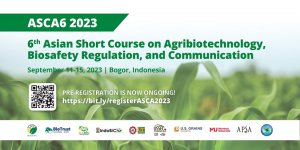
The course is a capacity building initiative of ISAAA Inc. and the Malaysian Biotechnology Information Centre (MABIC). It was first organized in 2018 as a platform for Asian scientists and regulators to be more competent in the regulations and policies related to biotechnology. Since then, the short course has been offered to promote strong collaboration among key biotechnology stakeholders for science and regulation to co-evolve and bring the benefits of modern biotechnology to society, while reducing its potential risks.